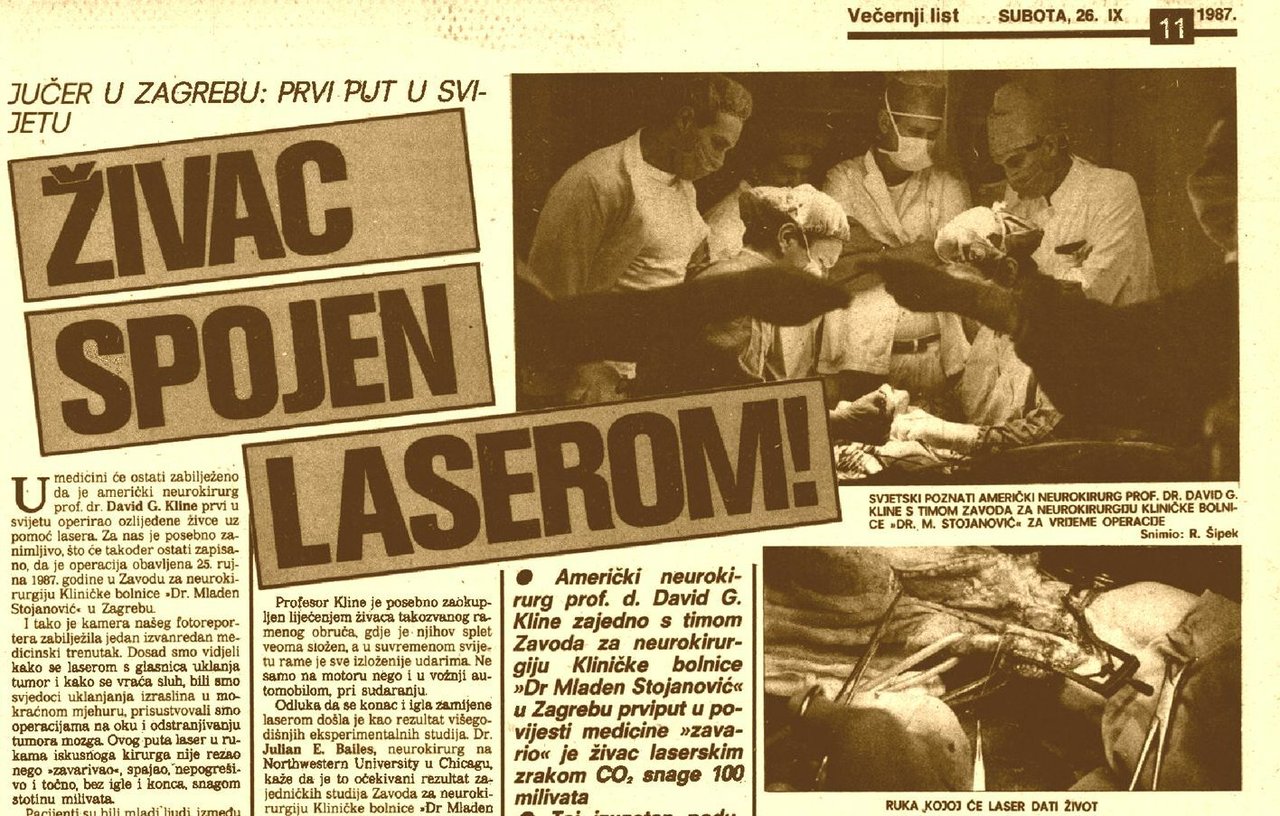
On September 25, 1987, Zagreb neurosurgeons performed a procedure that was presented as the first of its kind in the world. At the Department of Neurosurgery of the then Clinical Hospital ‘Dr. Mladen Stojanović’, today’s KBC Sestre milosrdnice, in collaboration with American neurosurgeon and peripheral nerve surgery expert David G. Kline, a nerve was cut for the first time using a CO2 laser. The operation attracted the attention of the international professional community as an important step in the development of microsurgery of peripheral nerves.
From Štampar to Transplants
Croatian medical history is full of successes. Andrija Štampar was among the founders of the World Health Organization and its first president. Zagreb doctors developed one of the most successful transplantation programs in Europe, while Croatian surgical and cardiology centers have introduced methods that were soon adopted by other European healthcare systems, and Croatia has been among the leading countries in the world for years in terms of the number of organ donors and transplants relative to its population. Numerous Croatian surgeons, cardiologists, neurosurgeons, and scientists have achieved results comparable to the most prestigious European and American centers.
The Other Side of the Coin
Croatian doctors often present the latest achievements and procedures in the media that represent the pinnacle of world medicine, which opens hope for all current and potential patients. This is precisely why Croatian healthcare represents a kind of paradox. While certain doctors and medical teams achieve world-class results, patients often wait for months, even years, for examinations, diagnostics, and specific procedures. The system faces a shortage of doctors and nurses, an aging population, chronic financial problems, and organizational weaknesses that repeat from term to term.
Croatia does not have a dramatically low number of doctors in international comparison. The problem is that this workforce is unevenly utilized, there is a lack of specialists in certain branches of medicine, and the organization of the system often does not match the level of expertise of its best doctors.