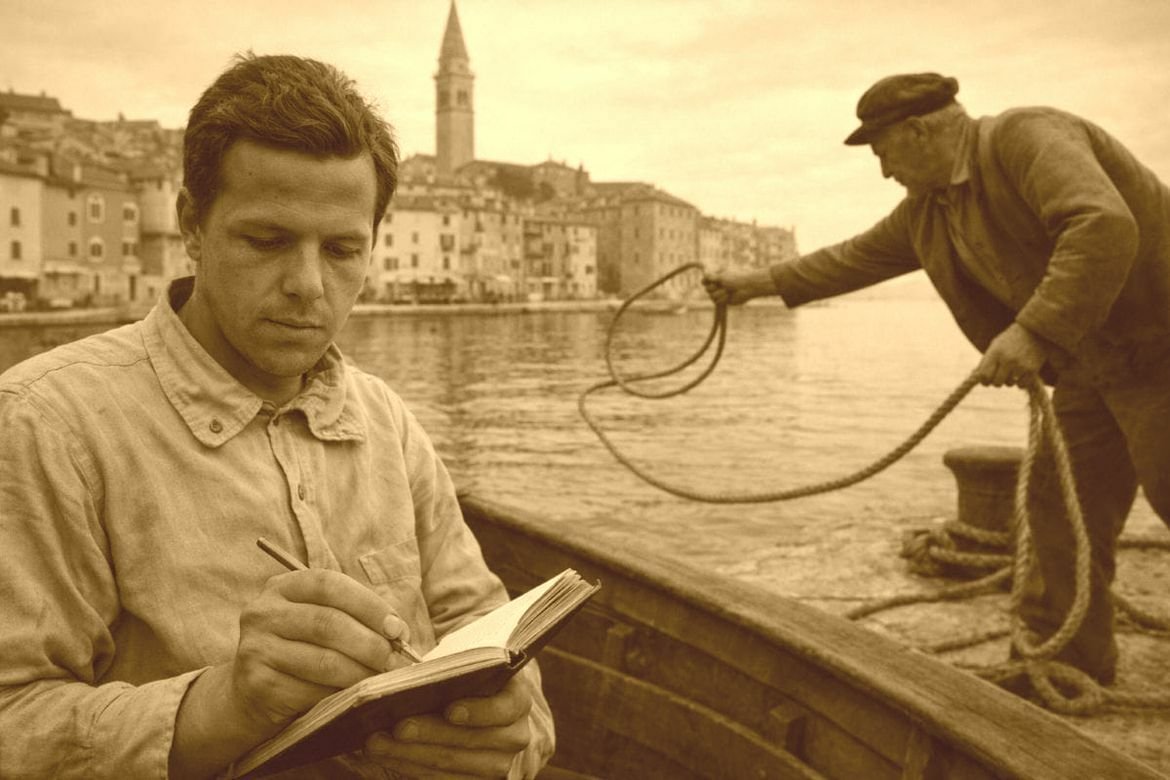
Born on September 28, 1898, in Raklje, Mijo Mirković is remembered as the writer Mate Balota. However, during his lifetime, he was equally known, and perhaps even more important, as an economist, professor, academic, and researcher of economic history.
Istrian Elegy and Economic Analysis
The collection “Dragi kamen” is still considered one of the most important books of Istrian literature, and his Čakavian dialect has become part of Istria’s cultural identity. As Mate Balota, he wrote about Istria, its people, and the harsh life on rocky land, while as an economist, he sought to answer one of the key questions of the 20th century: why are some nations and regions economically developed, while others lag behind.
After studying in Zagreb and Belgrade, Mirković went to Germany, where he earned his doctorate in economics. His doctoral dissertation already dealt with the causes of economic backwardness of Slavic peoples, a topic to which he remained faithful throughout his life.
He taught at higher education institutions in Subotica and Belgrade. He was a participant in the anti-fascist struggle, and after the war, he became one of the most prominent professors at the Faculty of Economics in Zagreb. In the post-war decades, he participated in shaping Croatian and Yugoslav economic thought and published a large number of books and textbooks in the fields of trade policy, industrial development, agriculture, economic history, and national economy.
Progress Through the Fate of Ordinary People
He was particularly interested in the position of peasants and the development of agriculture. He believed that economic progress could not be viewed solely through industry and trade, but also through the fate of ordinary people in the countryside. Therefore, a significant part of his work dealt with agrarian policy, the relationship between capitalism and the countryside, and developmental differences among regions.