Finally, it has cooled down after perhaps the longest heatwave in our area. The drop in temperature and rain reminded us that winter exists and that those who have not thought about it should start looking for raw materials for heating, especially those who heat with pellets, as last winter’s experience shows what it means to secure them in time.
There are also experiences from previous years, such as the winter of 2022/2023, when a large quantity of this fuel went for export. Prices rose because of this, but also due to the war between Ukraine and Russia, i.e., the energy crisis. At that time, the largest pellet producer in Croatia, RST-Pellet, in cooperation with the local government in Delnice, distributed vouchers (each worth 130 euros, or a thousand kuna at that time) to financially and fuel-impaired citizens. A maximum of four vouchers were distributed per household, which was a saving of 520 euros, or 4000 kuna. A total of a thousand vouchers were distributed, meaning RST-Pellet donated a million kuna (130 thousand euros) to the people of Delnice.
How Pellets Are Made
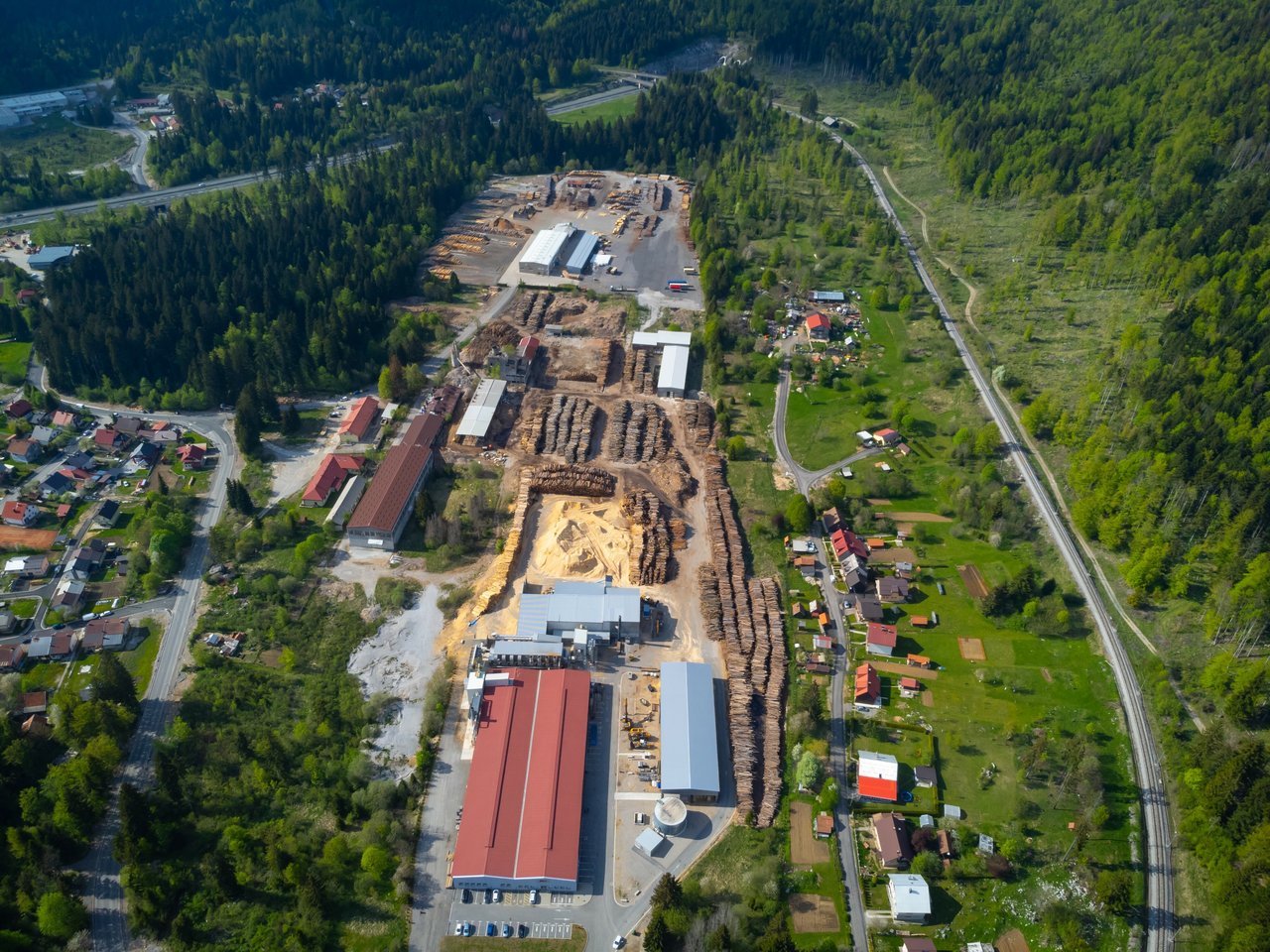
It was a commendable move by the company, which has modernized production since it started operating in 2019. Financial director Goran Petranović says that in Croatia, about 115 thousand tons of pellets are produced annually at two production locations. Until now, the annual capacity of the plant in Delnice was approximately 70 thousand tons (increased to 80 thousand tons this year), while production in Udbina amounts to about 45 thousand tons (increased to 55 thousand tons this year), meaning that in the next period, the capacity will be approximately 135 thousand tons.
– At the level of the entire RZ Group, of which RST-Pellet is a member along with plants in Austria, Italy, and Slovenia, the total annual production is between 700 and 800 thousand tons of pellets – says Petranović.
From this data, it is evident that Croatia is an important part of the overall production platform of this group. Pellets are produced from approximately 85 percent industrial (spatial) wood and 15 percent by-products from sawmills (sawdust, chips, remainders).
The production process begins with stripping the bark from industrial wood, explains assistant director and procurator Philip Stückler. The wood is then shredded with a hammer mill, and the shredded material is transported via conveyor belts to the second grinding stage, a wet hammer mill.
– After further shredding, the prepared material is dried, and then it goes through another, special fine grinding process in a dry hammer mill. It then passes through a filtration system during which fine dust is removed. This helps us ensure consistent quality of raw materials in the further production process. The material is then fed into presses where it is compressed into pellets under high pressure. The freshly pressed pellets are then cooled in a cooling system to achieve the required temperature – Stückler describes the process.
After an appropriate cooling period, the finished pellets are packaged according to customer requirements, in smaller or larger bags, and prepared for further transport.
New Photovoltaic Systems
Both locations have invested in expanding technical infrastructure and sustainable production. In Udbina, the photovoltaic system was expanded by an additional 0.49 megawatts of peak power (the standard designation for the maximum power of a photovoltaic power plant under idealized, standardized conditions), while a new photovoltaic system with a capacity of 1.4 megawatts of peak power was installed in Delnice. This allows the company to cover most of its energy needs with its own renewable energy.
– In addition, in Udbina, we optimized the drying process by expanding the dryer and installing another, larger pellet press. This has significantly increased our production capacity, allowing us to produce about 55 thousand tons of pellets per year, even up to 60 thousand. Another important step was the introduction of a new raw material processing system. This allows us even more efficient quality control of raw materials and ensures consistently high quality of pellets – explains Stückler.
Investments and Challenges
In Delnice, an additional pellet press has also been invested in, which, as noted, will increase the annual production capacity of the location to approximately 80 thousand tons. With these investments, the company not only strengthens production capacities but also improves energy efficiency, process reliability, and overall product quality. The commissioning and optimization of new equipment are in the final stages. Once full operational capacity is reached, RST-Pellet believes that further opportunities for improvement in both production and processes will arise. However, they say it is still too early to say whether this will immediately result in another increase in production volume.
– A key factor for this is the development of the raw materials market. Competitive pressure, especially from Italy and Slovenia, is now very strong. As a result, domestic pellet producers, and the Croatian wood industry in general, are finding it increasingly difficult to procure the necessary raw materials under competitive conditions. Therefore, we do not focus solely on further increasing production capacities. It is equally important to ensure a secure, long-term supply of raw materials and to increase the efficiency of existing processes. We are closely monitoring market movements and will make future investment decisions accordingly – says Stückler, while Petranović adds that the company’s advantage lies not only in the total production capacity but also in the geographical distribution of production, proximity to the raw material base, and the ability to supply various European markets.