Home / Business and Politics / Studenac did not collapse overnight: three financial reasons for the crisis

Studenac did not collapse overnight: three financial reasons for the crisis

<p>Mario Kurtović</p>
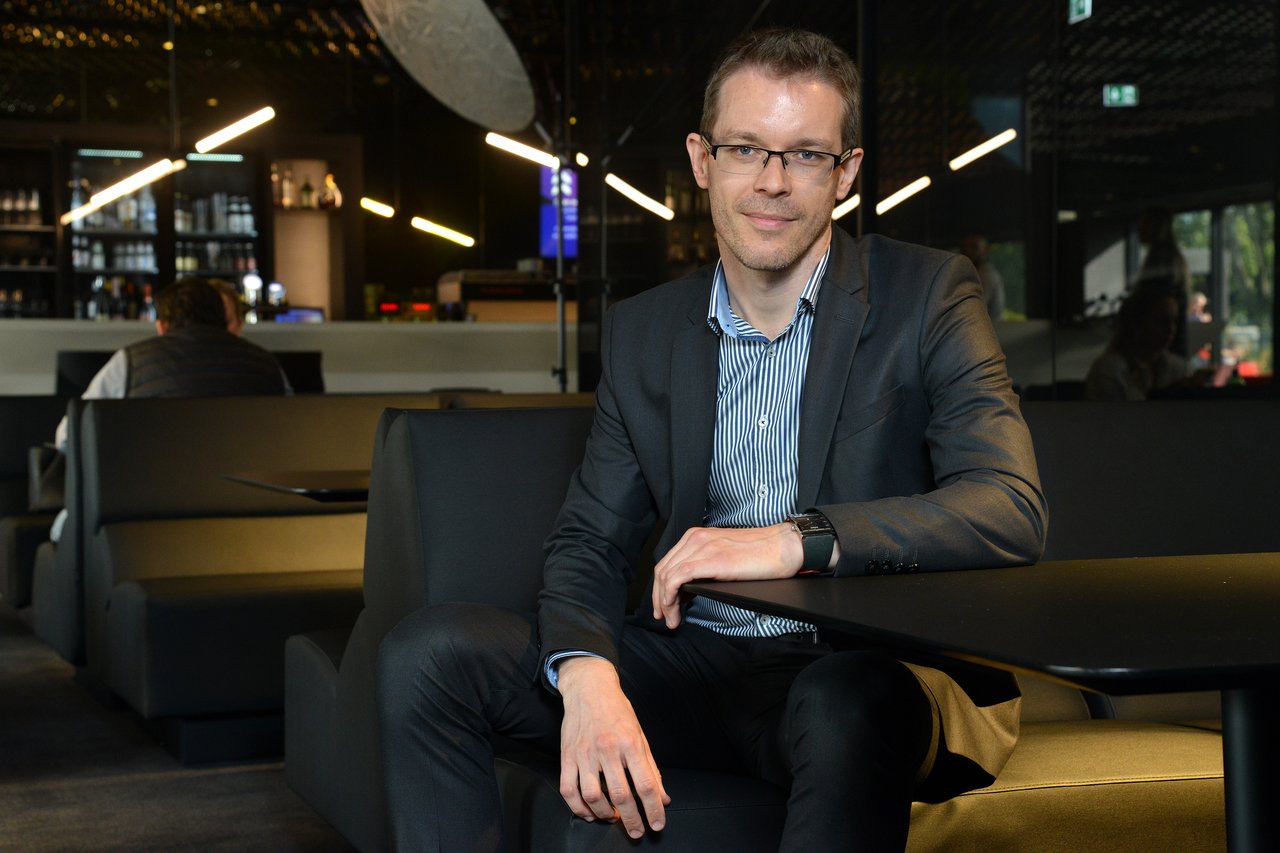
Mario Kurtović / Image by: foto Rene Karaman

The financial problems of Studenac, which has filed for pre-bankruptcy proceedings, according to financial advisor Mario Kurtović, did not arise overnight. Kurtović, who has been involved in financing and assessing the bankability of companies for years, has been warning about weaknesses in the company’s financial structure since 2023, and after the failed IPO, he believed that the risks had become even more pronounced.

In his newsletter, he analyzed cash flows, indebtedness, acquisitions, and the financing method of Studenac’s growth in detail, highlighting three key financial causes of today’s problems, in his opinion. Below, we present his analysis:

You have heard and read that Studenac has filed for pre-bankruptcy. I am not at all shocked, as I have been warning my clients about Studenac’s weak financial position since 2023. After the failed IPO, it became even clearer that the story would be hard to end well.

Financing and bankability is something I have been dealing with for a long time, which is why this case intrigues me, but also affects me, as today’s problems were solvable. While in the SME segment we can find all sorts of things that are logical given their number, I do not expect to see such circumstances in large companies (especially those managed by financial investors) and large banks.

In general, let’s get to the point. In the next two tables, you can see an overview of where Studenac generated money and what it spent it on. All data is from the cash flow report, so you will not find breakdowns of expenses and the like. But that is not important to us, as when you look at the categories, everything will be clear. Study the tables carefully, as we will return to them later.

The largest inflows for Studenac came from new loans, then from operating earnings (this is FFO in the table), and a smaller (but not insignificant) part came from working capital. This means that as the business grew, Studenac increasingly financed itself at the expense of suppliers. This is otherwise common in food retail as inventories are usually not large (especially at Studenac, where there is a high proportion of fresh goods due to the format of the stores they have), receivables are collected immediately in cash or by card, and suppliers are paid according to commercial payment terms (usually 30-60 days). This creates a gap where Studenac actually has excess cash that they can further dispose of.

The largest outflows went to capital expenditures (CapEx), acquisitions, and in 2025 to loan repayments (principal and interest). You can easily connect these expenditures with Studenac’s growth strategy – acquisitions and then CapEx in logistics centers and refurbishment of stores.

All of the above is crucial for identifying the three fundamental financial causes of failure. Let’s get more specific with the numbers.

Short-term sources financed long-term investments

One of the golden rules of financing states that long-term investments should be financed with long-term sources. We know that some rules in finance are flexible, but this was blatantly ignored. Finance 101…

Take another look at the sources of money in the table above. In the category of long-term sources, we can include New debt and Equity. However, from the next table, you can see that the total net increase in debt did not only relate to long-term loans. (Note: here I subtracted debt repayment from the increase in debt in the table.) During the observed period, as much as 30% of this increase in debt related to short-term loans!

The first key question – what does Studenac need short-term loans for? This is a business that structurally has negative working capital, which means that every growth in business means increasing financing at the expense of suppliers. This is a structural feature of this business. So what is being financed with short-term loans? Here, the banks are not clear to me, as this situation clearly indicates that working capital was not financed, but liquidity was patched up. And why would liquidity need to be patched up if the business is healthy?

The second key question – how has only 8 million in equity entered the company in the last four years? If you have ever sought financing from banks, then you know how firm banks are in their requirements that the own contribution must be at least 20%, and sometimes even 30% is not enough. And where is the own contribution here? Current operations? The fund gave 8 million for this whole story on a total of 233 million in debt? If you look at the balance sheet, the Equity ratio was 18% in 2022, and at the end of 2025, only 7%. (Note: I am not a proponent of the Equity ratio for many reasons, but in this case, it clearly illustrates the disproportion in the distribution of risk between banks and owners.)

If you look at the outflows, the largest part went to long-term investments in the form of CapEx and acquisitions. These are not investments that yield returns within a few years.

And now when we relate long-term sources and long-term investments, we get the table below. This means that in four years, a gap of as much as 117 million was created! This means that this gap of 117 million was bridged by Studenac from current cash flow, which consists of earnings, but also from the feature of working capital (you will see later why this is a problem). By 2024 at the latest, it must have been clear to the banks that this could not continue. Okay, then there was supposed to be an IPO that failed. But why then in 2025 was a lot of money still going to CapEx and in conditions of declining margins due to the faster rise in costs, primarily labor costs?

This is not an unusual situation in other companies either. First, investments and growth begin, which banks monitor, only for everyone to suddenly find themselves in a situation where the financing structure is not sustainable. This does not happen ‘suddenly’ or ‘all at once’, but most often as a result of unfounded optimism that the future will be just as successful as the past.

Wrong liquidity strategy

The gap of 117 million from the first point does not have to end tragically if there is a sufficient level of money, i.e., liquidity to cover these mismatches. But, look at the table for the level of money in accounts at the end of each year.

To illustrate what these numbers mean – in all years, these amounts did not cover even one month’s operating expenses, and in 2024 and 2025, this level was at the level of an average week to 10 days of operating expenses. Now you understand what kind of maneuvering space there was.

Now let’s return to that feature of working capital in this type of business. Everything is fine as long as the business is growing and margins are rising or at least stagnating. While this is the case, the gap is growing larger and more and more money remains in the business at the expense of suppliers. However, when margins fall, as is the case with Studenac, this feature becomes a burden. If we sum up the FFO receipts and Working capital in 2023 and 2024, it amounted to 74-75 million in inflows annually. In 2025, when there was a significant drop in margins, the sum amounted to 59 million, which is 15-16 million less. That is why short-term financing was needed – to patch up liquidity. This was another signal that the financing structure was not sustainable.

When liquidity is weak, there is no maneuvering space. When there is no maneuvering space, every disturbance leads to problems, from which it is sometimes impossible to escape. Having enough money in the account is always a decisive factor for survival in the short term.

Inadequate acquisition strategy and acquisition financing strategy

You know that Studenac has acquired a bunch of companies in recent years. You can see this in the outflow table, where only in the period 2022-2025, 194 million went to acquisitions. Acquisitions are a risky venture, so I will never understand the glorification of acquisitions in the public space. Damodaran says that as much as 70% of acquisitions do not create value, meaning that acquisitions turn out to be overpaid. It is worth repeating – in acquisition processes, sellers (sales at a premium) and advisors to sellers and buyers (fees) come out best. If something goes wrong, the bill goes to the buyer and creditors.

In the case of Studenac, it is fascinating that the debt to banks at the end of 2025 was almost the same as the goodwill on the balance sheet! In other words, we can practically conclude that banks financed goodwill, which is the part paid above the fair value of the acquired net assets. This does not mean that goodwill is an overpaid amount, but when goodwill is so high, it carries significant risks. For illustration, goodwill accounts for about 40% of Studenac’s balance sheet. I remind you that only 8 million of fresh equity has entered in the last four years.

Banks took on the risk

The banks stretched themselves well here and took on enormous risk. In the table below, you can see the indicators of indebtedness. Even the EBITDA indebtedness in 2024 was already high, and we won’t even mention 2025. But in the row below, you have the ratio of debt to sustainable cash flow, which I am sure did not find its place in the internal credit proposals of the banks. When the debt to EBITDA ratio was around 3-3.5x, the debt to sustainable cash flow ratio was 8-10x, which more realistically reflected the period needed to repay debts. In 2024, the ratio went to 15.3x, and with business at the level of 2025, it was clear that debts could not be repaid.

And one more important element – all these acquisitions and CapEx during this entire period occurred with excessive debt to suppliers. If we take that the average payment terms are 60 days (although the average is realistically lower because fresh goods must be paid for within 30 days by law), the excessive debt to suppliers in 2022 amounted to 27 million and grew to 60 million by the end of 2025. This was a ticking time bomb, and banks should not have allowed such a strategy. This was hidden debt that hung by a thread, i.e., the patience of suppliers. This simply should not be done, and the banks should have addressed this problem at least in 2023 or 2024 and sought a sustainable solution. This would likely have led to slower growth for Studenac, but today the company would probably be healthier.

Common denominator

The common denominator of all problems is the wrong financing structure. Of course, the business model, the failed IPO, rising costs, etc., are also important in the whole story. But the financing structure is fundamental. Without healthy foundations, there is no solid construction.

The blame lies with both management and banks, as there were a considerable number of signals that something was wrong. Look at the numbers yourself, and you will see that the problems were already visible in the reports for 2022. If it was missed then, everything should have been clear with the reports for 2023 – concludes Mario Kurtović.

Tagged: