written by: Dražen Katalinić
Diesel is currently extremely expensive on the global market and, more importantly, it has increased significantly more than crude oil itself. The problem is not only in the price but also in the global shortage of middle distillates, primarily diesel.
Futures contracts for diesel on the London exchange reached approximately $1,488 per metric ton, which translates to a price of about $199 per barrel. Brent was simultaneously trading around $103 to $105 per barrel. Thus, diesel was almost twice as expensive as crude oil.
Its price did not explode just because oil became more expensive. Diesel has become a scarce product, which is why the so-called diesel crack, or the difference between the price of diesel and the reference price of crude oil, has risen to an extremely high level.
Diesel exports fell by ten percent
The International Energy Agency states that global maritime exports of diesel and gas oil averaged 4.7 million barrels per day in the first eight months of 2026, which is ten percent less than the previous year.
The decline in exports from two important sources – Russia and the Middle East – is particularly dramatic. Their combined diesel exports in August amounted to about 520 thousand barrels per day, approximately 75 percent less than in the same month last year.
At the same time, diesel deliveries from the Middle East to Europe in September fell to the lowest level in six years. According to S&P Global data, they amounted to about 110 thousand barrels per day, compared to 191 thousand barrels per day in August.
Low inventories are an additional problem. Increased U.S. deliveries and the recovery of Asian exports have only partially compensated for the lost volumes from Russia and the Middle East. Refineries around the world are trying to increase diesel production, but many are already operating close to full capacity and have not yet managed to fully compensate for the shortfall.
Ina’s investment came at the right time
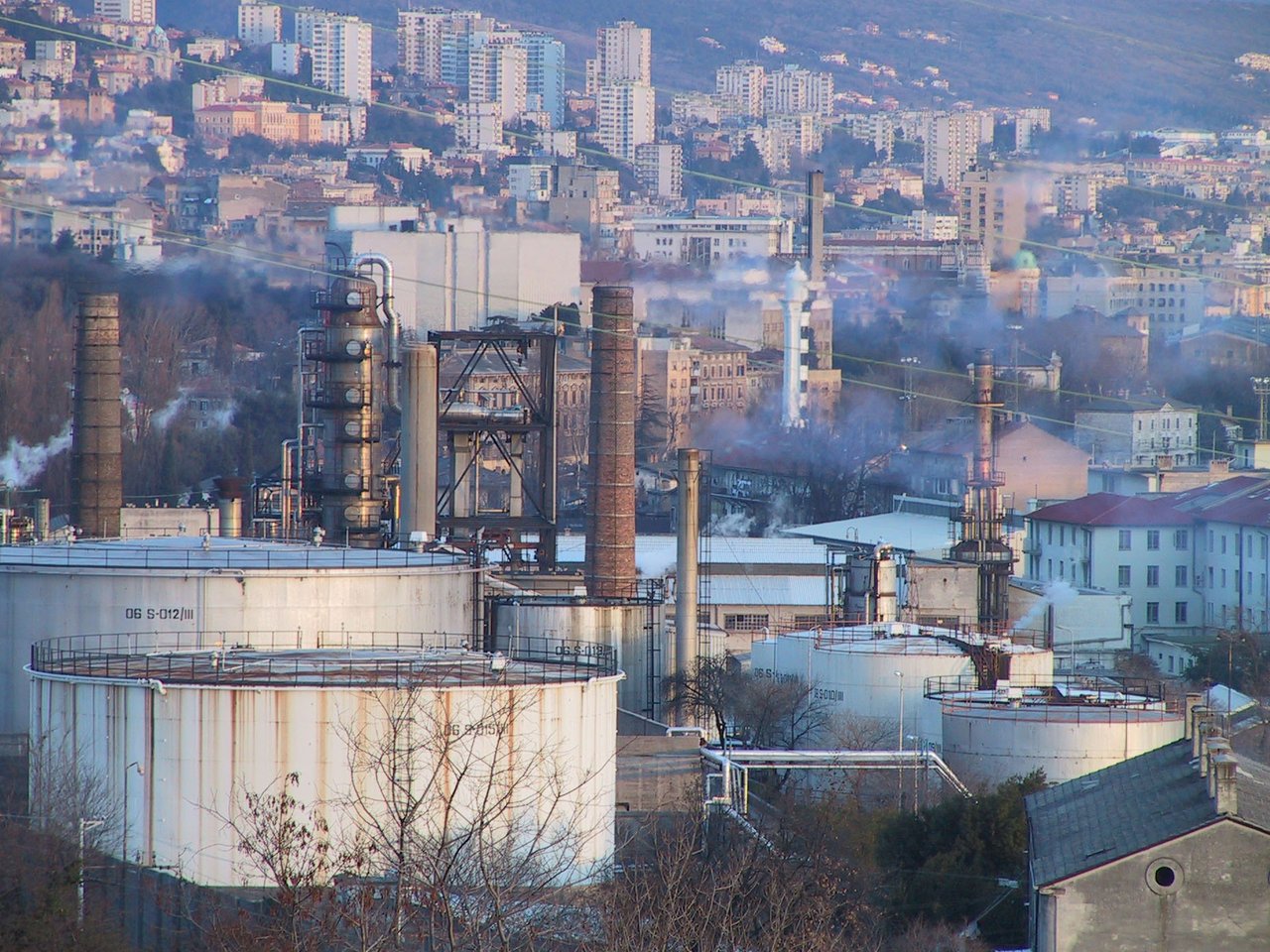
In such circumstances, Ina launched a new heavy residue processing facility at the Rijeka Oil Refinery. The project, worth nearly 700 million euros, the largest single investment in the company’s history, was completed and presented in March, while fuel production at the new DCU facility began on September 1.
The facility has been operating continuously since then and currently reaches about 70 percent of its designed capacity. Ina states that it will contribute to the profitability of the refining business.
– The total capacity of the refinery depends on the type of oil that is available for processing at any given time, and if it is heavier types of oil, it can amount to up to four million tons per year. Thanks to the DCU facility, it is expected that up to 30 percent more diesel, or up to 400,000 tons more annually, can be produced from the same amount of crude oil. The refinery also gains the ability to process heavier types of oil, which allows for greater flexibility in raw material procurement – Ina responded to Lider’s inquiry.
They added that all key products were produced in accordance with the prescribed specifications, confirming the successful launch of the facility.
The new unit allows for the processing of heavy residues that previously had lower market value into diesel and other more valuable products. At the same time, the need for importing vacuum gas oil, known by the acronym VGO, which was used as an additional raw material in processing, is eliminated.
Theoretical potential of $283 million
Thus, the Rijeka refinery has found itself in a favorable position precisely at the moment of the European diesel shortage. An increase in production of 400 thousand tons per year corresponds to approximately 2.98 million barrels of diesel.
How much this additional volume could be worth is shown by a simple, but purely illustrative calculation. The European diesel crack reached about $95 per barrel. If such a high difference were hypothetically maintained for the entire year and applied to 2.98 million additional barrels, it would yield an amount of approximately $283 million.
However, this amount cannot be equated with additional revenue, let alone with Ina’s profit. The crack spread is merely a simplified indicator of the gross difference between the market value of diesel and the price of crude oil. It does not include costs of energy, processing, labor, maintenance, logistics, and financing, nor does it take into account the value of other products that could be obtained from the same raw material.
Thus, it is a representation of the scale of current market margins, not a forecast of Ina’s business results. The actual benefit will depend on how quickly the new facility reaches full capacity, its operational availability, procurement price and type of crude oil, and how long European refining margins will remain elevated.
Rijeka will not be the largest, but it is becoming more competitive
The Rijeka refinery will not become the largest European diesel producer because of this. In Europe, there are several refineries whose capacity is multiple times larger, including large complexes in Rotterdam, Antwerp, Karlsruhe, and the German Rhineland.
The advantage of Rijeka is that it can obtain a larger share of more valuable products, especially diesel, from a relatively limited processing capacity. By processing heavy residues, the depth of processing increases, and the ability to use heavier types of crude oil gives Ina greater flexibility in procurement.
Thus, Ina has transformed a relatively small regional refinery into a facility that can extract significantly more of the derivative that Europe currently lacks from the same amount of crude oil. Rijeka will not be the largest diesel refinery in Europe, but after modernization, it is becoming one of the more technologically advanced high-conversion refineries in this part of Europe.
When the new facility operates at full capacity, the installed processing capacity of the Rijeka refinery should reach up to four million tons of crude oil per year. Ina states that about two million tons of produced derivatives are sold on the Croatian market, while the rest is directed towards export markets.
Additional production should reduce the need for importing derivatives, primarily diesel, to supply Croatia and the region, especially during the tourist season when demand peaks. As key regional markets, Ina cites Bosnia and Herzegovina, Montenegro, and Slovenia.
In Bosnia and Herzegovina, the company sold 695 thousand tons of derivatives last year, while sales in Slovenia increased by 43 percent. Therefore, the new heavy residue processing facility not only brings Ina greater security of domestic supply but also greater export potential precisely at a time when Europe is lacking diesel.
Rijeka has already had a record year
For the Rijeka Oil Refinery, 2025 was a record year for crude oil processing. With operational availability exceeding 96 percent, it processed a record three million tons of crude oil, surpassing the previous record from 2010.
The total production of all types of fuel in 2025 amounted to 3.7 million tons, of which 972 thousand tons were gasoline and 1.45 million tons were diesel. Gasoline production was 62 percent, and diesel 42 percent higher than the previous year.
The beginning of 2026 was marked by a shorter planned overhaul, and total refinery processing in the first half of the year amounted to 1.566 million tons.
The new facility is now further changing the production structure. If the global diesel shortage and high refining margins persist, the investment of nearly 700 million euros could start yielding business benefits in a significantly more favorable market moment than was expected when the project was initiated.