Home / Comments and Opinions / Your Brand Between Sarma, Eyebrows, and Protests in Lika

Your Brand Between Sarma, Eyebrows, and Protests in Lika

<p>Nenad Vukušić opinion</p>
Nenad Vukušić opinion / Image by: foto

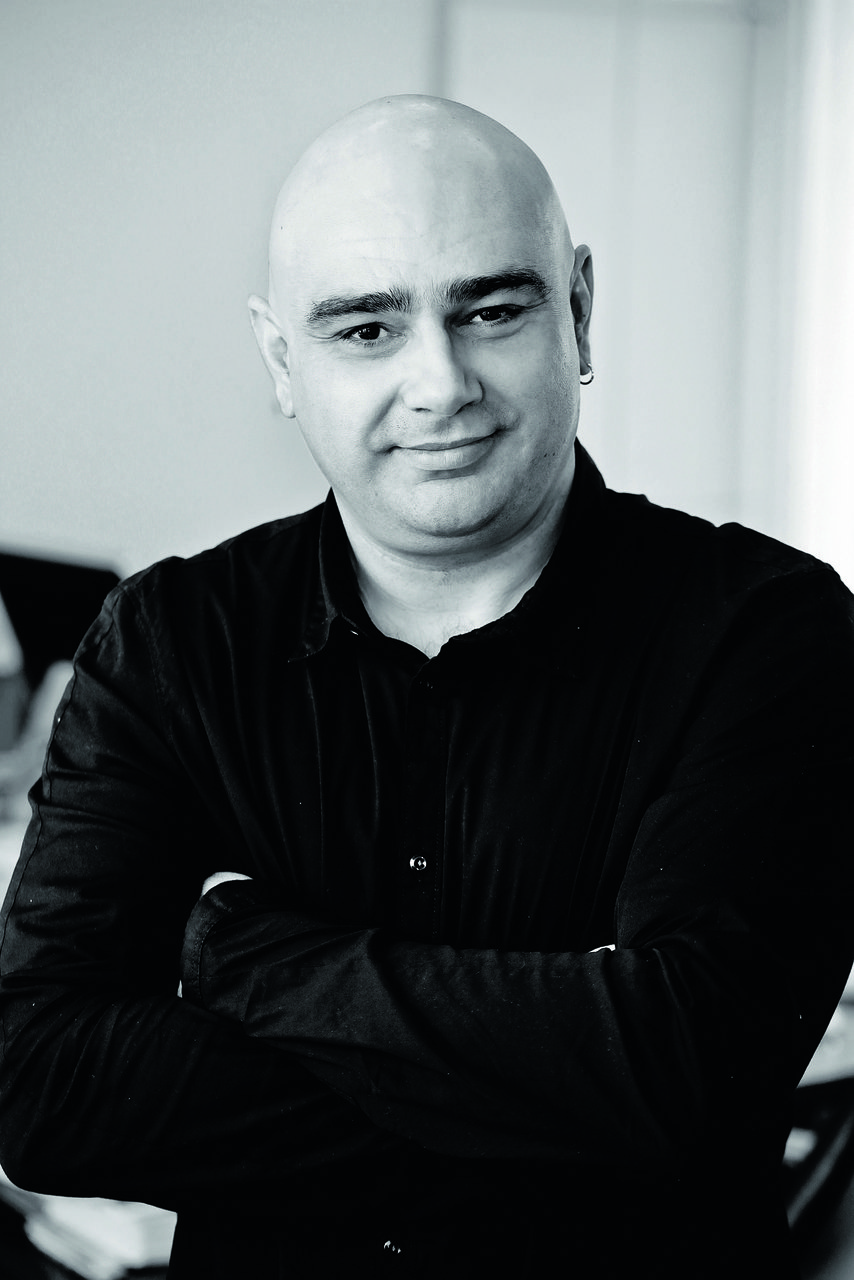
Written by: Nenad Vukušić

Ever since Don Draper sipped bourbon, marketing has been reduced to ‘define who you are talking to, what you want to say to them, and where you will find them.’

In the meantime, we have received social networks, the internet, and, in the latest wave, recommendations from artificial intelligence. No one stares at a single television with X programs, with slots for advertising messages, but each of us has our own screen, two or three on which we follow countless channels where the program is not chosen by editors, but by algorithms. Everyone in their own soap bubble watches what the algorithm has recognized as their topics: dogs, cats, recipes, sports, right-winging, left-winging, travel, vinyl, or whatever interests an average person between the ages of 15 and 75.

Algorithms do not literally choose the content that will be produced and reach us, but they do so through a reward system that increases the likelihood that an influencer will create more of what works. If we watch an influencer and they realize in their analytics that people love it most when they wear a red hat and insult the police, he or she will produce more such content because it provokes the most reactions and encourages audience engagement.

Algorithm Bubbles

Research on recommendation systems clearly describes the mechanism in which engagement is used as a signal to predict content that will hold users’ attention. The idea that we can predefine one audience, one message, and one desirable way in which the brand will be interpreted is becoming less and less sustainable. It worked relatively well in the earlier phase of social networks when the dominant model was gathering followers and distributing to them, but algorithms have fragmented media like never before. Social networks are becoming less social. Look at TikTok. Everything has become entertainment. There is no longer even the semblance of control over how your brand asset will be displayed somewhere. Any message can end up in front of people you did not expect, in a context you did not choose: wedge between a recipe for sarma, instructions for applying artificial eyebrows, and an article about protests in Lika.

I see Nike between sarma and eyebrows.

You see Nike between vinyl and Trump.

She sees Nike between Pilates and Gaza.

The context is constantly changing, and your signal must remain recognizable.

And while we marinate in our algorithm bubbles, the foundations of mass advertising are melting away: a common language, shared moments, and clichés. True, we still have ‘Eurovision’, Netflix, and Taylor Swift, but we increasingly strive for a small, isolated algorithm bubble filled only with things we like. Let’s add the awkward circumstance that your brand is increasingly reaching people as a reflection of the voice/brand of the creator, reviews, comments on Reddit, some activation in your community. Each of these messages is expressed in a different tone. Some hate your brand, some adore it, some find it expensive, others dislike the color. You can still buy distribution, own a channel, earn coverage. But the boundaries are becoming porous.

An creator receives a brief, creates content, the algorithm organically spreads it, Reddit comments on it, someone makes a parody, Google indexes the discussion, AI then synthesizes all of this into a response.

What is that? Paid? Earned? Social? Search? PR? All of the above?

It is an amusing paradox that algorithms simultaneously fragment the audience and homogenize content. A million different feeds pouring out the same hooks:

Three things I wish I knew before…

Nobody talks about this…

I tried X so you don’t have to…

The Question of a Million Influencers

And here lies the question of a million influencers: how to be compatible enough with the algorithm to be distributed, yet different enough for people to remember you? For that, you do not need a holy brand book of 83 pages that prescribes every expression, but grammar – a relatively small set of stable rules from which an infinite variety of expressions emerges. Creator A will have their version, a second will emerge on Reddit, a third and fourth on TikTok, a user review will provide a fifth, AI will synthesize a sixth, and the brand itself will represent a seventh.

Algorithmic distribution has not killed the need for a strong brand. It has killed the illusion that a strong brand means complete control.

The less you control the context, the more clearly you must define the code.

Tagged: