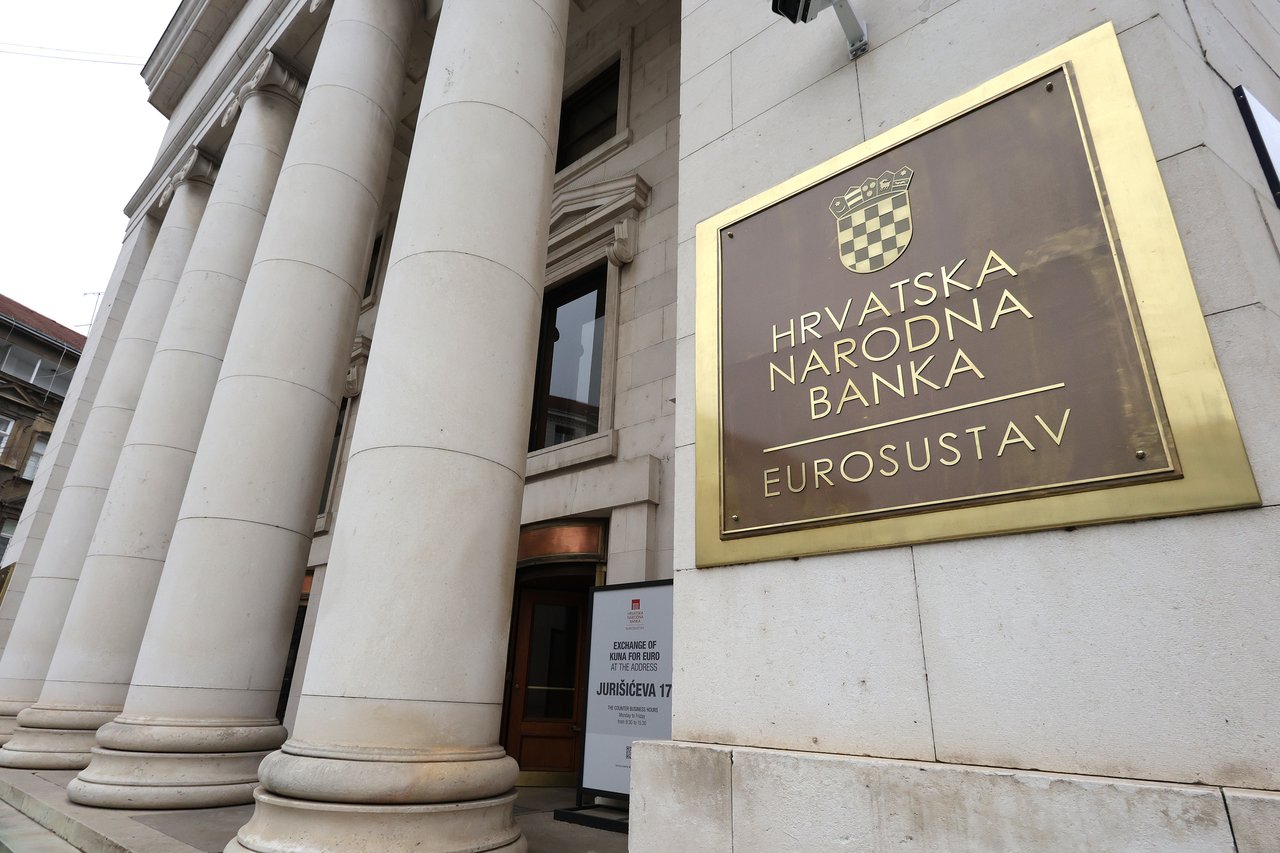
In its latest autumn macroeconomic forecasts, the Croatian National Bank (HNB) estimates that this year’s growth of the Croatian gross domestic product (GDP) will reach 2.4 percent, the same as in its projections published in June, while inflation is expected to slow to just over four percent, and gross wage growth could amount to 8.3 percent.
As they add, economic growth will be achieved with a slightly higher contribution from foreign demand and a somewhat smaller contribution from domestic demand to total growth than in the June projection.
– Compared to 2025, growth is visibly slowing down, reflecting weaker domestic demand, partly linked to the adverse effects of the war in Iran on economic activity, especially through rising energy prices and deteriorating confidence, as well as slower growth of real incomes and a more restrictive fiscal policy – they state on Tuesday from the central bank. Let us recall, in 2025, economic growth was 3.4 percent.
The HNB emphasizes that after very weak growth in the first six months of this year, an increase in activity is expected in the second half of 2026, in line with a significant strengthening of retail and industrial production in July, further strong income growth associated with a robust labor market, as well as the expected intensification of the use of EU funds by the end of the year.
The expected strengthening of growth in the second half of the year should result in a so-called positive transfer effect, so the growth rate in 2027 could be similar to that in 2026, despite expectations of a slightly weaker quarterly growth profile. In 2028, the continued slowdown in real income growth and slightly weaker use of EU funds could result in a mild slowdown in economic growth, they note.
Reduced Inflation Projections
Inflation, according to the latest projections from the HNB, could be slightly above four percent this year, after which a gradual decrease is expected. Let us recall, in the June forecast, they expected inflation of 4.9 percent.
Despite the strong rise in energy prices, the average annual inflation rate measured by the harmonized index of consumer prices (HICP) could slow to 4.1 percent, down from 4.4 percent recorded in 2025, the central bank states.
– The slowdown in inflationary pressures is influenced by the slowdown in domestic demand and wage growth, subdued growth in foreign demand for tourism services partly linked to the already achieved high price levels, as well as weaker import pressures, which include import prices of food raw materials on the global and European markets. Assuming a gradual decline in energy prices, continuously restrictive fiscal policies, and weakening domestic demand, further declines in inflation are expected in the projection period, and it could drop to 2.8 percent in 2028 – they emphasize from the HNB.