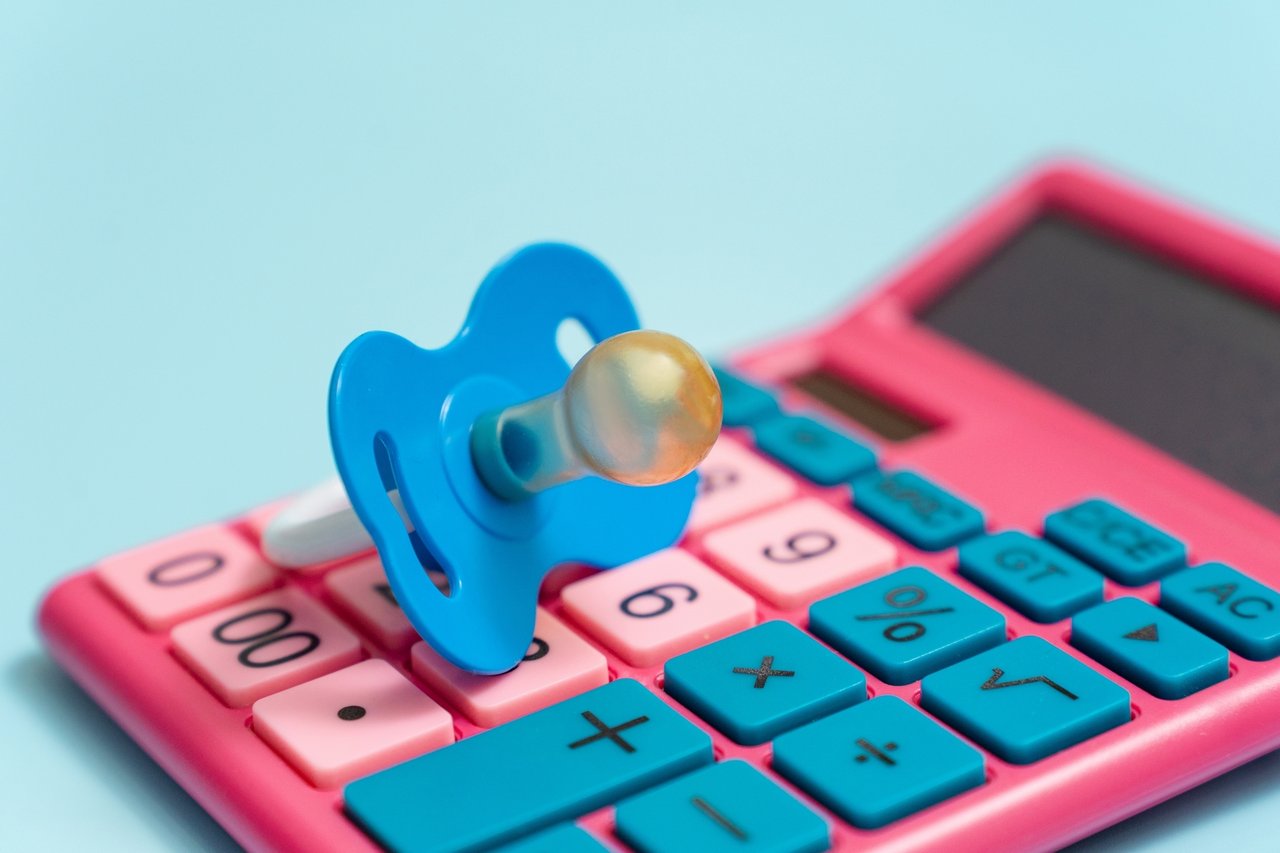
The arrival of a child changes almost every part of family life, and one of the first impacts is felt on the household budget. Diapers, wet wipes, formula, baby strollers, car seats, cribs, and clothing may not individually seem like dramatic expenses. However, when the quantities of products that should be purchased for a child during the first year, according to estimated needs, are summed up, the bill in Europe rises to several thousand euros.
A new Remitly analysis shows how much this amount varies among European countries. Prices of 14 basic products from six categories were compared: changing supplies, bottles, formula, sleeping equipment, transportation, and clothing.
This is a standardized basket created according to American consumer habits, so the listed amounts do not represent the actual consumption of every family. For example, the basket includes formula for all 12 months, 2,910 diapers, 7,800 wet wipes, and a total of 120 bodysuits, one-piece garments, or pants. Remitly sought more affordable, rather than more expensive branded products in stores, supermarkets, and online pharmacies. Therefore, the results should primarily be viewed as a price comparison among countries.
According to prices from June 2026, the annual cost of such a basket in 38 observed European countries ranges from 2,813 to 6,294 euros, while the average is 4,727 euros.
Difference Greater than 3,400 Euros
The most expensive is Spain, where the basic necessities for the first year of a child’s life are estimated at 6,294 euros. At the opposite end of the scale is the United Kingdom with 2,813 euros, so the difference between the most expensive and the cheapest country exceeds 3,400 euros.
Along with Spain, four other countries exceed the 6,000 euro mark. In the Netherlands, the basket costs 6,140 euros, in Finland 6,066, in Sweden 6,025, and in Switzerland 6,018 euros.
The next large group falls between 5,000 and 6,000 euros. This includes, among others, Luxembourg, Italy, Lithuania, Albania, Serbia, and Montenegro, with a range from 5,665 euros in Luxembourg to 5,004 euros in Iceland. Thus, some of the richest European countries and countries with significantly lower incomes fall into the same price category.
Germany, at 4,701 euros, is practically at the average of the 38 observed countries, while France is slightly cheaper, at 4,393 euros.
Croatia Fifth Cheapest
According to nominal prices, Croatia is among the cheapest countries covered by the analysis. The standardized basket for the first year of a child’s life is estimated at 3,661 euros, which is 1,066 euros less than the average of all 38 countries.
Only Latvia at 3,392 euros, Romania at 3,385, the Czech Republic at 3,211, and the United Kingdom at 2,813 euros are cheaper. Thus, Croatia is the fifth cheapest country on the nominal cost ranking.
However, the price on the bill tells only part of the story. When this amount is compared to domestic salaries, the Croatian advantage is no longer so significant.
Therefore, Remitly compared the cost of basic necessities with the average annual earnings of employees, using data from the International Labour Organization. This comparison included 36 countries, and the average cost of the basket corresponds to 20.9 percent of the average annual earnings.
In Croatia, the cost of 3,661 euros corresponds to 13 percent of the average annual earnings. This is significantly less than the average of the observed countries, but it does not place Croatia among the countries where purchasing these products is the least burden on the household budget.
For example, in Slovenia, the same basket corresponds to 11.7 percent of annual earnings, in the Czech Republic 11.1 percent, in Germany 8.1 percent, and in Austria 8.2 percent.
On the other hand, the burden in Croatia is significantly less than in Romania, where the basket corresponds to 18.9 percent of annual earnings, in Poland at 22.8 percent, Bulgaria at 25.8 percent, Slovakia at 31.7 percent, Hungary at 34.6 percent, Bosnia and Herzegovina at 36.1 percent, and Serbia at 41.4 percent.
Cheaper Basket Does Not Mean Easier Expense
The comparison with salaries shows how misleading nominal prices can be. The most pronounced example is Moldova. There, the standardized basket costs 4,143 euros, significantly less than in Spain, the Netherlands, or Switzerland, but this amount corresponds to as much as 88.8 percent of the average annual earnings.
In Albania, this share is 66 percent, in Turkey 45.1 percent, in Montenegro 45 percent, and in Serbia 41.4 percent. In Bosnia and Herzegovina, it is 36.1 percent, in Portugal 35.7 percent, and in Hungary 34.7 percent.
At the other end of the scale is Belgium. There, the basket costs 4,084 euros, which is more than in Croatia, but it constitutes only 5.4 percent of the average annual earnings. In Luxembourg, the share is six percent, in Denmark 6.7 percent, in the United Kingdom 7.5 percent, and in Norway 7.6 percent.
In Ireland and Switzerland, the cost corresponds to eight percent of the average annual earnings, in Germany 8.1 percent, Austria 8.2 percent, France 8.5 percent, Malta 8.9 percent, and the Netherlands 9.4 percent.
A good example of the difference between price and actual burden is Spain. Although it has the most expensive basket in the entire comparison, at 6,294 euros, it corresponds to 17.1 percent of the average annual earnings. Therefore, the data on how much something costs at the checkout is not sufficient to conclude how burdensome that expense is for the family budget.
Most Spent on Clothing, Milk, and Diapers
Three categories make up the largest part of the standardized annual basket. Clothing contributes an average of 30.3 percent, formula 25.7 percent, and diapers and other changing supplies 24.5 percent. Together, they account for as much as 81 percent of the total observed costs.
On average, 1,465 euros are spent on children’s clothing during the year, 1,187 euros on formula, and 1,152 euros on diapers and related supplies. In total, this amounts to 3,804 euros.
The structure of the basket varies significantly among countries. Clothing in Denmark makes up only 16 percent of the total amount, while in Sweden it reaches as much as 52.5 percent. Its share is over 45 percent in the Netherlands, Finland, and Ireland.
Formula constitutes only 10.8 percent of the cost in Sweden, but as much as 41.3 percent in Latvia. Its share exceeds 35 percent in Turkey, Denmark, and Hungary. The range for diapers is also large: in Turkey, they account for 12.4 percent of total costs, while in Switzerland and Belgium, their share exceeds 36 percent.
Nurseries and Kindergartens Not Included
The comparison only includes selected products for the first year of life. Costs of childbirth, healthcare, food other than formula, medications, childcare, nurseries, and other forms of organized care are not included.
How high childcare costs can be is shown by a separate OECD comparison for families with two children aged two and three who spend full-time in early childhood and preschool education institutions.
According to data for 2023, gross annual allowances in Switzerland reached 64,211 euros, while the Netherlands had the highest amount among EU members at 39,229 euros. In Germany, the comparable amount was only 552 euros, and in Croatia 1,911 euros.
When tax breaks, subsidies, and other state support are taken into account, the picture changes again. The net annual cost in Switzerland was 10,200 euros for a household with one employed parent and 27,551 euros for a couple where both parents work. The OECD considers net cost to be the reduction of available family income after accounting for allowances, tax breaks, and other support related to childcare.
Therefore, Remitly’s analysis does not show how much it ultimately “costs to have a child,” but rather how much the same, predefined group of products costs in different countries. The result for Croatia is nonetheless significant: children’s necessities are nominally among the cheapest in Europe, but this advantage diminishes when prices are compared to salaries. Because 3,661 euros is not the same burden on the Croatian household budget as six thousand euros for a household in one of the richest European countries.