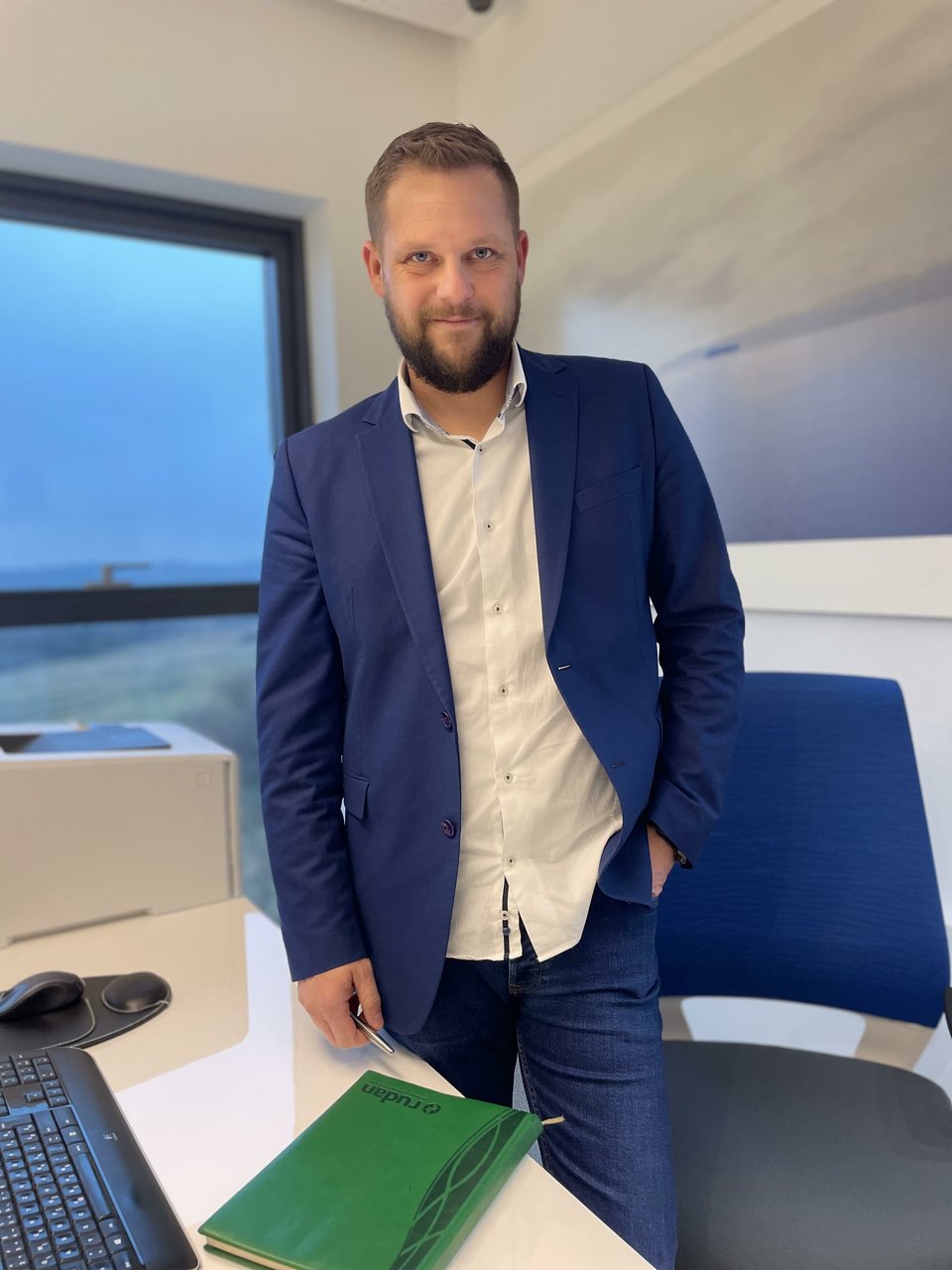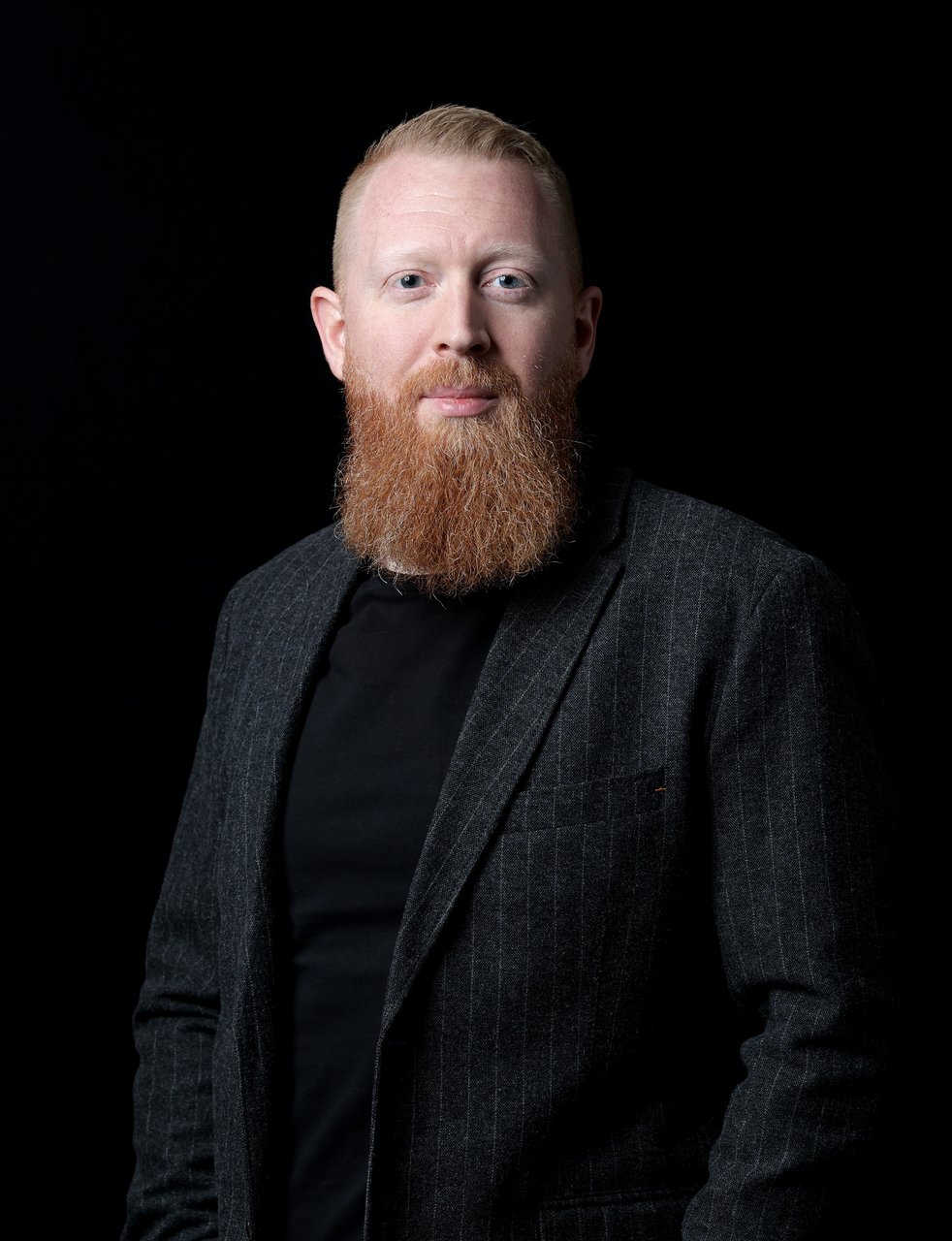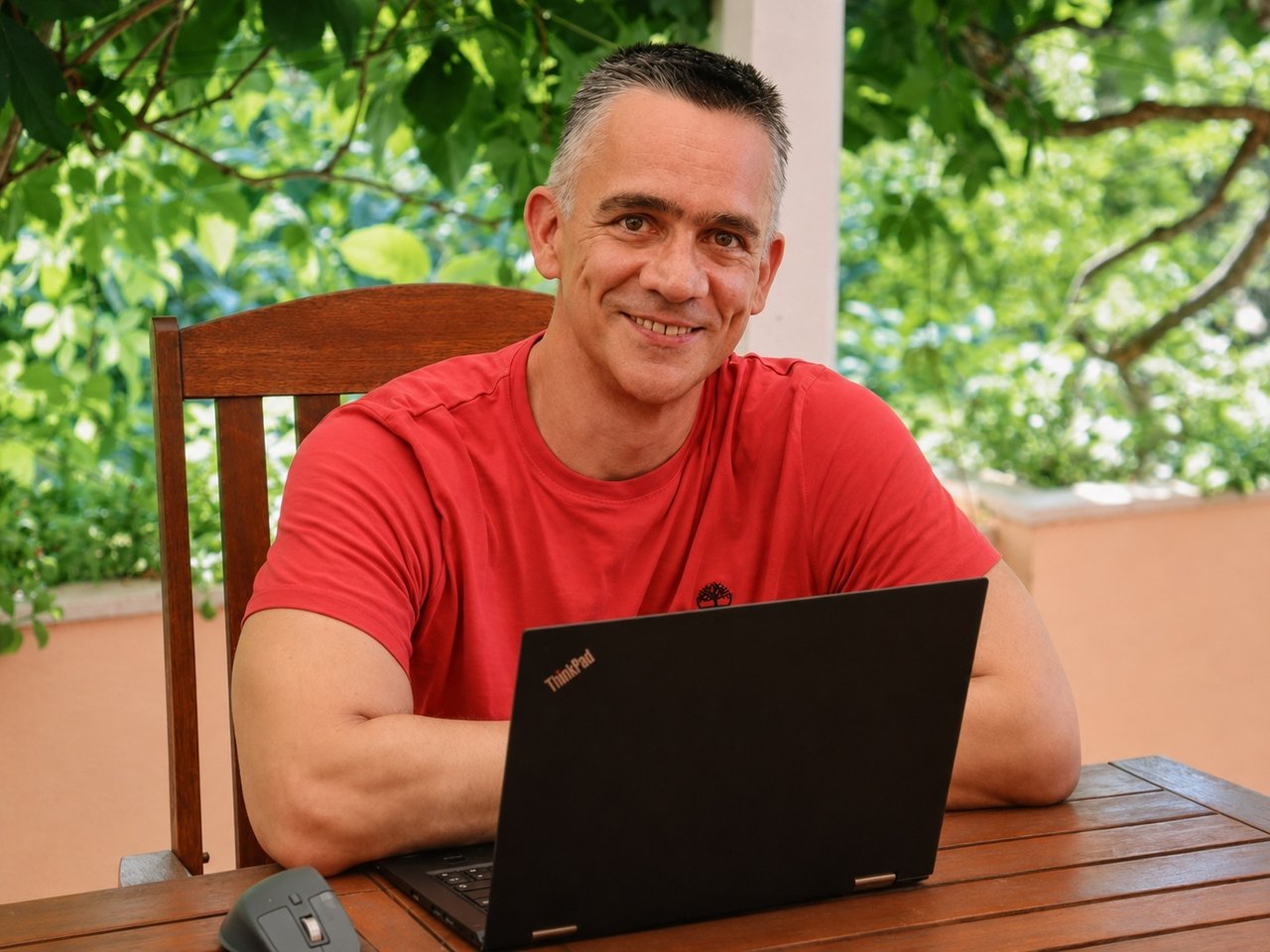
Sven Darrer is not a typical entrepreneur. Under the umbrella of his company, he currently combines four business areas that are quite different: dietary supplements and phytopharmacy, education and development of communication skills, tourism, and sustainable solutions for food waste management. However, he did not enter entrepreneurship with a plan to one day have a company operating in four different segments. He diversified gradually, over more than two decades of gaining experience, and each new area mostly arose from problems he identified in the market.
The largest part of his current business is in the waste management segment. D-Organic, the brand of devices for aerobic digestion of food waste, accounts for as much as 60 percent of the company’s revenue. Last year, it generated €395,496, an increase of 16.59 percent compared to the previous year. For this year, Darrer does not expect a dramatic jump; he would be satisfied with a slight increase.
– I don’t think the company needs to grow at double-digit rates every year. What matters to me is that the business is healthy and sustainable and that we have room for long-term development – says the entrepreneur.
Entrepreneurial family
For a small company, any growth simultaneously means new costs, organizational demands, and the need for additional people. For this reason, he does not want to increase revenue just for the sake of growth, but primarily when there is a business reason for it.
Darrer has been in entrepreneurship for 22 years, but his business lessons began much earlier. He grew up in a family that was engaged in photography, so from an early age, he observed how a small business operates, where creativity, clients, employees, and money must all be considered simultaneously. Photography, he says, was his first school of entrepreneurship. The business required following trends, adapting to the market, and constantly seeking new ways of working. Along with the creative part, it was necessary to organize processes and manage people daily.
– I grew up in a family that ran its own business, and practically everyone was involved. I learned very early that you have to recognize the problem yourself, find a solution, and organize the business – he says.
Before starting his own company, he worked in several large domestic companies. His experience from the family business was thus supplemented by working in larger systems, especially in sales, management, and client relations. Sales became one of the links between all his business areas. However, he entered entrepreneurship primarily to solve problems.
– When I think about a new business, I first ask what problem exists and whether we can solve it. Only after that do I ask whether there is a business opportunity in it – he explains.
Today, he runs the company with his wife, but he leaves most of the work to external collaborators. Sales, graphic design, transport, shipping, and other activities are taken over by partners as needed. This model allows him to maintain flexibility without creating large fixed costs.
Products with a clear purpose
The first business he started to build his own company was related to dietary supplements. In collaboration with a foreign company, he developed the market for products aimed at women’s health. Over time, he assessed that there was room for his own production concept. Thus, Femmi Plus was born, a brand that today encompasses Femmi MACA, Femmi GOLD, and Femmi INOSITOL.
The formulations in the company are developed in-house, and the raw materials are sourced and produced in Croatia. In product development, quality and safety, transparency of composition, origin of raw materials, and reliability of manufacturers are important to Darrer.
– When we develop a product, it is important for me to know what is in it, where the raw materials come from, and whether I would choose it for myself or my family – he notes.
He applies similar criteria when selecting foreign partners and products to include in the portfolio. He does not want to have as many items as possible just to broaden the offer. The product, he claims, must have a clear purpose, market potential, and the possibility of long-term development.
The second branch of the business is tourism. Darrer launched ‘Hello Zagreb‘, a tourist guide and project aimed at visitors to the capital. Later, it expanded to the coast as part of the ‘Hello Croatia‘ project with editions for Poreč, Rovinj, Opatija, Split, and Dubrovnik.
However, the coastal part of the business did not retain long-term. After two years, he decided to concentrate on Zagreb, where ‘Hello Zagreb’ continued to be published in various seasonal editions. In 11 years, 74 editions have been published, and guides and tourist maps have been distributed at high-traffic tourist locations, including the main city square and tourist information centers. Through his work in the tourism sector, Darrer came into contact with hotels, restaurants, the nautical sector, and other business clients. At that time, he began to notice a problem that is not visible to tourists but is concrete for those who prepare large quantities of food daily: what to do with the leftovers?
Solving the problem
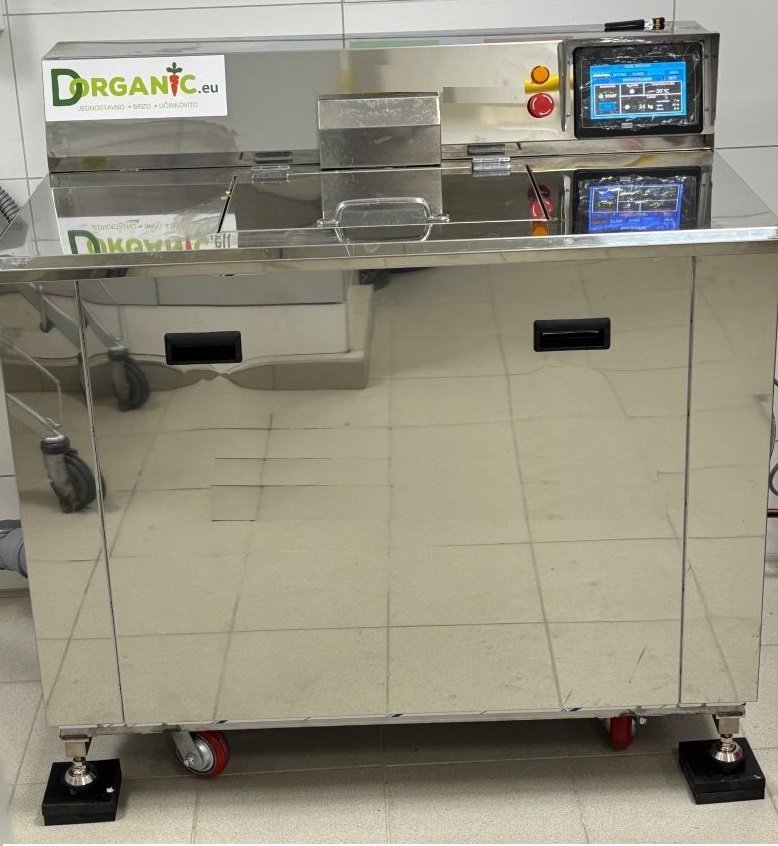
Brown bins, unpleasant odors, insects, and frequent pickups were part of everyday life. Food waste was thus not only an ecological issue but also a logistical and cost one. Darrer began looking for a way to solve part of the problem at the source of the waste. Through research, he came across aerobic digestion and devices that allow for the processing of food waste within the facility. Thus, D-Organic was born.
– This was, in fact, a natural continuation of what I was already doing. In tourism, I saw a problem, started looking for a solution, and came to the technology that we then began to develop in the market – he says.
D-Organic distributes devices from a South Korean manufacturer. Darrer does not produce them; rather, he ensures distribution and provides support to users. Croatia is currently the main market, and in other countries, the business is developing with the help of local distributors and partners. Darrer provides partners with materials and initial support, and they open the market, sell devices, and over time can independently take over installation and user support. The technology is intended for hotels, restaurants, hospitals, nursing homes, kindergartens, and other facilities that produce larger quantities of food waste.