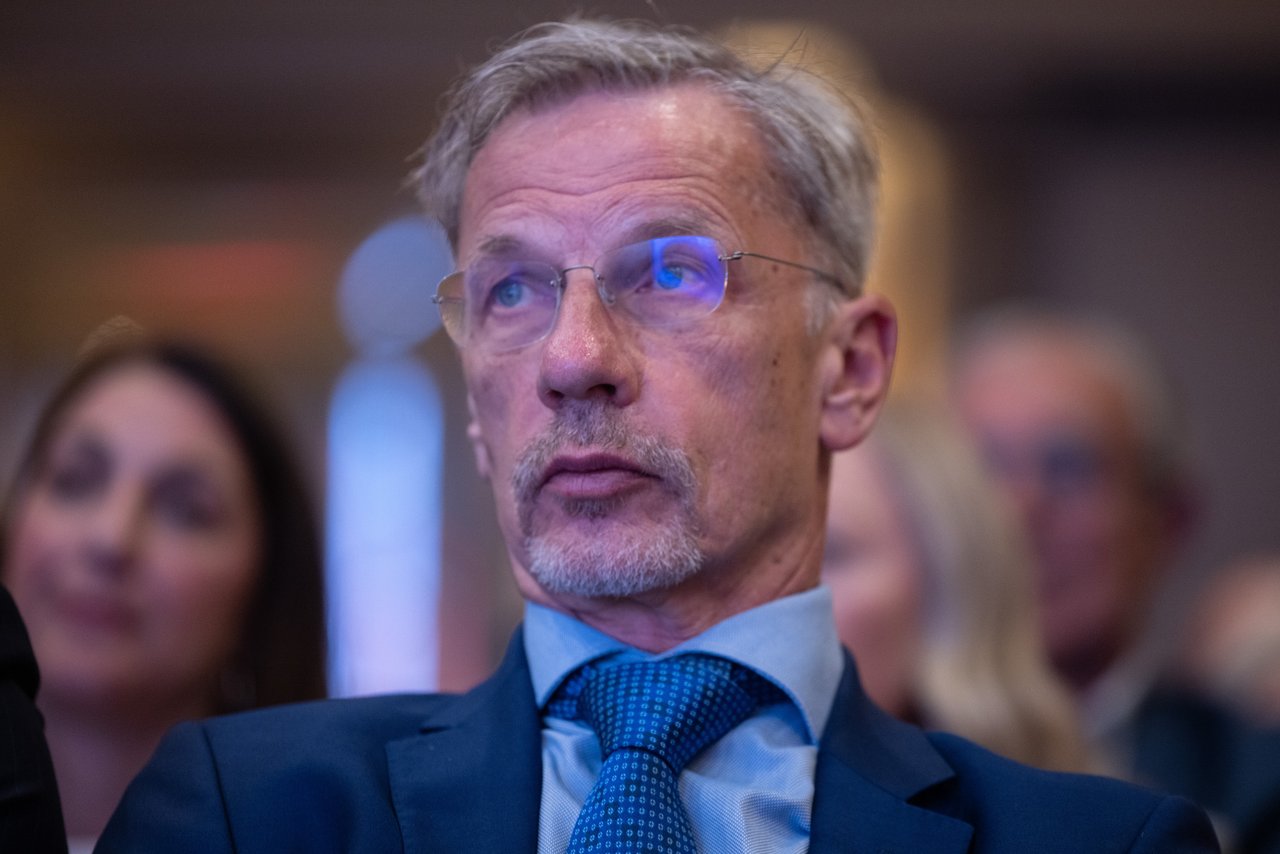
Market expectations regarding further increases in interest rates by the European Central Bank (ECB) are primarily driven by higher energy prices, but monetary policymakers will consider a significantly broader set of economic indicators when making decisions about their next moves, said ECB Vice President Boris Vujčić to Reuters.
Investors have recently raised expectations for new interest rate hikes by the ECB after the eurozone central bank raised borrowing costs last week, while the escalation of conflict in the Middle East has pushed fuel prices higher in the eurozone.
Vujčić, a member of the ECB’s Governing Council, warned that such expectations should not be based solely on oil and gas prices.
– Market expectations regarding interest rate movements are mainly driven by rising energy prices. I want to emphasize that we do not only look at energy prices, but a much broader set of data and criteria when making monetary policy decisions. It would not be good to focus exclusively on energy prices, no matter how important they are – said Vujčić.
Resilient Economy Faces Certain Risks
Vujčić, who was the governor of the Croatian National Bank before becoming ECB Vice President in June, stated that persistently high energy prices could not only raise inflation but also weaken economic growth by putting pressure on household incomes and consumption.
– If inflation remains high during the autumn and affects household incomes and consumer behavior, it will also have a negative effect on GDP – he said.
He added that a cold winter could further worsen the situation due to higher heating bills. At the same time, he highlighted that the eurozone has reduced its dependence on natural gas over the past four years, making low inventory levels a lesser threat today than after Russia’s invasion of Ukraine in 2022.
The economy, he added, has proven to be more resilient than expected, primarily due to exports, with buyers likely having made some purchases earlier than originally planned, and private consumption is expected to remain “reasonably strong.”
ECB Could Maintain Current Pace for Now
The ECB raised its key interest rate from 2.0% to 2.50% in two steps, in June and September, along with updated quarterly projections. Vujčić believes that such a pace is worth maintaining for now.
– We will see what happens in the coming months and adjust monetary policy accordingly – said Vujčić.
Money markets are currently pricing in three or four more interest rate hikes by the end of next year, with the next one possibly occurring as early as October. This could bring the deposit rate to 3.25% or 3.50%.
The ECB has described an interest rate above 2.50% as restrictive, meaning a level that hinders economic growth. Vujčić stated that the ECB should not focus too much on such labels but rather “assess what level of interest rates is appropriate at a given moment.”
He also opened the possibility of increasing the requirements for banks’ mandatory reserves as a way to withdraw part of the excess liquidity from the system. This excess liquidity has arisen as a result of the accommodative monetary policies of the past decade, costing euro area central banks billions of euros each year in interest payments.
– When you create excess liquidity, especially to such an extent as we have done in the past, the requirements for mandatory reserves allow part of that liquidity to be sterilized in a simple and inexpensive way – he said.
He added that he prefers such a solution over alternatives, such as introducing fees or re-establishing a “complicated” system of multiple interest rate levels, where no interest is paid on part of the deposits.
Signals from Bond Markets Call for Fiscal Discipline
Yields on government and other bonds worldwide have reached their highest levels compared to the pre-financial crisis period, under pressure from higher inflation and interest rate expectations, as well as significant borrowing needs from governments and technology companies.
Vujčić stated that these movements do not pose a threat to financial stability as banks in the eurozone are well-capitalized and have sufficient liquidity.
However, he warned that governments should keep public finances under control.
– Over time, if inflation expectations decrease, we could see a repricing in the market. But responsible fiscal policy remains a crucial part of the puzzle in the long term – said Vujčić.