The arrival in Rijeka of one of the most modern specialized RO-RO ships for transporting vehicles, which on August 24 delivered more than a thousand Chinese vehicles directly from Shanghai, officially marked the opening of a new logistics route for Asian car manufacturers to European soil.
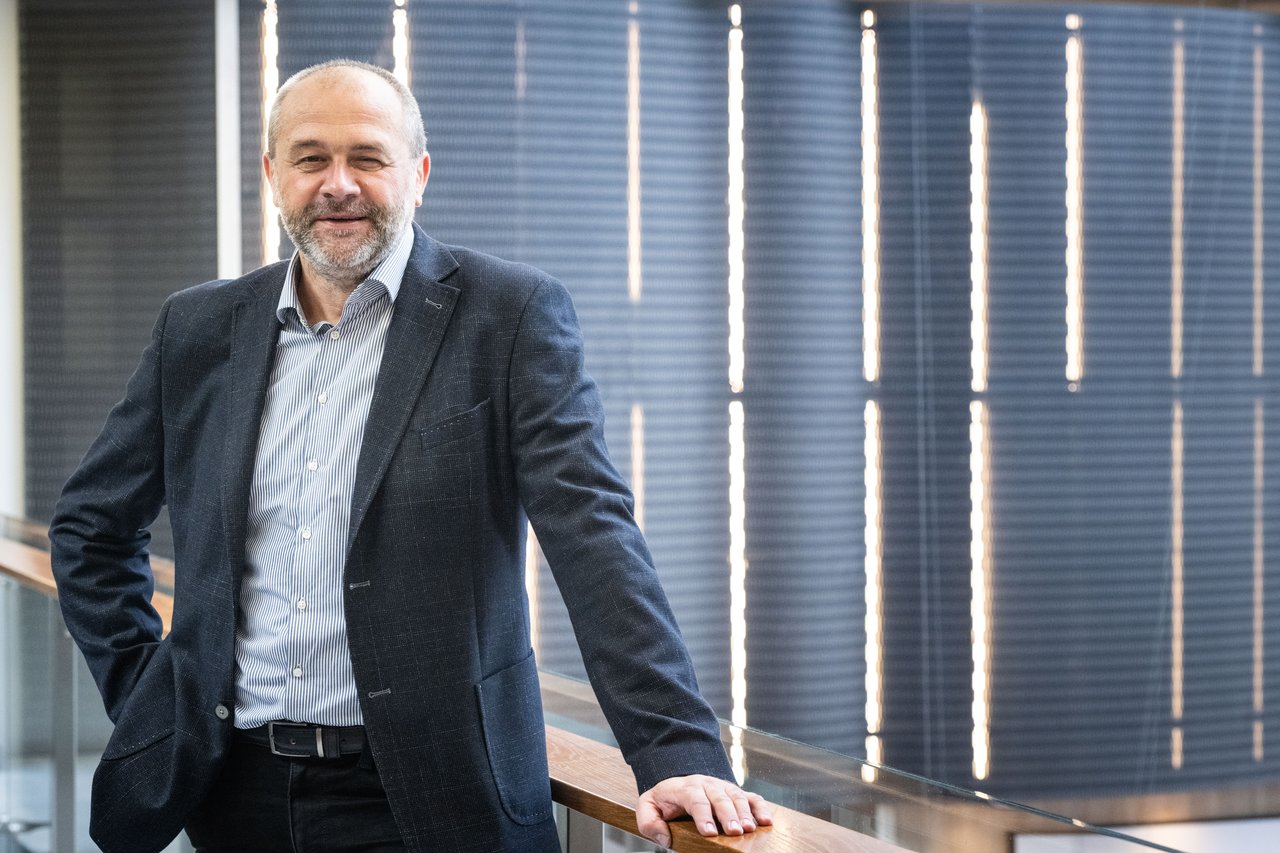
The scale of this logistics surge in Rijeka is best reflected in the data: with 22 thousand transshipped units in the first half of the year, total vehicle traffic by the end of the year will jump to as much as 60 thousand. The main driver of this logistics expansion is Emil Frey Logistics, part of a large European group that imports and distributes cars across Europe. We spoke with its director, Ivan Milković, about how the entire operation started, how it developed, the resistance from competitors, and what the future plans of this automotive logistics provider are.
Automotive logistics in the Port of Rijeka had been lagging behind the competition in Koper or Monfalcone for years, and then a turnaround occurred, and suddenly we are witnessing thousands of cars at the Rijeka docks. What was the turning point for Emil Frey Logistics’ entry into the Rijeka port, and what was your primary motivation for activating this transport route?
– Our initial motivation was purely internal: optimizing the operation of our own fleet. The Emil Frey group is the largest private importer and distributor of cars in Europe, with more than twenty thousand employees and an extensive network in many European markets. Within the logistics segment, we had already developed our fleet of about a hundred specialized trucks that operate exclusively for our members, but since we became active in Croatia and have operations here, we noticed some inconsistencies in the flow of transport routes across Europe. For example, it was incomprehensible to us that dozens of vehicle transport ships, so-called RO-RO ships, were anchored in front of Koper and Monfalcone for weeks, while the Rijeka port had been completely outside these main logistics flows for decades.
What did you then undertake?
– We began gradually taking over the logistics processes: first road transport, then rail in cooperation with carriers like HŽ Cargo, and finally the maritime part. We decided to leverage Rijeka’s geographical position as a natural entry point for the markets of Croatia, Slovenia, Bosnia and Herzegovina, Serbia, Bulgaria, the Czech Republic, Slovakia, Hungary, and Austria. The Emil Frey group is the exclusive importer and logistics provider for a number of markets in Central and Eastern Europe. We bring cars from European and Asian factories for our colleagues in Slovakia, the Czech Republic, Hungary, Switzerland, etc.
The Croatian market, viewed in terms of our group’s revenue, has a share of a modest three to five percent of the total volume, which only meant that Rijeka was not the final destination for those vehicles. Therefore, launching a new shipping route was an important logistical undertaking because shipping companies are reluctant to change established routes unless they are guaranteed a steady volume, efficiency, and competitive conditions. The significance of these long-awaited changes for the domestic transport sector is best illustrated by the fact that HŽ Cargo has not had a locomotive transporting cars to Rijeka for more than thirty years, and the Adriatic Maritime Service in Rijeka has not dealt with the acceptance and towing of specialized RO-RO ships for over two decades.
How is a corridor established to a port that had not previously been on the automotive logistics maps?
– It was quite a challenging project that required a lot of effort and cooperation from various stakeholders. For example, Rijeka was then more expensive than Koper, and we had to resolve that. However, to discuss this, you must first keep in mind one important fact. Italy and Slovenia have held a complete monopoly on automotive logistics in this part of the Adriatic for decades. From southern Italy all the way to Trieste and Koper, a whole network of specialized ports has been built. When we started redirecting Emil Frey’s and Stellantis’ vehicles to Rijeka, operational teams and interest groups in Italy and the neighboring regions exerted tremendous pressure to torpedo the Rijeka project and keep volumes in their ports.
How?
– We managed to resist this and push the project through to completion solely because Emil Frey is an exceptionally reputable group in the automotive world. We leveraged our strength, our position as the largest importer, and strong partnerships to initiate this strategic route through Croatia.
The first cars that arrived at the Rijeka port last year were owned by the Emil Frey Group, and then you continued with the integration of Stellantis vehicles. What does this business collaboration look like?
– Primarily, our road fleet collects vehicles daily from Stellantis’ factories in Spain and Portugal, from Vigo and Mangualde, where commercial vehicles like Berlingo, Partner, and Doblò are produced, as well as from Zaragoza and Villaverde, where C4, 208, and Corsa are produced, and from Tramagal, where the Mitsubishi Fusa factory is located. All these vehicles are transported to the storage terminal in the Spanish port of Tarragona. There, we accumulate them and twice a month load dedicated RO-RO ships that sail directly to Rijeka. From the Rijeka port, the vehicles are further distributed by trains and trucks to the Czech Republic, Slovakia, Hungary, Austria, Slovenia, and Bosnia and Herzegovina.
The second flow we established is already an extremely dynamic line between Turkey, Slovakia, and Rijeka. From the Bursa factory in Turkey, we transport light commercial vehicles three to four times a month via a shipping line from the port of Yalova to Rijeka. To ensure that the ships do not sail back empty, we organized land transport of vehicles from the Slovak factory in Trnava. Every week, we secure 300 to 400 trucks and dedicated freight trains that bring cars produced in Slovakia to Rijeka, from where they are loaded onto the same ships and transported to the Turkish market.
Why are vehicles from Spain and Portugal not transported directly by trucks to Central and Southeast Europe, but instead combine three types of transport: first truck, then ship, and then truck and train again?
– The key is in cost-effectiveness and optimization of empty kilometers. Transporting cars exclusively by trucks over a distance longer than two thousand kilometers, from Portugal to Central Europe, is extremely expensive and environmentally unacceptable. The newly established flow through Rijeka has resulted in a faster, more economical, and environmentally friendly logistics solution, all to satisfy our end customers. Through combined transport, we achieved complete optimization: our trucks drive short and efficient collection routes in Spain and Portugal to the nearest port, and then maritime transport takes over a mass volume of several thousand vehicles at once, drastically reducing the cost per car.
When the ship arrives in Rijeka, our trucks and trains take over the vehicles, which drive shorter distances to Central European countries. With this model, we managed to reduce the share of empty kilometers in our road fleet from the previous 15 to 20 percent to only three to five percent. Thus, we not only preserve margins but also maintain a stable transport price, while drastically reducing carbon dioxide emissions, which is no less important.
Are you planning to further expand these European routes through Rijeka?
– We are constantly expanding the network. We are expanding cooperation with the Gliwice factory in Poland, from where we will bring vehicles to Rijeka by train and truck for export to the Mediterranean. We are also in the final stages of negotiations to redirect part of the production from Kragujevac in Serbia through the Rijeka port for Turkish and other overseas markets.