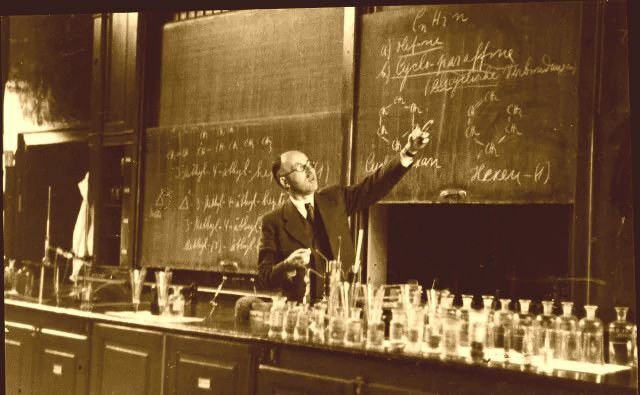
The first Croatian Nobel laureate, chemist Lavoslav (Leopold) Ružička (Vukovar, September 13, 1887 – Mammern, Switzerland, September 26, 1976), gained worldwide fame for his pioneering work on the structure and synthesis of male sex hormones, and the Nobel Prize in Chemistry was awarded to him in 1939 for his research on polymethylene and higher terpenes, compounds that were of great significance for the development of modern organic chemistry, the pharmaceutical industry, and the fragrance industry. His collaboration with the perfume industry provided him with financial stability.
After his education in Osijek and studies in Karlsruhe, Germany, he primarily built his scientific career in Switzerland. He worked at the prestigious ETH Zurich, was a professor at the University of Utrecht in the Netherlands, and then returned to Zurich, where he established one of the most prestigious European schools of organic chemistry.
Connections with Zagreb
Although he achieved his greatest successes abroad, Ružička maintained close ties with Croatia. The University of Zagreb offered him a professorship, and according to available data, he received two offers to work in Zagreb, at the Technical University and at the then Faculty of Philosophy. However, he did not accept them as he believed that the conditions at the time did not provide sufficient resources for serious research work. Instead, he remained in Switzerland, where the scientific infrastructure and funding were significantly more developed.
After receiving the Nobel Prize, he traveled to Zagreb in 1940, where he gave a lecture with the significant title ‘From Dalmatian Flea to Sexual Hormones’. On that occasion, he was elected an honorary member of the then Yugoslav Academy of Sciences and Arts and an honorary doctor of the University of Zagreb.
Perfumes as a Path to Financial Stability
Interestingly, Ružička’s scientific rise was not only linked to the academic world. As a young researcher, he connected with the fragrance and perfume industry, studying terpenes and other natural compounds important for fragrance production. He collaborated with the German company Haarmann & Reimer and later with Swiss perfume manufacturers Chuit, Naef & Firmenich. This collaboration ensured him financial stability and resources for further research work.