Gospić is an extreme case, but it is not the only example of agricultural infrastructure that has become a neglected space for storing or disposing of waste after losing its primary function.
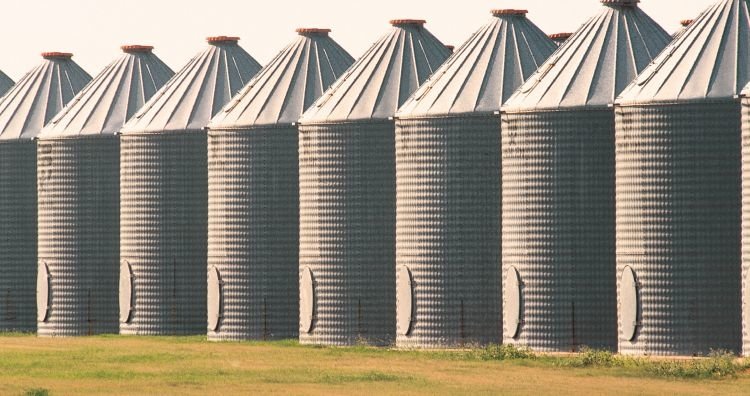
The case of PPK Velebit is extreme and, unfortunately, has become well-known to everyone. It once fed numerous families in Lika. It was characterized by its impressive silo and storage spaces. After decades of decay, it has become a source of fear, pollution, resentment, and a sense of futility in remaining. Agriculture has been destroyed, there is no industry, only waste remains.
In recent months, we have encountered the phenomenon of neglected agricultural plots becoming landfills for supposedly construction waste. The land is excavated, waste is disposed of, and then everything is buried. This phenomenon has been observed at several locations in the Dalmatian fields.
The regional wholesale market in Benkovac was one of the wholesale markets from the national project for building a network of wholesale markets. It was envisioned as a logistics and collection center for agricultural producers from Ravni Kotari, but it never became that. It has been in bankruptcy for years. A significant amount of packaging and disposed plastic waste has been found in the area of the wholesale market.
What Remains After Agricultural Combines
The largest part of agricultural storage capacities was built as part of former agricultural combines. Agricultural combines were the predominant organizational form of agricultural enterprises in Croatia from the 1960s until 1991. The agricultural combine system had serious problems, and many combines were already economically problematic before the 1990s. However, the PIKs had a very important characteristic: vertically integrated infrastructure that encompassed production, procurement, silos, dryers, mills, animal feed factories, processing, and markets.
PIKs connected primary production and processing and cooperation with peasant farms. It is important to emphasize that during the Homeland War, a large part of Slavonia, as well as other parts of Croatia, was occupied, agricultural combines were neglected, markets and livestock were lost, and PIKs suffered enormous war damage.
After their transformation and privatization, some of these capacities continued to operate in new companies, while others remained without production, ended up in bankruptcy, or decayed for years. However, parts of some PIKs and their capacities found their place in the new market environment. Driven mainly by the vision and enormous investments of new owners, they have today become the most valuable part of Croatian agriculture as part of Žito, Osatina, Podravka Agri, and Agro Invest Group.
The transformation and privatization of agricultural companies generally meant a significant reduction in land, in some cases by more than 50 percent. Companies were left without cooperators. With significantly reduced land areas, they retained the same storage capacities. It took years of investment to increase yields, modernize production, introduce new technologies, improve knowledge, and rebuild relationships with cooperators, so today the silos in these companies are optimized. However, some silos have permanently ceased operations, especially in coastal areas.
Silos Are Becoming Strategically Important Again
Croatia has lost a large part of its former systems, but it has not ceased to be a producer of grains and oilseeds. Crop farming is the best segment of Croatian agriculture, in which we achieve yields above the average of EU countries. Agricultural and food companies today record productivity per hectare that can be compared with the best in the EU.
Today, in an era of climate risks, price volatility, and trade disruptions, storage is becoming increasingly important. Those who have storage can wait for a more favorable moment, contract larger quantities, and have a better negotiating position. Silos and storage facilities are part of the competitiveness of agriculture.
In 2017, the European Commission published a study indicating that Croatia has about 15 percent less storage capacity than estimated needs. We produce between 3.5 and 4.2 million tons of grains and oilseeds. We need silos where there is production and where we can connect them with processing and the market. Because a silo without production becomes a burden, but production without adequate storage loses value.
Gospić is an extreme reminder of what can happen when infrastructure loses its economic purpose.