
Home / Business and Politics / The Croatian Business Elite is Too Little Engaged in Expansion and New Markets

The Croatian Business Elite is Too Little Engaged in Expansion and New Markets

Image by: foto Shutterstock

Last year, the top 500 companies increased their newly created value from approximately 18.02 to 18.91 billion euros, or 4.9 percent, thus breaking the historical record for the second consecutive year. However, revenues only grew by 2.4 percent, causing the best to lose the race against inflation of 3.7 percent.

The Best Have Lost Their Breath

Thus, the top 500 actually achieved a real decline in revenues of 1.3 percentage points. Considering that the revenues of all entrepreneurs in 2025 grew by 8.8 percent (realistically 5.1 percent), this could mean that the best have lost their breath, or that they have become complacent, and that they are not sufficiently working on expansion.

It could be said that they are focusing more on polishing business results than on conquering new markets. This has also translated into profit, which has stagnated, or fallen by 0.8 percent, representing a real decline of 4.5 percent. The same is true when the top 500 expands to the 1000 largest creators of new value.

Banks Remain the Most Powerful

The money business in Croatia continues to generate the most revenue. Banks are again convincingly the most powerful creators of new value. After all, the three largest – Zagrebačka, PBZ, and Erste – lead the list of the top 500 for the second consecutive year, prepared by Dun & Bradstreet for Lider. Zaba leads the list with a record amount of 771 million euros in newly created value.

This is actually a concept known as added value, but in this publication, it has been modified to newly created value (NV) to avoid confusion with value-added tax (VAT).
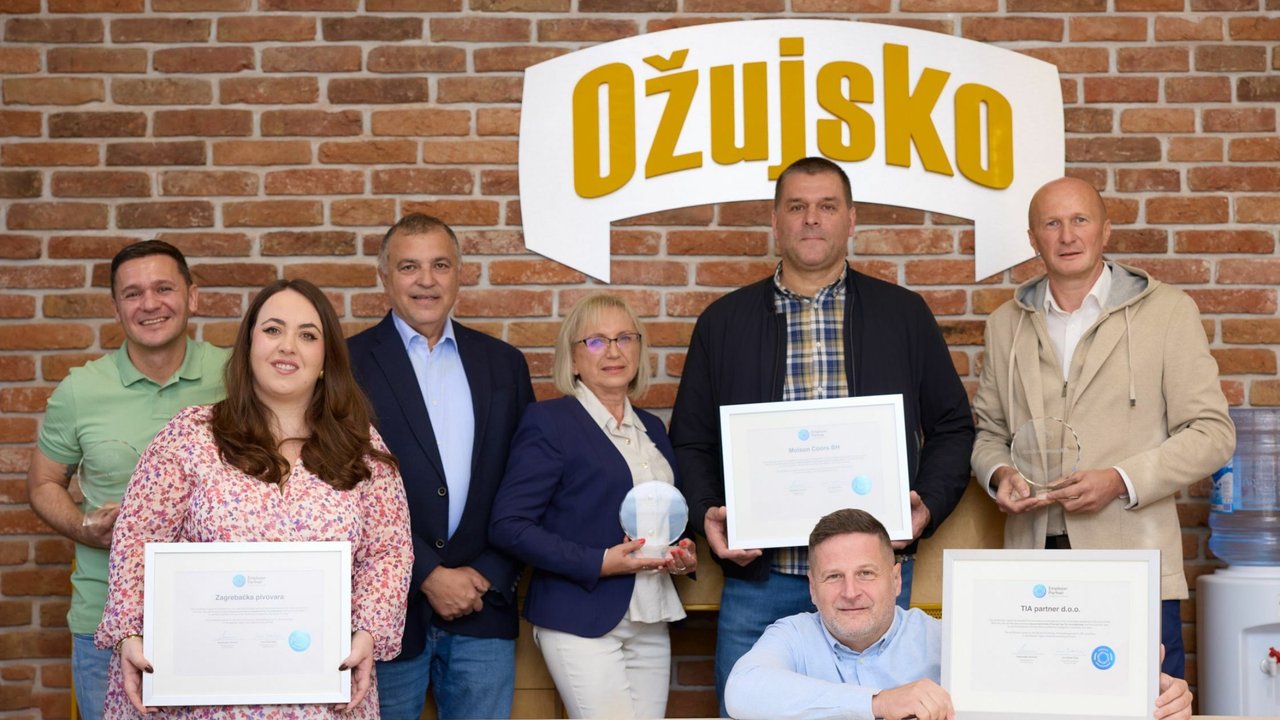

Half of the New Value Created by Banks is Sent Abroad

This refers to the sum of gross wages and gross profits, or the amount that employees spend, while owners invest or spend. In the story of record newly created value, there is one caveat, which is particularly transparently expressed in banks.

Of the 771 million euros, nearly 510 million euros refers to net profit, which will mostly be spent by owners, primarily in their home countries. Thus, it could be said that Zaba created a significantly smaller amount that remains in Croatia last year – around 261 million euros.

The same calculation could be applied to the entire banking sector, which is almost entirely represented on the list. The net profit of ten foreign-owned banks was around 1.4 billion euros in 2025, so it can be concluded that of the 2.7 billion euros of newly created value in the banking sector in Croatia, barely half remained.

The banking business, of course, remains convincingly the most profitable. The gross profitability rate is nearly 40 percent, four times higher than the average for the top 1000.

Retail Operates with Low New Value

Retail is almost a mirror image of banks. Both sectors achieved equal NV, but retailers did so with 3.7 times more companies and 3.5 times more employees who generated three times higher revenues. Therefore, retail operates with a profitability of around five percent, while banks achieve 40 percent profitability. This clearly shows how the same billion in revenue means something entirely different in various sectors.

31075

Tagged: