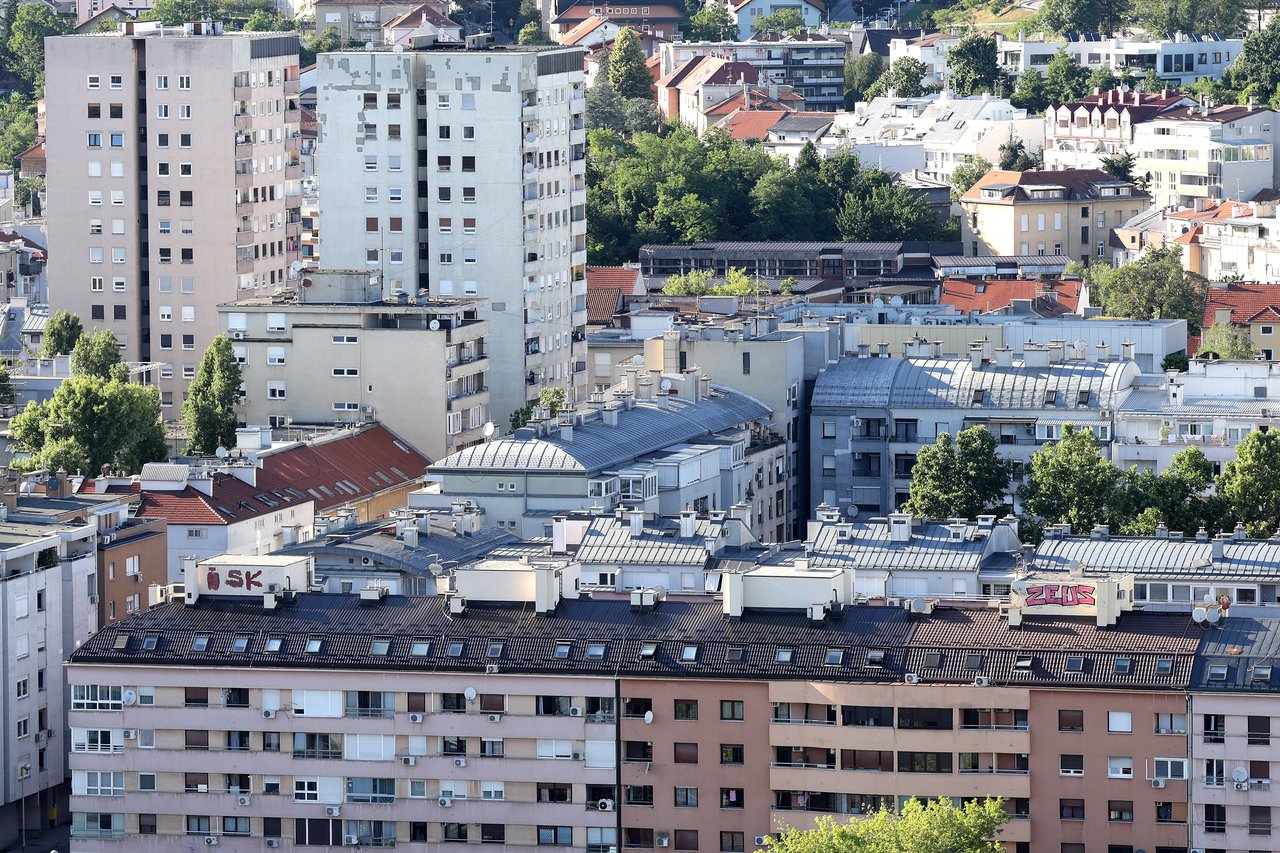
Zagreb is the only one among the six major Croatian student cities where, during the first seven months of this year, both the supply of apartments for long-term rent has increased and the average asking price has decreased. According to an analysis of Njuškalo ads, the number of active listings increased by 26 percent from January to July, while the average asking monthly rent fell from 1,009 to 963 euros.
The largest part of Zagreb’s supply remains concentrated in the Lower Town and Trešnjevka, which together accounted for approximately one-fifth of all rental ads in the city in July. They are particularly represented among apartments up to 55 square meters, a segment that Njuškalo highlights as especially relevant for students.
In the Lower Town, 397 apartments up to 55 square meters were advertised in July, with an average asking price of 761 euros. In Trešnjevka, there were 337 such apartments, with an average of 686 euros.
However, the differences among Zagreb’s neighborhoods are quite significant. Among the locations that combine a price below the Zagreb median and a relatively large number of available apartments, Njuškalo highlights Prečko, where the average price was 631 euros with 54 ads in July, Voltino with 634 euros and 58 ads, Gornja Dubrava with 643 euros and 78 ads, Špansko with 649 euros and 89 ads, and Knežija with 669 euros and 86 ads.
The most affordable among the neighborhoods with regular supply is Utrina, where the average asking rent for apartments up to 55 square meters was 517 euros. On the other hand, in Donje Svetice, the average rent for an apartment is 846 euros. The difference thus amounts to 329 euros per month, or even 64 percent.
On the coast, a different picture
While Zagreb simultaneously records an increase in supply and a decrease in asking prices, the situation on the coast is significantly different. In Rijeka, the number of ads decreased by 29 percent during the first seven months, while average asking prices increased by three percent. Among apartments up to 55 square meters, the most affordable is Pehlin with an average of 498 euros, while in Kantrida, the average asking price is 829 euros.
Seasonality is even more pronounced in Split, where the number of ads decreased by 32 percent from January to July. The average asking rent increased during the spring and reached 1,147 euros in May, before dropping to 1,055 euros in July. The supply of smaller apartments particularly decreased: the number of ads for apartments up to 55 square meters fell from 709 in January to 472 in July. The most affordable among the neighborhoods with regular supply is Sućidar, with an average of 552 euros, while in Lovret, the asking price was 868 euros.
Zadar, on the other hand, recorded the highest price increase among the analyzed cities during the year. The average asking rent increased from 813 euros in January to as much as 1,055 euros in June, or nearly 30 percent, before dropping to 894 euros in July. At the same time, the supply decreased by 26 percent. For smaller apartments, the choice is particularly limited – in July, only 109 were advertised throughout the city. Among the neighborhoods with continuous supply, Poluotok was the most affordable at 616 euros, while Višnjik reached 847 euros.
Osijek is the most affordable, with the highest supply growth in Varaždin
On the continent, the picture is more favorable. Osijek is the most accessible of the six analyzed cities: the average asking rent fell from 603 euros in January to 559 euros in July, with a simultaneous increase in supply of as much as 50 percent. For smaller apartments, prices range from 401 euros in Novi Grad to 544 euros in Retfala.
In Varaždinu, the supply has increased by as much as 65 percent since the beginning of the year, the highest among the analyzed cities, while the average asking prices increased by only 2.4 percent in the first seven months. The average for apartments up to 55 square meters in July was 533 euros, with more affordable locations including Banfica at 461 euros and Bronx at 471 euros.
The data thus shows a fairly clear division: the supply of long-term rentals is increasing in Zagreb, Osijek, and Varaždin, while Rijeka, Split, and Zadar have lost between a quarter and a third of their supply since the beginning of the year. Zagreb is specific in that, along with a 26 percent increase in supply, it also records a decrease in the average asking rent, which distinguishes it from other analyzed markets.
The analysis is based on active Njuškalo ads for long-term rent from January to July 2026. It is important to note that these are asking prices from the ads, not actual contracted rents.