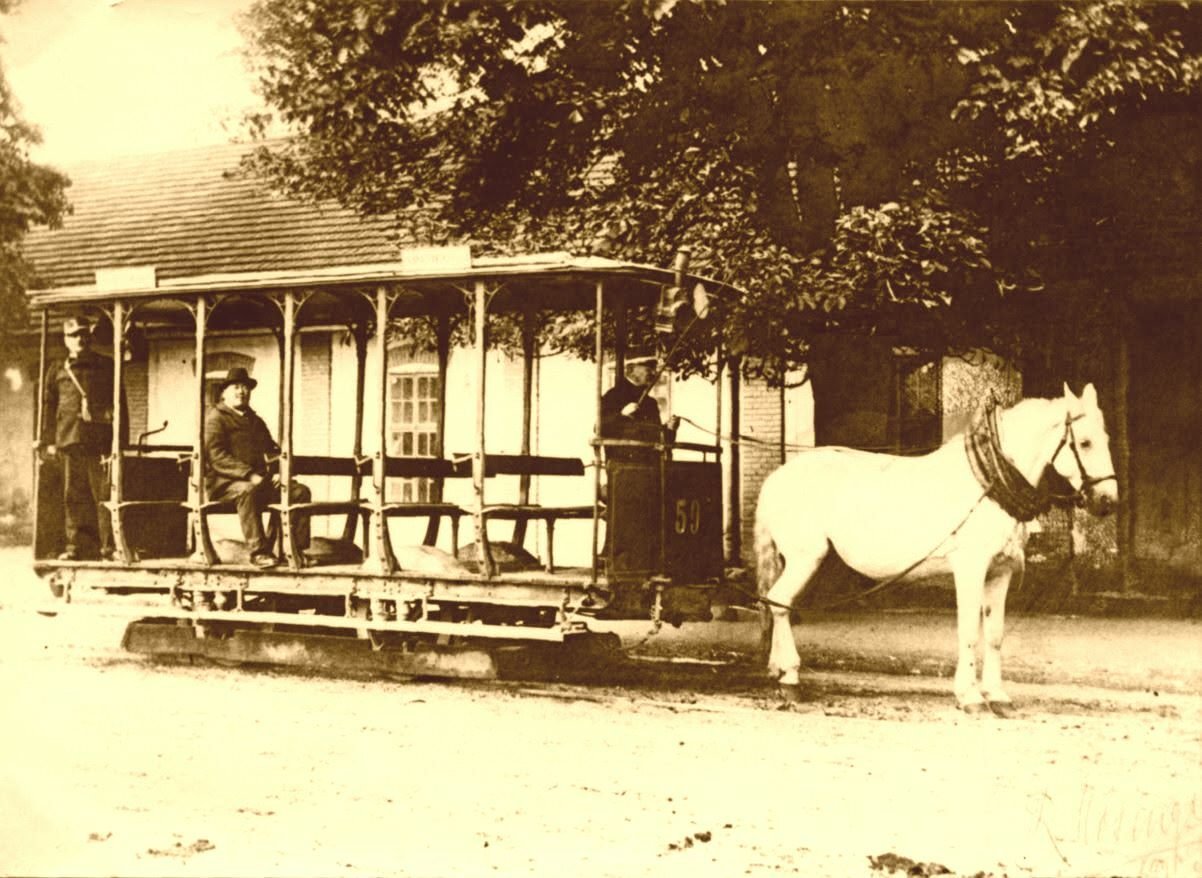
When driver Ferdo cracked his whip on September 5, 1891, and the horse Belko pulled the ‘horse tram’, organized public transport began in Zagreb. The first ride started from the then tram depot on Savska Road (today’s Technical Museum), passing by the Croatian National Theatre and Frankopanska to Ilica.
This marked the beginning of a system from which today’s Zagreb Electric Tram, ZET, would develop over the following decades.
Osijek Before Zagreb
However, Zagreb does not hold the primacy in Croatia. The first tram on Croatian soil operated in Osijek as early as September 10, 1884, a full seven years before Zagreb’s ‘horse tram’. At that time, Osijek was among the pioneers of tram transport in this part of Europe, while Zagreb only received its tram after long discussions and preparations that lasted almost a decade.
Half the City in a Horse Tram
The start of Zagreb’s tram operation was linked to the rapid growth of the city at the end of the 19th century. Zagreb then had just over 40,000 inhabitants, and the need for organized transport was becoming increasingly pronounced. In those early years, the tram network extended to the Southern, now Western railway station. The fleet consisted of 16 tram cars and 32 horses.
In the very first days, public interest was enormous. The day after the tram was put into operation, over 20,000 people rode it, almost half of the city’s population at that time.
Tram Tracks Dictated the City’s Development
A true transport revolution occurred in 1910 when Zagreb received the electric tram. Horse traction was still used for a while on secondary tracks but gradually faded into history. The new system allowed for faster transport, greater capacity, and further network expansion. Electrification was important not only for transport but also for the city’s overall development, as it enabled more efficient connections to increasingly distant city districts.
As Zagreb expanded throughout the 20th century, so did the tram network. New tracks followed the development of settlements to the east and west, and later the construction of New Zagreb south of the Sava River. The tram became one of the main recognizable symbols of the city. Many settlements developed precisely along its routes, and even today, location in the tram zone affects real estate prices.