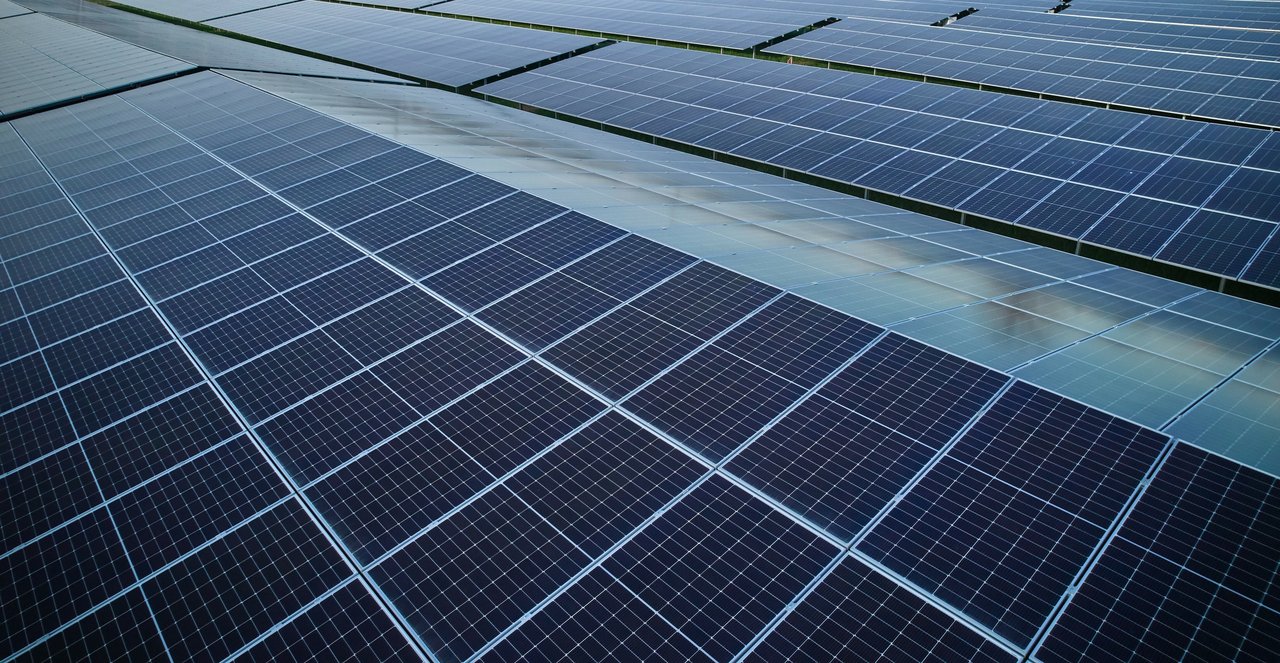
Croatia will need to significantly accelerate investments in renewable energy sources in the coming years if it wants to achieve its energy and climate goals by the end of the decade. The interest of investors is clearly not the main problem: the transmission system operator has already recorded requests for the connection of solar and wind power plants with a total capacity of about 9.25 gigawatts. Greater obstacles remain administrative procedures, available network capacities, and local contributions that can reach as much as 20 to 30 percent of the investment value in certain projects.
The Croatian Employers’ Association (HUP) warns of these problems in the latest edition of Focus of the Week, in which HUP’s chief economist Hrvoje Stojić and Petra Sentić analyze the conditions necessary to accelerate the energy transition.
Croatia has set a target for 2030, according to which the share of energy from renewable sources in gross final energy consumption should reach 42.5 percent, up from 28.5 percent in 2025. This implies a large investment cycle, which is why HUP warns that the regulatory framework must keep pace with the ambition of the set energy goals.
The need for investments is not significant only in Croatia. The European Commission estimates that the energy sector of the European Union will require about 660 billion euros in investments annually from 2026 to 2030. For comparison, annual investments from 2011 to 2021 amounted to about 240 billion euros. Among the main obstacles to new investments, the Commission cites the excessively long issuance of permits and the connection of new projects to the electricity grid.
By 2030, 33.8 billion euros needed
A significant investment gap also exists in Croatia. The revised Croatian energy and climate plan estimates that the implementation of the planned measures by 2030, excluding new nearly zero-energy buildings, will require a total of 33.8 billion euros.
The problem is that so far, a source of financing has been identified from existing national and European programs for only about 32 percent of the required amount.
Only investments in electricity production from 2024 to 2030 are estimated at 5.03 billion euros, and the largest part of these investments should end up precisely in renewable energy sources.
HUP does not view the energy transition solely through the need to increase energy production from renewable sources. The competitiveness of the transition, the Association’s economists emphasize, does not depend only on capital, technology, and natural resources but also on the economy’s ability to adapt to growing climate and energy risks.
One of these is the increasingly pronounced heat stress. The share of lost working hours due to heat stress could rise globally from 1.4 percent, as it was in 1995, to between 2.2 and 2.5 percent by 2030.
Findings for 35 countries show that each additional degree of temperature above 30 degrees Celsius reduces labor productivity by about three percent, or by 1.30 dollars according to purchasing power parity per hour.
Heat could cost Croatia up to one percent of GDP
Among the economies of the European Union, the largest decline in productivity due to heat stress is estimated for France, Italy, and Slovenia, but Croatia, HUP warns, is not far behind.
The short-term costs are primarily borne by companies because wages do not fall in line with the decline in productivity, leading to reduced profit margins.
The problem is further exacerbated by warmer nights, which reduce sleep quality, and thus work performance. HUP notes that in 2024, a record 8.7 percent more lost sleep was recorded, while 30 or more days with temperatures above 30 degrees could cost the economy as much as one percent of GDP.
Climate extremes simultaneously affect the energy sector itself. HUP refers to Oxford Economics, according to which heatwaves and drought have reduced the production of hydroelectric and nuclear power plants in the European Union. The resulting shortfall has increasingly been compensated by production from natural gas, whose wholesale price in August was about 90 percent higher than a year earlier, creating additional pressure on electricity prices.
Local contributions take 20 to 30 percent of the investment
Along with high investment needs, HUP highlights the way local contributions for renewable energy projects are structured as a particular problem.
The Association’s stance is that local communities must have a clear benefit from energy projects implemented in their area, but at the same time, investors must be provided with predictable investment conditions.
The Energy Approval Regulation already prescribes a fee for land use of 0.001327 euros per kilowatt-hour of delivered electricity, as well as an initial annual fee of 1.50 euros per kilowatt of connected power.
In addition to these special energy fees, renewable energy projects may also be burdened with municipal contributions and municipal fees.
Such a model, according to HUP, particularly undermines the economics of solar power plants. The reason is that the large area occupied by a solar power plant does not simultaneously mean proportionately large revenues for the project nor intensive use of local municipal infrastructure.
The consequence is that municipal contributions for certain solar power plants can reach 20 to 30 percent of the total investment value.
For SE Gradić, 3.8 million euros in contributions, and annual revenue around 900 thousand
As a particularly pronounced example, HUP cites the solar power plant project SE Gradić, for which a municipal contribution of as much as 3.8 million euros has been calculated.
This amount is several times higher than the estimated annual revenue of the power plant, which should be around 900 thousand euros.
HUP compares such treatment with other activities. The Municipal Economy Act, for example, limits the annual municipal fee for hotels, tourist resorts, camps, and golf courses to 1.5 percent of the revenue of the facility achieved in the previous year.
HUP therefore proposes that renewable energy facilities that already pay a special fee for land use be exempted from paying municipal contributions and municipal fees.
This, they believe in the Association, would eliminate the overlap of several different contributions and reduce the significant differences in costs of comparable energy projects among individual units of local self-government.
Part of the money from power plants directly to the local population
HUP emphasizes that such a change should not mean a reduction in the benefits that the local community has from the construction of the energy project. Instead, the benefit could be more clearly linked to the project itself and the population living in its immediate vicinity.
According to data from the European Commission reported by HUP, as many as 88 percent of EU citizens support increasing production from renewable energy sources, but local opposition can significantly slow down or completely halt certain projects.
The Commission therefore lists among possible models for sharing benefits community funds, lower energy bills, and opportunities for local residents to invest in energy projects.
The European Commission also proposes a mandatory sharing of part of the benefits of projects with a capacity greater than 10 MW with citizens and communities nearby, while the relevant committee of the European Parliament proposed in July this year to further lower this threshold to 7 MW.
Investors are already seeking connection for 9.25 GW of new power plants
That there is interest from the private sector for investments is shown by data from the Croatian Transmission System Operator.
HOPS has recorded requests for the preparation of connection studies for solar and wind power plants with a total capacity of about 9.25 GW by the end of November 2025.
At the same time, 16 renewable energy plants with a total capacity of 862.5 MW already have connection contracts, and their planned completion is between 2026 and 2028.
One of the long-standing obstacles was removed in May this year when the Croatian Energy Regulatory Agency (HERA) resolved years of uncertainty related to the connection fee. The new rules also apply to procedures that are already underway.
Thus, HUP assesses, an important obstacle has been removed, but the realization of projects still depends on available network capacities, permits, and other administrative procedures.
Projects get stuck even before construction begins
A large part of the obstacles appears before the actual construction begins, especially in the procedures for environmental impact assessments (EIA), assessments of the need for environmental impact assessments (EIA), and the issuance of environmental permits.
The European Directive RED III limits the total duration of permitting procedures. For land-based projects located in areas of accelerated development of renewable sources, the procedure should generally not take longer than 12 months, while for projects outside these areas, a period of two years is provided, with prescribed possibilities for extension.
RED III treats the planning, construction, and operation of renewable energy facilities, their connection to the grid, related network infrastructure, and energy storage, as projects of predominant public interest when weighing legal interests.
If the energy transition is a public interest, HUP concludes, the administration must be capable of making decisions both qualitatively and in a timely manner.
HUP demands a 30-day deadline for checking requests
However, an analysis of the draft Environmental Protection Act conducted by HUP shows that there is no prescribed deadline within which the competent authority must carry out the initial check of the completeness of requests in EIA and EIA procedures.
This means that the subject can remain in administration even before the formal deadlines for its resolution begin to run.
HUP therefore proposes that a 30-day deadline be prescribed for checking the completeness of requests, along with the introduction of a presumption that the request would be considered complete if the competent authority does not respond within those 30 days.
The Association also proposes that the total duration of the environmental impact assessment procedure be limited to a maximum of 10 months, and the procedure for assessing the need for an environmental impact assessment to a maximum of two months.
In addition to final deadlines, clear interim deadlines for the work of committees and other public law bodies involved in the procedure should also be prescribed.
For environmental permits, HUP demands the same 30-day deadline for checking the completeness of requests, as well as specifically defined deadlines for amendments to existing permits and the adoption of related decisions.
The ministry should publicly publish how long procedures actually take
However, merely prescribing legal deadlines, according to HUP, is not sufficient if compliance with them is not monitored.
Therefore, they propose that the competent ministry publicly publish data on the actual duration of key phases of procedures, the number of cases that have exceeded legal deadlines, and the reasons for delays.
The European Commission pointed out the same problem in its Report for Croatia in June 2026. The Commission stated that lengthy permitting and connection procedures and limitations of the electricity grid hinder the utilization of Croatia’s potential for wind and solar energy production.
The efficiency of the administration is therefore not just a procedural issue but, HUP emphasizes, an important part of the country’s investment competitiveness.
The ultimate goal of the reforms should be to create a predictable investment environment in which the investor knows in advance what contributions they will have to pay and how long administrative procedures will take, while the local community must simultaneously have a clear and visible benefit from the energy project in their area.
HUP therefore proposes a package of concrete changes: exempting renewable energy plants from municipal contributions and municipal fees when they already pay a fee for land use; standardizing local contributions so that project costs do not significantly change after the investment decision is made; and directing part of the revenue from renewable energy projects to the local population and projects in the immediate vicinity of the plants.
In addition, they demand the introduction of a 30-day deadline for assessing the completeness of requests in environmental procedures, with a presumption of completeness if the competent authority does not respond, limiting the EIA procedure to ten months, and the EIA procedure to two months from the submission of the request.
It is also proposed to prescribe interim deadlines and responsibilities of public law bodies, allowing for the parallel conduct of certain phases of procedures, and publicly monitoring their actual duration and reasons for delays.
The message of HUP’s analysis is that Croatia lacks neither goals nor investor interest in renewable sources. The key problem becomes whether the regulatory, fiscal, and administrative system will allow this interest to actually be transformed into built power plants and new energy production by 2030.