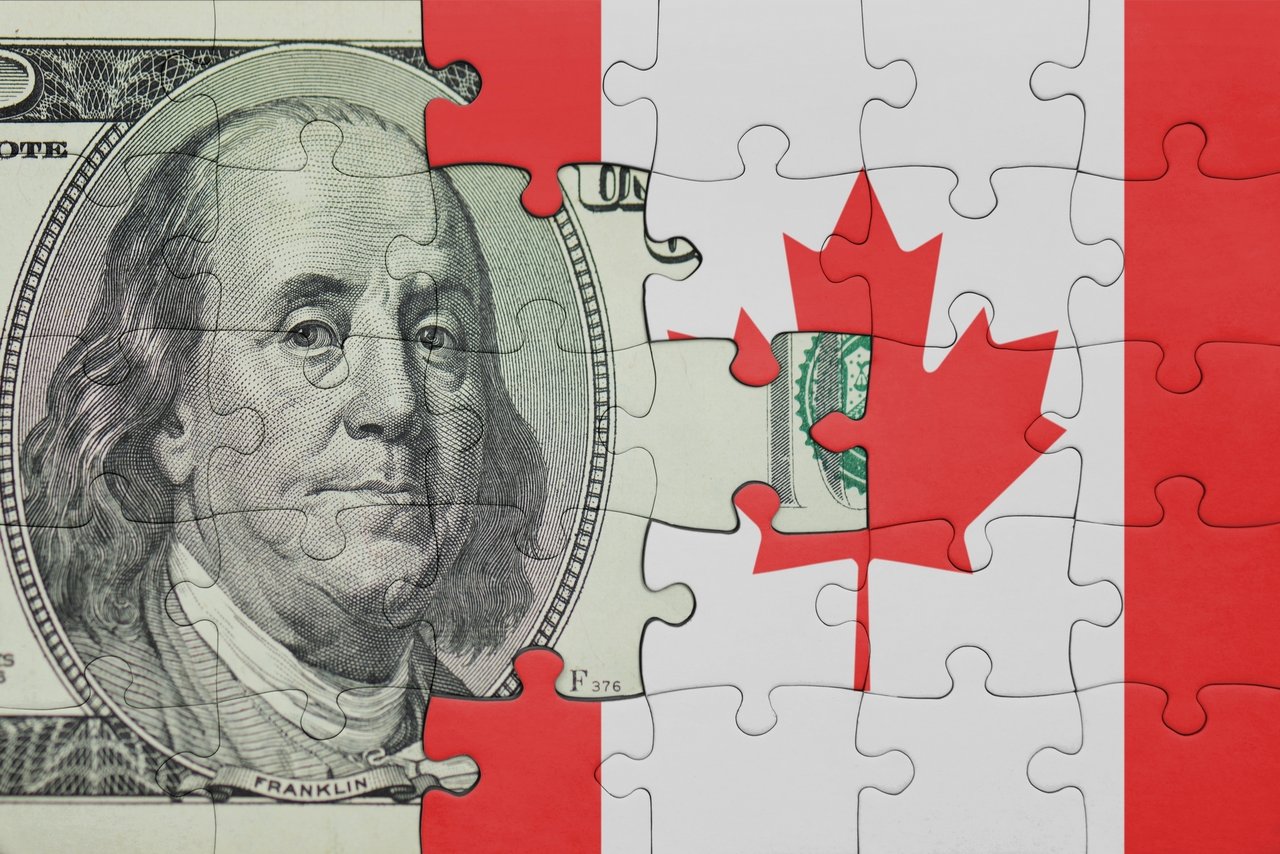
On Tuesday, Canada retaliated against the United States with a new round of countermeasures, this time targeting American goods worth approximately $20 billion, including steel, dairy products, household appliances, and agricultural machinery. The conflict between the two countries, which until recently was one of the most stable trade partnerships in the world, has escalated to a level that seriously threatens the long-standing economic ties between Washington and Ottawa.
What makes this round of tariffs particularly sensitive for ordinary citizens is its reach. The new Canadian tariffs apply not only to industrial goods but also to products from the everyday consumer basket, ranging from seafood, cheese, and clothing to cosmetics and toilet paper, with some of these goods facing rates of up to 50 percent.
Canadian Finance Minister François-Philippe Champagne stated that Ottawa did not choose this conflict, but that the economic integration of the two countries is now being used as a weapon instead of as a foundation for a partnership from which both sides should benefit. Industry Minister Mélanie Joly urged citizens to buy Canadian products, arguing that this would protect jobs and spark a wave of resistance to American pressure, noting that the new tariffs would particularly impact certain U.S. states.
Unlike the first Trump administration, when Canadian countermeasures in 2018 were carefully chosen to hit politically sensitive products, such as yogurt from Wisconsin or whiskey from Kentucky, a Canadian official familiar with the government’s strategy said that this time political sensitivity was not the main criterion. The new measures were primarily chosen to mirror American actions and pressure industries and supply chains in the U.S., while the impact on individual states remained a secondary element.
Collapse of Negotiations and Escalation of Threats
Canada decided on this move after the Trump administration imposed 50 percent tariffs on Canadian goods over the weekend, following the failure of negotiations for a new trade agreement. Canadian Prime Minister Mark Carney accused Washington of trying to subjugate Canada and stated that the American demands during the failed talks showed that the United States wanted, as he put it, to destroy key Canadian industries. A day earlier, at a press conference, Carney described the situation in almost warlike rhetoric, stating that the country was under attack and therefore defending itself.
Trump further escalated the conflict on Monday, telling Canadian leaders to ‘get in line’ or face consequences ‘much worse’ than the existing tariffs, threatening new 50 percent tariffs on Canadian vehicles, auto parts, and steel. On Tuesday, he added another provocation, stating that the U.S. is seriously considering renaming Lake Ontario to ‘Lake America,’ clashing with Ontario Premier Doug Ford. Such a move would recall last year’s presidential order that renamed the Gulf of Mexico to the Gulf of America.
In the hours before the Canadian announcement, Trump accused the country on social media of robbing American farmers and driving American companies to ruin, calling Canada the ‘most difficult and unreasonable’ country it works with.
Tariff Act of 1930
To understand the current round of tariffs, the legal context is important. The U.S. Supreme Court early in 2026 struck down a large portion of Trump’s previous global tariffs, imposed under the International Emergency Economic Powers Act (IEEPA) of 1977. The administration then resorted to a series of other, previously rarely used legal instruments, first for a temporary global tariff of 10 percent, and then 15 percent under Section 122 of the Trade Act of 1974, while simultaneously using Section 232 of the Trade Expansion Act of 1962 for sectoral tariffs on steel, aluminum, and automobiles.