By acquiring Arivera Fruita Fortenova, Fortenova last year closed the full circle after nearly two decades and literally ‘returned the child to the mother’ – it has once again brought an important piece of its former business under its wing.
The wholesale and distribution business of fruits and vegetables, built by Ivica Todorić and Denis Matijević since 2007, ultimately did not collapse into bankruptcy ruins. Like some corporate phoenix, it survived various ownership and financial upheavals, passed through the hands of ENNA’s Pavle Vujnovac, and ultimately ended up in the hands of a system that grew out of the former Agrokor. In doing so, it changed as many as seven incarnations: from AgroFructusa and Marinade through Enna Fruita to today’s Arivera.
Fortenova got the sweetest part
Behind those names, however, does not stand the same company, but a business entity that has over the years passed between different legal entities and owners.
While on one side it was disposing of its own fields, livestock, and tractors, selling its entire agricultural business to Podravka, Fortenova grabbed the sweetest part: the channel through which what comes from those fields travels to the store shelves.
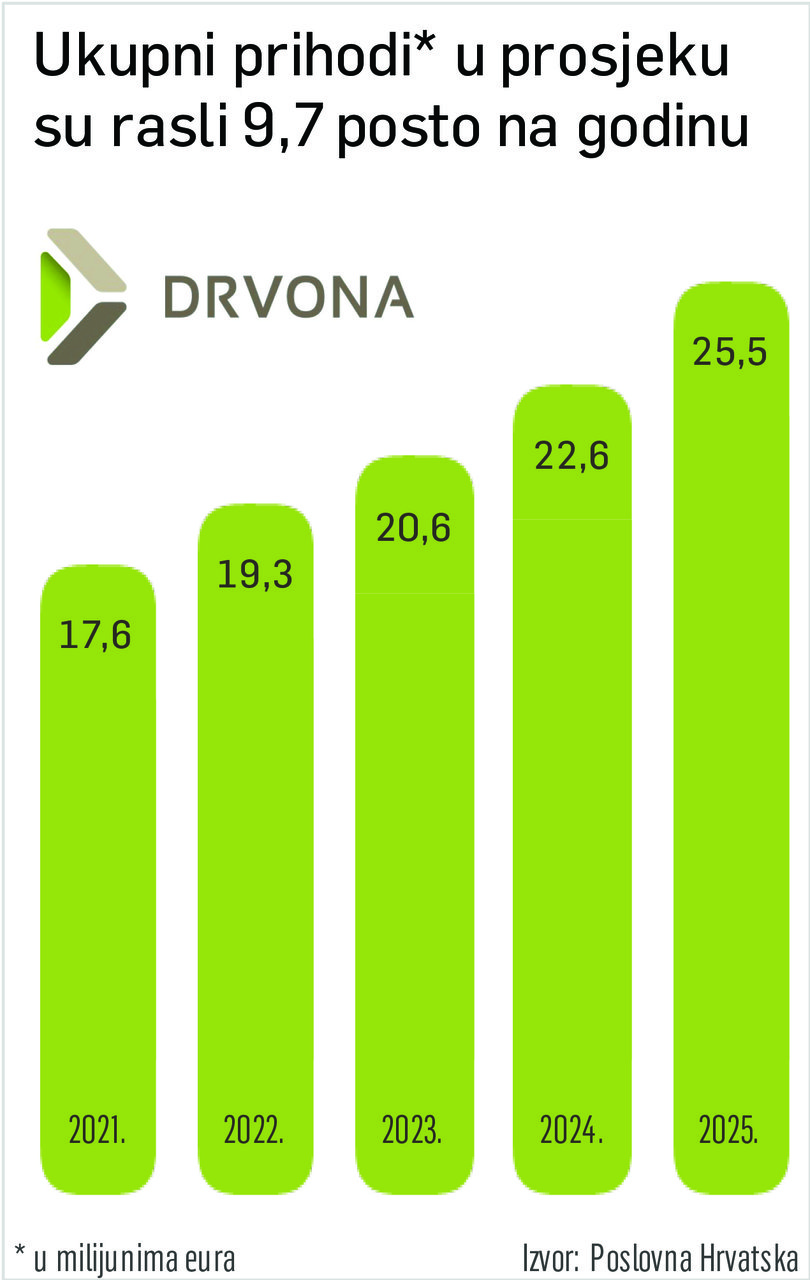
A vertically integrated agriculture with 32,000 hectares of land, farms, silos, around €386 million in revenue, and losses, Fortenova thus replaced with Arivera, which last year achieved €242 million in revenue and €4.8 million in profit.
Although it did not disclose the acquisition price in its responses to Lider, Fortenova’s annual report for 2025 shows that the investment in Arivera is recorded at a value of €55 million.
However, even a year and a half after that acquisition, the restructuring has not ended. Fortenova also disposed of the remaining parts of its own production related to fruits and vegetables that it acquired in 2025: it sold Moslavina voće, exited the group Naturala, and the company Enna Fruit in Serbia was sold in a package with the retail chain Idea.
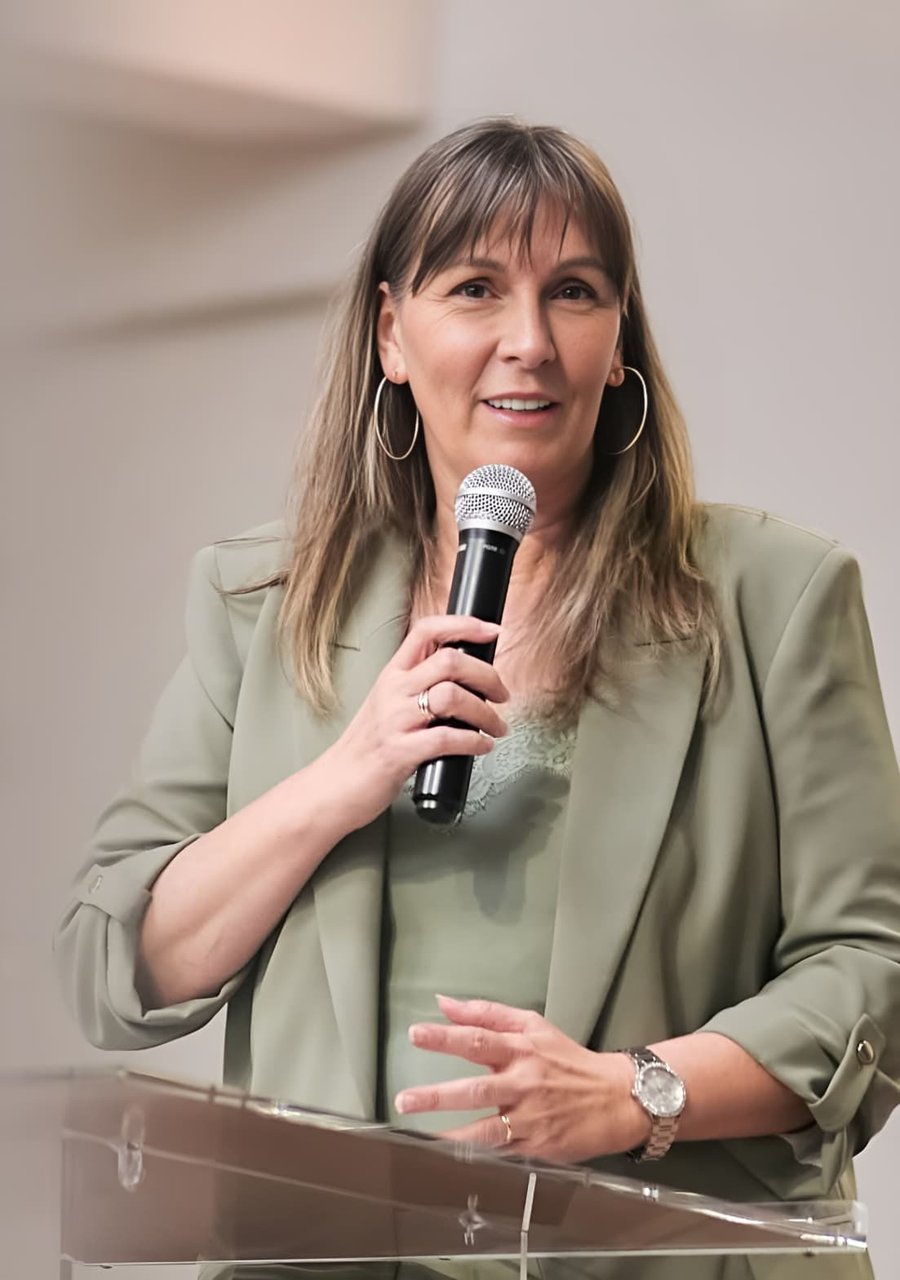
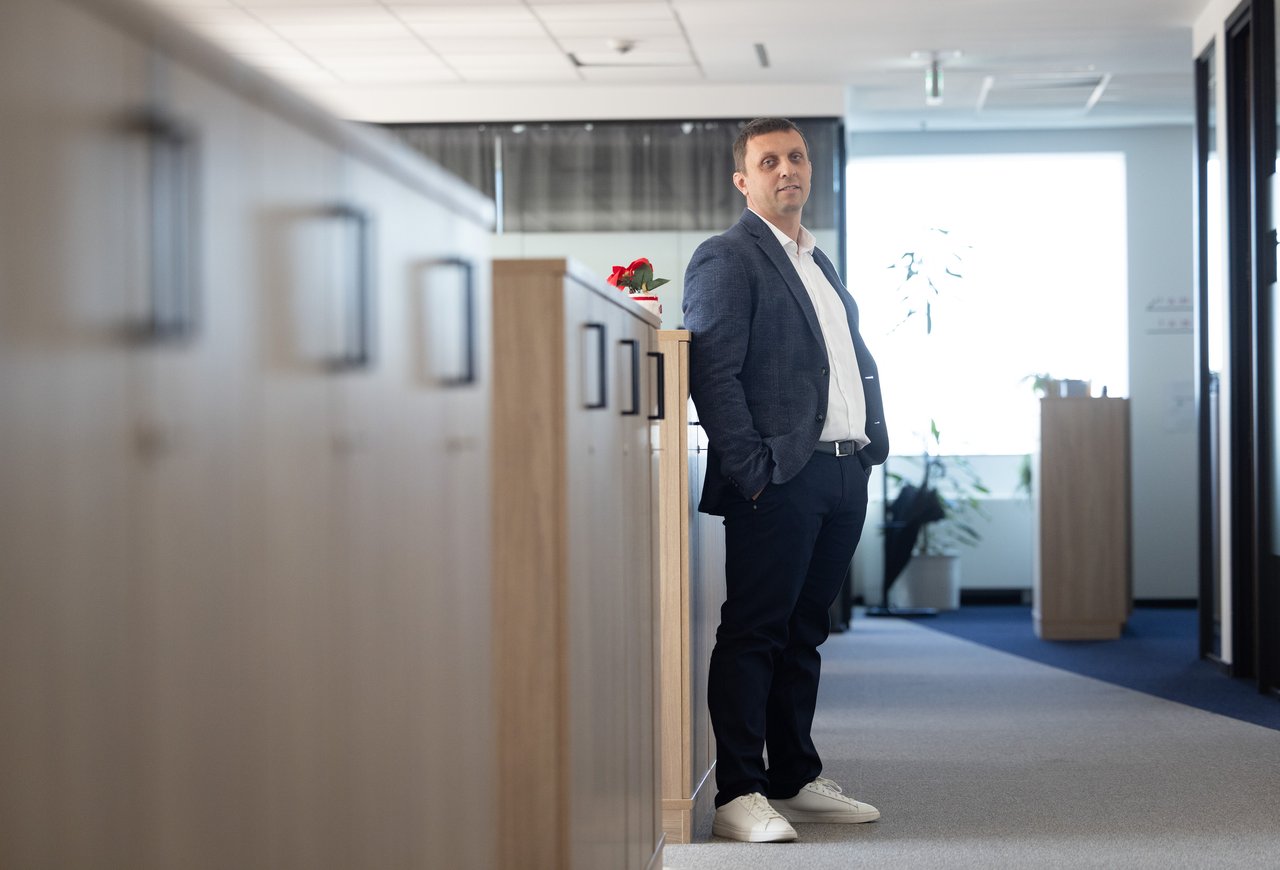
The entry into Fortenova was accompanied by a change at the top of the company. Prior to the acquisition, in January 2025, Arivera was taken over by Ivona Tupek, who remained at the helm of the Company even after the change of ownership.
In Fortenova, they explain the sale of production as a strategic orientation and optimization of business. As they state, the sale of Moslavina voće is not a departure from agriculture, but Arivera’s focus on parts of the business where it can create greater value.
For Serbian Enna Fruit in Fortenova, they state that it was logical for it to transition to the new owner as part of Idea’s supply system, but Arivera still counts on joint procurement and placement of agricultural products in Serbia.
Connection to two buyers
Besides in Croatia and Serbia, Arivera’s network today extends through Bosnia and Herzegovina, Montenegro, and Slovenia. In Croatia, it gathers more than 1,300 producers and cooperators, while in the rest of the region, it is followed by about 500 partners.
This entire system is powered by 600 permanent employees, whose number rises to nearly a thousand during the peak season. Through their hands, in 2025, as much as 164,000 tons of fruits and vegetables passed – but domestic origin accounts for only 46 percent of that goods.
The calculation improves with the exclusion of tropical fruits: Arivera alone imports 23,000 tons of bananas annually. Without that item, which Croatia does not produce, the share of domestic goods rises to 53 percent. The group emphasizes that this is four percentage points higher than in 2024 and highlights the desire for further growth of the domestic share.
Fortenova sees the greatest room for further growth in extending the domestic season, increasing available quantities, and better aligning the production capabilities of domestic producers with market needs, but given the situation in domestic agriculture, they can hardly influence the latter.
Moreover, Arivera is not a classic independent distributor that evenly distributes goods to various retail chains. The company did not respond to how much of its sales relate to Konzum, but they confirmed that the largest buyers of Arivera are Konzum and Mercator. Arivera’s revised report reveals that of the total €239.8 million in sales revenue last year, as much as €211.8 million, or about 88 percent, was achieved with related parties.
In the group, they do not see such dependence of Arivera on Fortenova as a limitation, but rather as one of the main advantages of the acquisition: Arivera gains a large and predictable sales channel, while Konzum and Mercator have an organized system for sourcing fruits and vegetables within their own group.
– This model allows for better alignment of market demand with procurement planning, more efficient inventory and logistics management, and greater predictability of the entire supply chain – they explain in Fortenova.
However, such a model raises eyebrows in competition. Representatives of rival retail chains and distributors state that it is common in retail to maintain two or three independent suppliers to preserve market competition. Relying primarily on Arivera raises the question of whether Konzum is really getting the best price and selection in the end.
‘If only there were more like this’
And how did Arivera even end up in Fortenova? According to media reports, former key Fortenova creditor HPS Investment Partners allegedly conditioned refinancing by acquiring Enna Fruita due to restrictions on doing business with related parties. The timing supports this: a new arrangement worth up to €1.22 billion with HPS was approved in November 2024, and Enna Fruit transitioned from Vujnovac’s Energija Naturalis to Fortenova as early as February 2025.
Fortenova rejects the suggestion that the connection itself is a problem. Konzum and Arivera, they emphasize in Fortenova, are two separate legal entities, and business is conducted according to contractual obligations and market rules. The regulator does not claim otherwise. The Agency for the Protection of Market Competition (AZTN) states that mere belonging to the same group is not a violation of the law, and the European Commission did not identify a problem in the vertical connection of Arivera’s wholesale and Fortenova’s retail when approving the concentration.
However, Arivera has found itself under AZTN’s scrutiny on another front. The regulator is investigating whether it has used significant negotiating power in mandarin procurement by imposing unfair practices on suppliers. The procedure is ongoing, and a previous complaint from 2025 was archived without identified irregularities.
Although it has come under fire due to its strong position in mandarin procurement, most suppliers we spoke to believe that large integrators like Arivera are needed in Croatia. They open the way for small and medium-sized farmers to the shelves of large chains, and many cooperators have been working with them for years.
– If only there were more like this – summarizes one of our interlocutors.
The troubles of domestic agriculture begin long before the price lists. Croatia suffers from chronic insufficiency, so our producers do not only fight among themselves on the shelves but also with cheaper imports. It is precisely in the relationship with cooperators that all the complexity of the business between the field and the shelf emerges.
Although production is planned before the season, Arivera takes on a firm procurement obligation for just over a quarter of the quantities, and prices are mostly formed just before harvest. The company claims that the producers themselves prefer such, so-called spot prices. The price itself is less problematic, notes our interlocutor from the vegetable sector, than the issues of procurement quantities and predictability of production.
– Prices among large purchasers are generally similar. The problem is that you have to announce quantities a month in advance, then two weeks, and then again a few days before delivery. And with vegetables that you harvest every day, you cannot know in kilograms how much you will harvest – he describes.
The former Konzum, our interlocutor recalls, had another problem: payment was waited for up to 120 or 180 days, but the goods were taken in full. Today, payments are much more orderly, but part of the risk regarding quantities remains with the producer, so in his area, many turn to other distributors who are willing to take excess stock into their own warehouse.
High turnover, not much profit
How dangerous it is to keep all eggs in one large basket was shown by Dodlek-Agro in 2023. Owner Mirjan Dodlek accused Enna Fruit of pushing him out of Konzum after 18 years, which brought him as much as 70 percent of revenue, because he refused to sell the company. Enna Fruit rejected the accusations, stating that chains choose suppliers based on price, quality, and delivery stability.
While the Dodlek case illustrates all the risks of working with one dominant buyer, Arivera’s dominant role in the supply chain remains intact. With revenue of €242 million, it is far ahead of its competitors. For example, Frutiko Group generated around €56.8 million last year, while the revenues of the company Dodir prirode reached €46.53 million in 2024.
Moreover, the €242 million revenue is only from the Croatian parent Arivera. Separate companies in Bosnia and Herzegovina, Slovenia, and Montenegro achieved around €71 million in revenue in 2025, and Moslavina voće, sold at the beginning of this year, added another €3.3 million. However, their sum is not the revenue of the entire group because intercompany transactions would need to be eliminated during consolidation.
High turnover does not bring high profit. The distribution of fruits and vegetables is a business of large volumes and thin margins, and Arivera’s EBIT and EBITDA margins are roughly in the middle of the range of comparable companies. A weak point is liquidity.
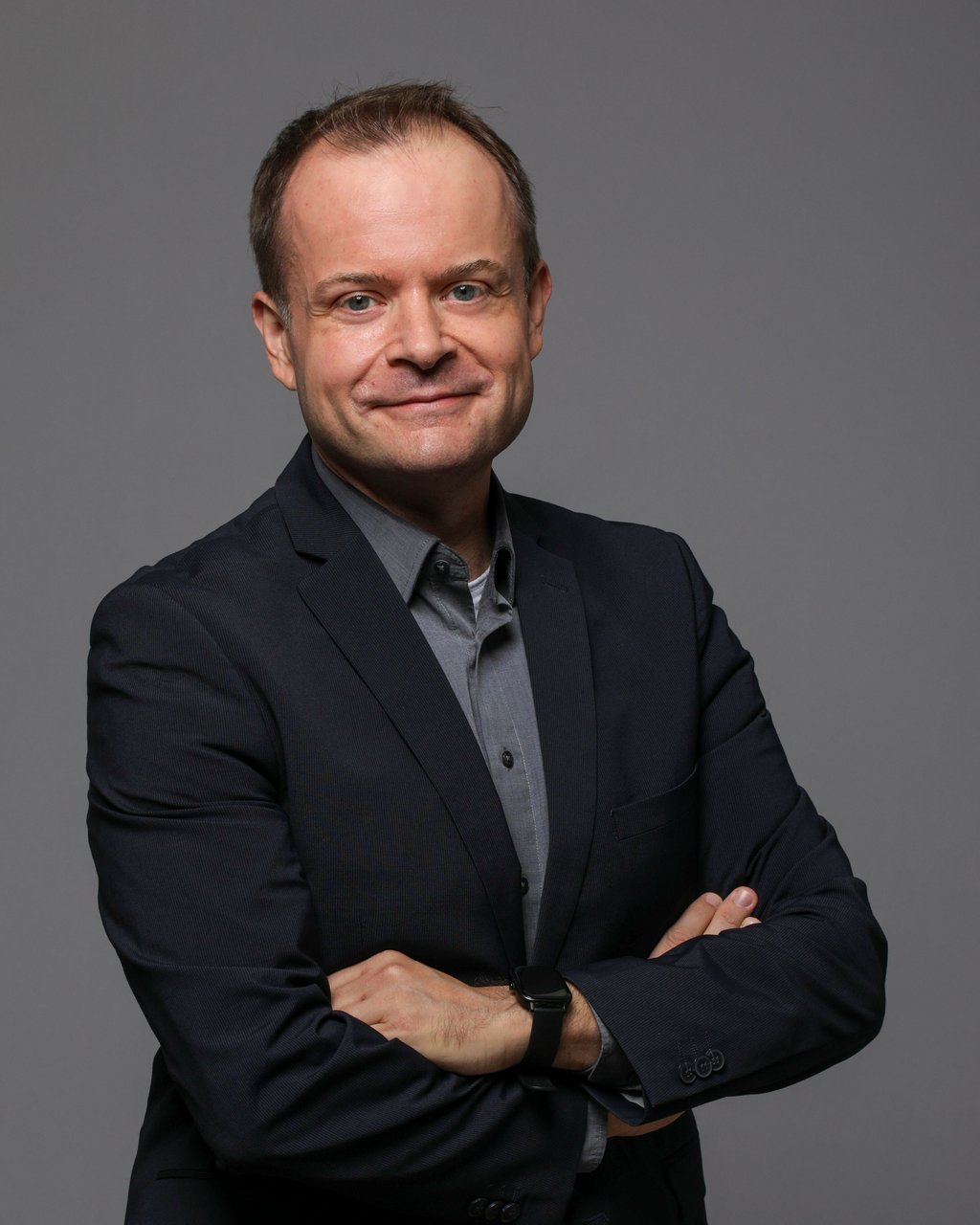
– The current ratio is weaker than that of comparable companies, and working capital is negative. This means that the business model relies heavily on the orderly turnover of goods, collection of receivables, and availability of short-term financing – explains financial consultant Ivan Matić.
The entry into Fortenova has visibly improved cash flow. Receivables from related parties fell from €28.9 million to €10 million, freeing up a large amount of money.
– This is a qualitative improvement in the balance sheet, but it cannot be repeated year after year at the same level. Only next year will show whether the company has permanently improved its working capital discipline – emphasizes the analyst.
Less exposure to banks
The structure of financing Arivera’s business has also changed. Secured bank loans fell from €25.5 million to just €0.2 million, while loans obtained from related parties rose from €2.1 million to €13 million. Thus, Arivera has practically replaced banks with financing within the Fortenova group.
– This can mean greater flexibility, simpler liquidity management, and less exposure to banks. On the other hand, financial risk has not disappeared but has concentrated within the group, so liquidity now depends more on the financial strength and policy of the parent company – he warns.
This is particularly important because Arivera already has weaker current liquidity than comparable companies. Group financing thus gives it both greater freedom and greater dependence on Fortenova.
Despite a modest margin, Arivera has shifted into higher gear in 2025 and invested €9 million in tangible assets, primarily buildings and land, which is double the amount from the previous year.
Fortenova states that investments are being made in procurement capacities, cold storage, warehousing, sorting, packaging, and distribution, but also in new equipment and technology that should increase operational and energy efficiency. Greater efficiency, believes the financial analyst, should be the main goal: less waste, lower costs, and better logistics, not necessarily just greater volume.
– The key is not just the height of the net margin, but the return on additional invested capital. Given the small operational margins, the quality of investment decisions is particularly important – emphasizes the analyst.
Whether these investments will translate into greater efficiency and better profitability remains to be seen. Just as it remains to be seen whether Fortenova’s strategic pivot from its own agricultural production to procurement, distribution, and retail has paid off. The true financial impact of this major restructuring will be clearer in the results for 2026, when Fortenova’s business after exiting the large agricultural production portfolio will be better visible.