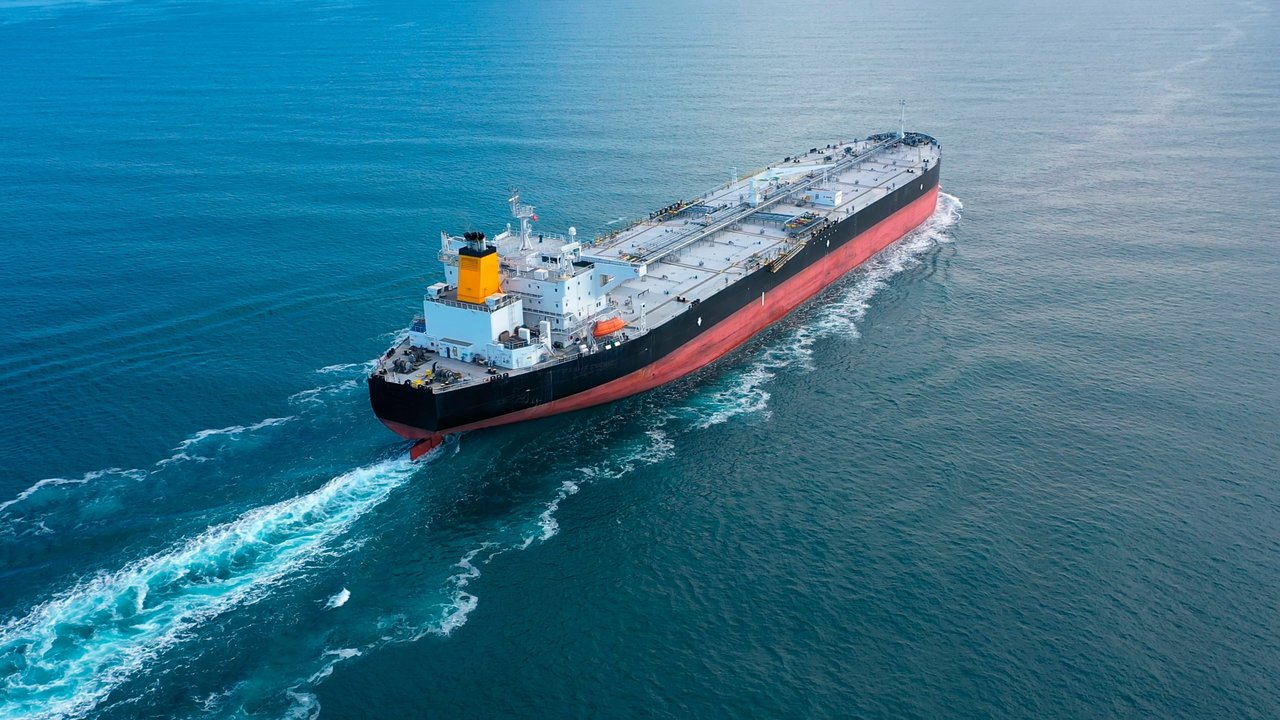
Here we are six months after the start of the war in the Middle East, and there is still no sign of a final peaceful resolution. At the center of the conflict is control over the Hormuz Strait, a key global hub for oil, which Iran continues to use as a means of pressure.
Market focus remains on external factors such as geopolitics and the U.S. Fed, particularly regarding what will happen with interest rates in the near future. The dollar is hovering near its highest level in two weeks, while expectations for an interest rate hike are strengthening, fueled by “hawkish” comments from Warsh and renewed tensions in the Gulf.
Hormuz Raises Energy Prices Again
The price of Brent crude oil has jumped back above $90/bbl, starting the week with an increase after the U.S. military attacked Iranian rocket launchers preparing to lay mines in the Hormuz Strait. This was the first such attack in over a month. U.S. forces also stated that they are closely monitoring the situation in this waterway and are ready to ensure the smooth flow of trade.
The U.S. last struck Iranian targets at the end of July, but since then, the focus has shifted to pressuring the Iranian economy through sanctions to bring Tehran back to the negotiating table. An Iranian official stated on Friday that the continuation of diplomatic relations with the U.S. “is not impossible” after constructive talks with Qatar, the mediator in the conflict.
At the same time, data shows that between six and eight million barrels of crude oil continue to pass through the Hormuz Strait daily, despite the absence of a peace agreement between Washington and Tehran. A few months ago, chaos in the global market was prevented by large oil reserves. Today, the situation is completely different. The U.S. has crude oil reserves sufficient for only 41 days, the lowest level since 1970.
For the same reason, natural gas prices in Europe have risen above €69/MWh, the highest level since January 2023. The market is concerned about further delays in LNG exports from the Persian Gulf. The export of LNG from major Gulf producers, such as Qatar, has already been limited, reducing supply to Europe during the critical gas storage refill season.
Qatar’s LNG exports have plummeted by 96 percent following the de facto blockade of the Hormuz Strait. Qatar has lost approximately $24 billion in gas revenue. The resulting shortfall is partially offset by increased LNG deliveries from the U.S.
At the same time, gas stocks in European storage facilities have fallen to a record low for this time of year, at 63 percent, increasing the risk of a sharp price spike ahead of winter. Prices for European gas delivery contracts for the upcoming winter are already more than double the levels from a year ago and could reach peaks recorded during the 2022 crisis if global supply remains constrained.
Germany is in the most vulnerable position, as its gas storage is only 51 percent full, a record low for August. In the event of a harsh winter, Germany would be forced to buy gas at high prices, competing with Asia.
Goldman Sachs analysts predict that the reference price will need to exceed €100/MWh to attract sufficient quantities to meet winter demand. This could have dire consequences for sectors of the German economy that are still trying to recover from the previous energy crisis.
Funds Bet on Agricultural Commodity Growth
Hedge funds are bullish on agricultural commodities. Estimates suggest that their long position has grown to over $30 billion, and we are quickly approaching the record long position of $36.5 billion from early May. At that time, funds effectively ran out of buying power. Crude oil reversed, agricultural markets followed, and prices fell.
There are many reasons why funds have rebuilt their long position today: strong demand in China, halted export flows from the Black Sea, questionable yields in the U.S., and production risks in Brazil. However, today positioning is more of a liability than an asset. At these levels, bullish news is needed every day, and it is a big question how much positive expectations are already priced into market prices.
Corn prices in the U.S. have risen by 18 percent since the beginning of the year, reaching a three-year high. The Pro Farmer Tour estimated a 10 percent drop in U.S. production compared to 2025, the lowest level since 2020. There is a total shortfall of approximately 50 million tons of corn in the U.S. and EU compared to levels from 12 months ago.
MARS has updated its yield estimates for Europe. While the average yield of soft wheat in the European Union remains at 5.88 t/ha, the report includes a downward revision of potential corn yields. The European yield is now estimated at 6.61 t/ha, down from 6.93 t/ha last month, although further revisions are possible in the coming months.
Globally, the corn deficit, or the difference between production and consumption, will be at least 30 million tons. International demand for corn remains strong, pushing the stock-to-use ratio in the U.S. to its lowest level in six years. Add to that the lack of shipments from Ukrainian ports, given that Ukraine is the fourth largest exporter in the world, and the bullish picture is complete. Ukraine’s exports have fallen by 75 to 80 percent.
The emergence of shipments of French wheat destined for Egypt and Sudan, countries that usually buy wheat from the Black Sea region, indicates the beginning of a redirection of international trade flows. Leading analysts predict that the December corn futures contract on the CBOT will rise above the $6/bu level, an increase of €15 per ton compared to current levels.
Copper Under Pressure from Stronger Dollar
Copper prices are hovering around $14,500 per ton, but have been slightly declining since mid-last week as the dollar strengthened amid rising expectations that the Fed will raise interest rates next month following sharp statements from Chairman Kevin Warsh.
A stronger dollar makes commodities priced in U.S. dollars, such as copper, more expensive for buyers using other currencies, which burdens short-term demand. There have also been signs that supply pressure could ease, as the premium for spot copper over three-month futures contracts is decreasing. Additionally, stocks on the LME have recently increased due to higher metal deliveries.
However, traders have continued to redirect copper shipments to the U.S. ahead of potential new import tariffs, reducing stocks in global markets. Disruptions in mining at major producers, Indonesia, Congo, and Chile, have also contributed to concerns about supply.