Home / Business and Politics / Venezuela billions of dollars, cheaper gasoline for Trump and a possible investigation

Venezuela billions of dollars, cheaper gasoline for Trump and a possible investigation

Image by: foto Shutterstock

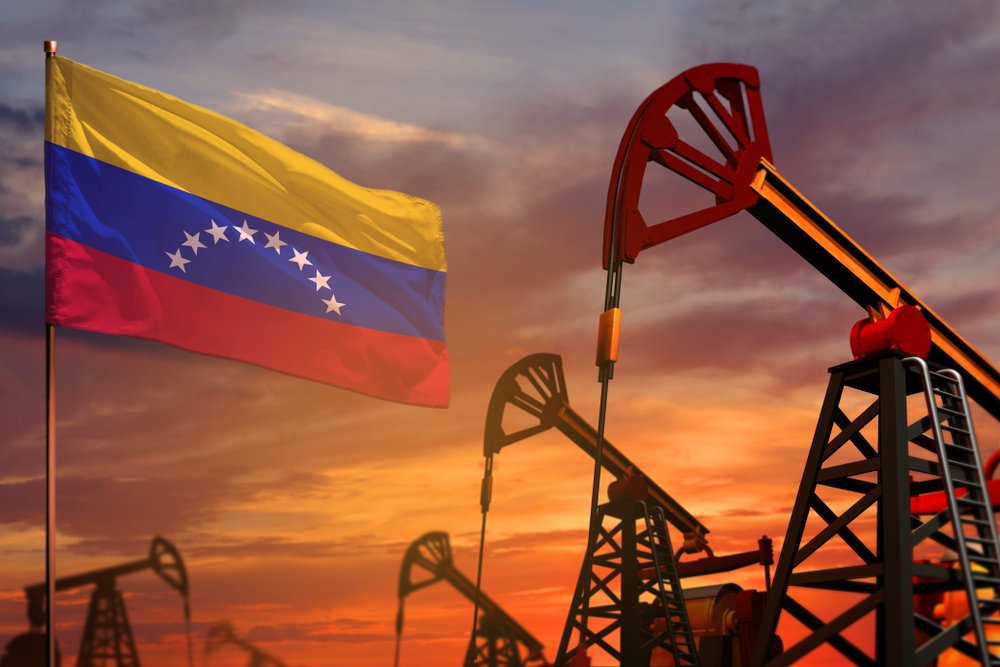
It has been 238 days since the spectacular American action in which the President of Venezuela Nicolas Maduro was arrested and transferred to court in the USA, and now the interim government has ceded a good portion of the oil reserves of that South American country to Washington. World media reported the announcement by American President Donald Trump that the USA has reached an agreement to gain majority control over more than 65 billion barrels of oil in Venezuela.

The American president described the agreement between American Secretary of State Marco Rubio, Defense Minister Pete Hegseth, and interim President of Venezuela Delcy Rodríguez as ‘the largest oil deal in world history!’ on Friday night on the Truth Social platform. – This historic transaction more than doubles American oil reserves, significantly increases our oil supply, and will significantly lower fuel prices for all Americans in the long term, while simultaneously helping to steer Venezuela towards enormous success and great prosperity – Trump stated on his social network.

Immediately behind Aramco

– This transaction will greatly strengthen the already growing relations between Venezuela and the United States! – he added in the announcement. According to the Financial Times, an unnamed White House official claimed that the USA has acquired 55 percent of ‘the effective production of a new private joint venture that will be the second largest private oil company in the world by reserves’ immediately behind Saudi Aramco.

The official stated that the joint project of the American government and ‘an experienced private operator in Venezuela’ will receive 100-year concessions for oil fields with a total of 63 billion barrels of proven reserves. Rubio stated that the agreement will bring ‘almost 100 billion dollars in private investments’ to Venezuela and ‘stimulate the recovery’ of its economy.

The announcement of the oil agreement comes at a time when the Trump administration is facing growing public dissatisfaction due to rising gasoline and diesel prices ahead of the parliamentary midterm elections in November, which will decide control over Congress. The average price of a gallon of gasoline at American pumps has reached 4.09 dollars, 27 percent higher than a year earlier, according to data from the American Drivers Association.

The Venezuelan government did not respond to a request for comment. A source close to the Venezuelan government stated that ‘a major agreement has been reached that establishes a framework for operational management for 17 to 21 oil fields, which includes significant investments in drilling facilities to increase oil production.’

Direct foreign management

In early January, the USA arrested former Venezuelan President Nicolás Maduro and his wife during a nighttime military operation in Caracas. Their trial in federal court in Manhattan on drug trafficking charges is scheduled for next year. Former Vice President Rodríguez took over as interim president after Maduro’s ousting.

– This initiative is the result of strengthening relations between Venezuela and the United States and will allow for a significant influx of investments aimed at the recovery and renewal of strategic infrastructure for the development of our hydrocarbon industry – Rodríguez said. Since Maduro’s arrest, Washington has lifted sanctions, allowing American companies to invest in Venezuela’s oil sector. Venezuelan authorities also passed a hydrocarbons law in January that drastically weakens the state oil company PDVSA and allows private companies to directly manage drilling operations.


This agreement brings an increase in Venezuelan oil production towards the targeted two million barrels per day, which should generate hundreds of billions of dollars in tax and concession revenues for the recovery of the Venezuelan economy. The Trump administration has repeatedly emphasized that stabilizing Venezuela’s economy is the first phase of a three-part plan for political transition in that South American country, which has been under the rule of revolutionary socialists since Hugo Chávez was elected president in 1998.

Oil multinationals Repsol, Eni, and Shell have signed agreements with the Venezuelan government this year, while Chevron, which has been operating in Venezuela for an entire century, increased its stakes in joint ventures with PDVSA in April. Each agreement is likely to face sharp criticism from the Venezuelan opposition, which calls on the USA to force the authorities to call new elections in the country. Depending on the terms of the agreement, this could also raise questions about the legitimacy of Delcy Rodríguez. Domestic opposition and prominent economists argue that the agreement is unconstitutional and was made under duress.

‘Predatory agreement’

In a post on the X platform, Ricardo Hausmann, former Venezuelan Minister of Planning and current professor at Harvard, stated that any agreement to transfer control over reserves to the USA would be ‘a fiasco for all involved’ because the Venezuelan government ‘lacks the legitimacy to enter into this unconstitutional agreement.’

Francisco Rodriguez, a Venezuelan economist based in the USA, stated that ‘the surrender of Venezuela’s oil wealth to the USA violates the constitution and is not in the interest of the people of Venezuela – especially when done under the threat of force.’ He added that the national assembly should block ‘this predatory agreement.’

Any agreement regarding Venezuela’s oil reserves is likely to become a political issue for the Democrats, who have promised to investigate the Trump administration’s dealings with that country if they gain control of one or both houses of Congress in the upcoming midterm elections.

The amount of 65 billion barrels of oil over which the Trump administration claims it will take majority control constitutes more than one-fifth of Venezuela’s total oil reserves, which the country estimates at just over 300 billion barrels. This is more than three times the 20 billion barrels of proven reserves of ExxonMobil, the largest American oil company.

Venezuela has the largest oil reserves in the world, accounting for about 17 percent of the global supply – more than both Saudi Arabia and the USA. Alejandro Terán, director of the Latin American Association of Oil Entrepreneurs based in Texas, stated that the agreement pertains to ‘investment in operational capital’ in the Orinoco oil belt to achieve production exceeding two million barrels per day.

– The way to achieve this is through production-sharing contracts – Terán said. One Venezuelan energy official stated that domestic companies have been sidelined in a wave of deals made with American companies. – Most oil agreements are made with American companies, and that has been a constant throughout the history of this country’s oil sector – said the official. – Just look at us; we play baseball and eat hot dogs and hamburgers – he concluded.

Tagged: