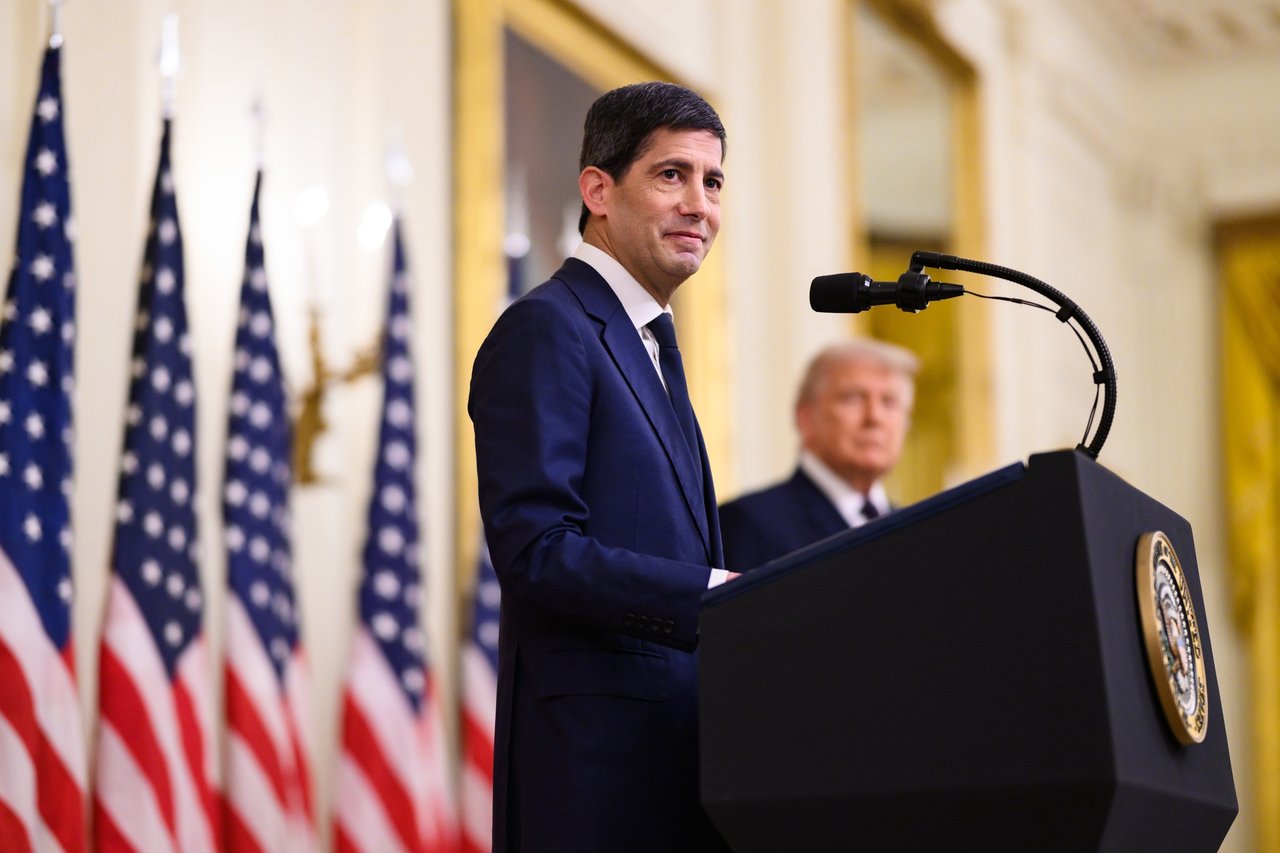
The President of the American Federal Reserve Kevin Warsh, on Friday delivered his first speech at the annual Fed symposium in Jackson Hole since taking office in May, stating that inflation remains too high and warning that interest rates could rise again if greater progress is not made in easing price pressures.
In his long-awaited speech in Jackson Hole, Wyoming, Warsh avoided giving clear guidance on future Fed moves. He did not specify under what circumstances the central bank would respond by changing interest rates.
However, he clearly expressed concern that inflation remains high.
– Although inflation data this summer has been better than expected, it does not tell me that the underlying trends have significantly improved – said Warsh.
– We must ensure that core inflation is moving towards our target, clearly and quickly enough. Otherwise, we have more work to do. That is our job and our obligation that we must fulfill – he added.
His words immediately resonated in the markets. Stock indices did not change significantly after the speech, but yields on U.S. government bonds rose sharply. Additionally, many are now more convinced that the Fed will raise interest rates at its September meeting, CNBC reports.
According to Warsh, inflation is currently the main issue that the Fed should address. At the same time, he showed a relatively high degree of confidence in the U.S. economy, stating that it appears to be stronger.
As before, he highlighted the benefits of artificial intelligence development and assessed that consumption by businesses and households remains stable. The slowdown in employment, he said, is not due to a weakening economy but stagnation in the labor market.
Warsh also used the speech to present his view on how to conduct monetary policy, while avoiding giving concrete indications on how the Fed should act to achieve its goal: price stability and full employment.
– Today I stand here committed to discipline, not decision – said Warsh in a prepared speech before a group that included his colleagues from the Federal Open Market Committee (FOMC), as well as economists and media representatives.
Returning to the Pre-Financial Crisis Approach
In recent months, Warsh has faced criticism for his unclear approach to monetary policy, especially at a time when inflation continues to significantly exceed the Fed’s target of two percent. He is particularly critical of so-called forward guidance, the practice by which the central bank gives advance indications about future moves. He believes that markets should react to economic data, not to statements from Fed officials.