Home / Business and Politics / Varaždin: The Phoenix That Survived Its Rise and Fiery Catastrophe

Varaždin: The Phoenix That Survived Its Rise and Fiery Catastrophe

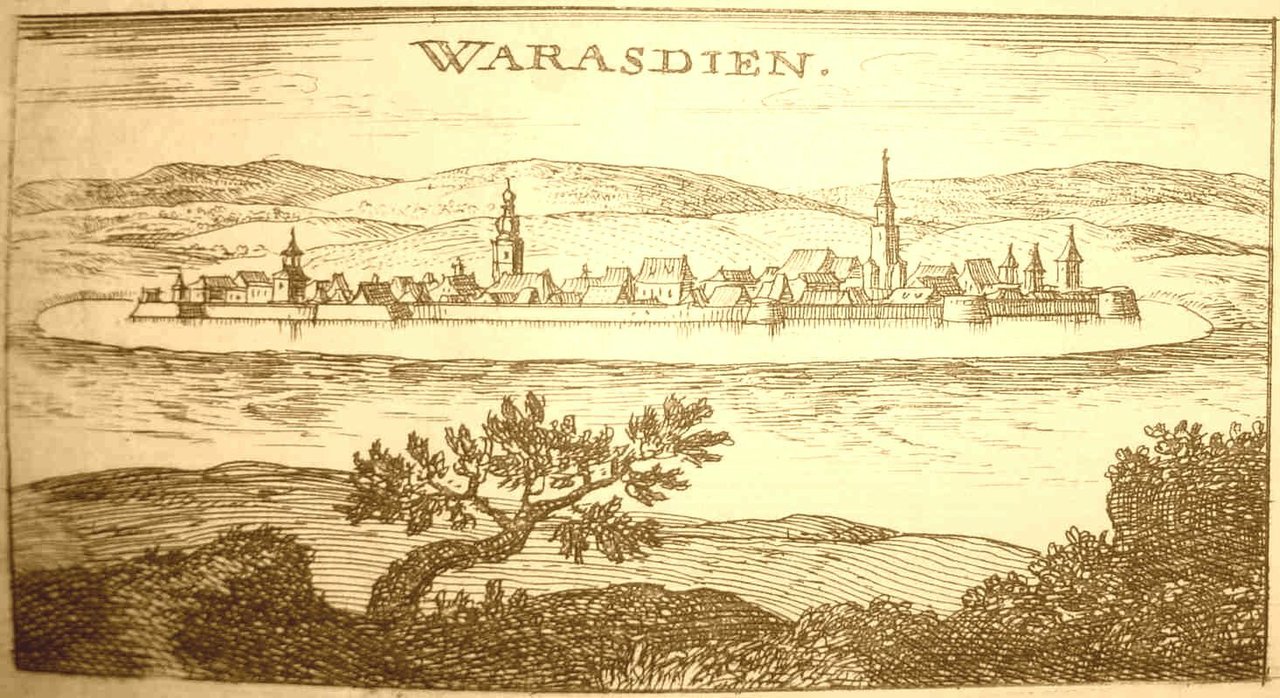
<p>Varaždin u 17. stoljeću</p>
Varaždin u 17. stoljeću / Image by: foto

On August 20, 1181, the Croatian-Hungarian King Bela III. first recorded the name Varaždin in a document, then known as Garestin. It was merely a passing note about a dispute between the Varaždin county head and the Zagreb chapter, but significant enough to be noted as the first known written trace of a city that would play an important role in Croatian history for centuries.

The conflict of two brothers changed the fate of the city

In the early 13th century, the Croatian-Hungarian kingdom was shaken by the conflict between the sons of Bela III., King Emerik (Mirko) and his younger brother Andrija. While Emerik sought to secure the throne for his lineage, Andrija dreamed of his own ruling branch and a stronger position in Croatia.

According to records conveyed by historian Rudolf Horvat, their armies gathered near Varaždin, on opposite banks of the Drava. Instead of a great battle, a dramatic resolution occurred. King Emerik personally crossed the river and appeared in the camp of the opposing army. The Croatian nobles did not dare to rise against the legitimate king, so Andrija was arrested and imprisoned in Kneginec near Varaždin.

Hospitality for the prisoner

According to tradition and chronicles, the citizens hosted and entertained the imprisoned duke, trying to ease his stay in captivity. Fate soon turned. Emerik died, young Ladislav III. did not live long, and Andrija became King of Croatia and Hungary in 1205.

Four years later, in 1209, he granted Varaždin a charter and the status of a free royal city. Many historians believe that the memory of Varaždin’s hospitality at least partially contributed to the decision that would open the doors to great advancement for Varaždin.

Privileges of a free royal city

The status of a free royal city meant much more than prestige. The citizens of Varaždin gained broad municipal autonomy, the right to elect their own judge, freedom of movement and inheritance, and tax privileges.

The city was located on important traffic routes between Pannonia, Austria, and the Croatian regions south of the Drava. Thanks to this, it gradually grew into one of the most important urban centers in northern Croatia.

When Varaždin was the Croatian capital

The peak of Varaždin’s power came in the 18th century.

In 1756, Ban Franjo Nadasdy moved his seat to Varaždin. The most important administrative institutions came to the city, the Croatian Parliament convened there, and Maria Theresa established the Croatian Royal Council. Varaždin became the political center of Croatia and a sort of capital of the then country.


This period left a mark that is still visible today. Luxurious baroque palaces were built, squares and parks were arranged, and Varaždin has remained a baroque city to this day.

The fire that changed history

Everything changed on April 25, 1776. A fourteen-year-old peasant, Jakov Verček, was frightened by a pig while extinguishing lime on the city mayor’s estate, causing him to fall into a pile of straw with a lit tobacco.

The great fire destroyed approximately four-fifths of the city. The fire consumed houses, palaces, and public buildings for four days, and the consequences were not only material. Soon after the disaster, the political and administrative center of Croatia was returned to Zagreb, which would gradually strengthen its leading role from then on.

It is hard not to wonder how Croatia would look today if that fire had never happened. Perhaps Varaždin would have remained the political center of the country.

From Varteks to new industries

But Varaždin recovered again.

During the 19th and 20th centuries, it grew into a strong industrial center. The textile, food, metal, and wood industries developed, and the city became synonymous with work discipline, entrepreneurship, and economic success.

The most famous symbol of that period was Varteks. Generations of Varaždin citizens worked in the textile giant whose suits and garments were known throughout the former state.

Many feared that the difficulties and prolonged decline of Varteks would severely impact the city. However, Varaždin demonstrated resilience that has accompanied it for more than eight centuries. Instead of relying on a single economic giant, it developed a network of successful medium and small enterprises, export production, logistics, new technologies, and the IT sector.

A city that always rises again

Few Croatian cities have a history that contains so many dramatic turns. Varaždin has been the site of dynastic conflicts, the first free royal city of continental Croatia, the political center of the country, a victim of a catastrophic fire, and has established itself as one of the leading industrial centers in Croatia.

Perhaps that is why its greatest success is not that it was once the political center of Croatia, but that it has proven its ability to survive every crisis over more than eight centuries. From Andrija’s imprisonment in Kneginec to the collapse of Varteks, Varaždin has always known how to adapt to new circumstances. This resilience may be the most important part of its identity.

Tagged: