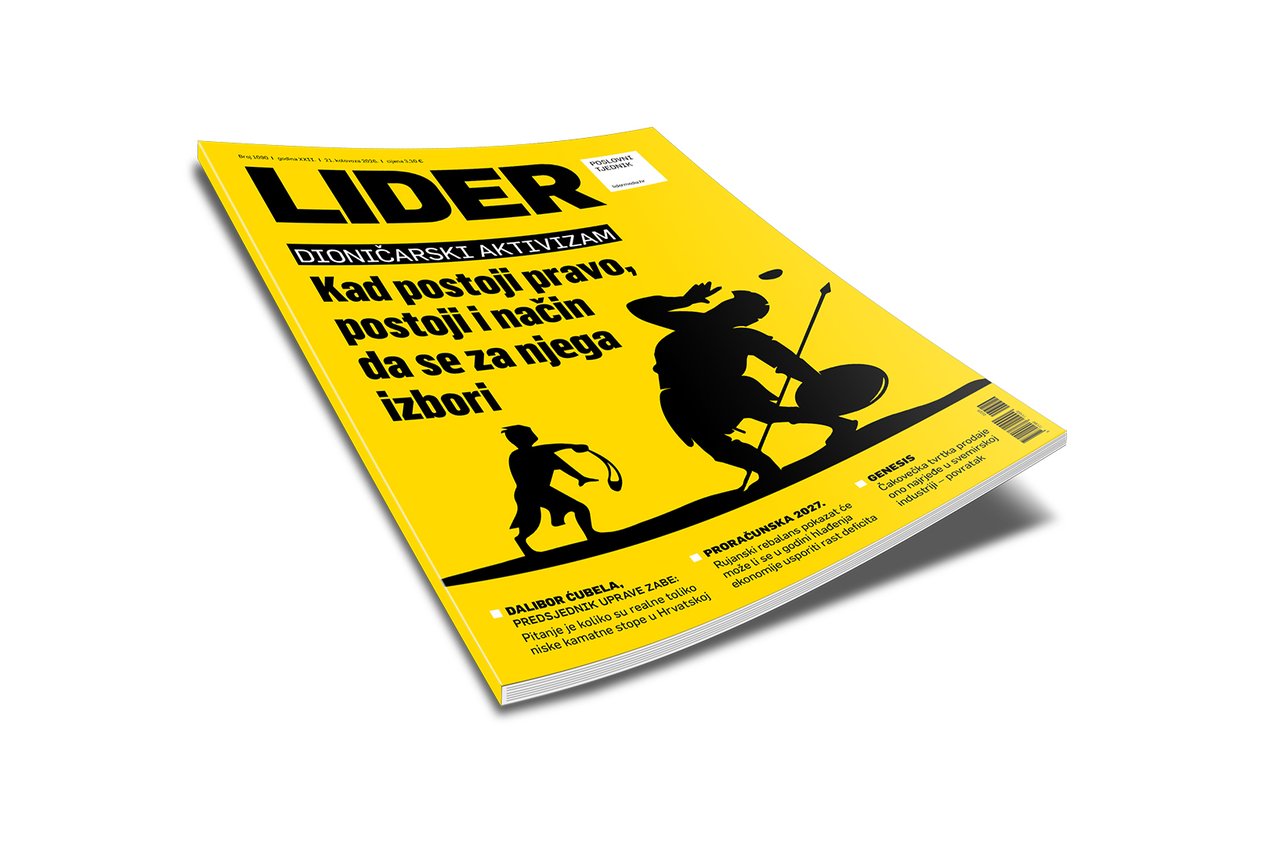
The Prime Minister will still be able to relativize the Gospić case with 76 secure votes in the Parliament. It remains to be seen how Croatia is soon becoming a member of the OECD, the club of the world’s most developed countries. In most of these countries, tap water is either prohibited or not recommended for drinking. So why should Croatia be an exception, emphasizes Miodrag Šajatović, editor-in-chief of Lider, in this week’s ‘Ekonomalije‘.
Measures aimed at increasing budget revenues and restraining further expenditure growth could play an important role in assessing Croatia’s fiscal position, which will be assigned to us by the European Commission, on which the potential initiation of the excessive budget deficit procedure depends. The key question is whether the announced savings of 1.3 billion euros will be fully realized. Learn more about the budget for 2027 in the current topic.
A strong economy is unimaginable without strong banks, and the Croatian market is dominated by five large banks, mostly foreign-owned. For decades, the largest has been Zagrebačka banka, owned by the Italian UniCredit, which, despite its size, shares the fate of the entire banking sector, as well as the economy, which is no longer growing as dynamically as in previous years. What does this mean for banks, which are simultaneously facing potential additional taxation due to extraordinary profits, as well as the still unresolved issue of converting loans into Swiss francs? We discussed this with Dalibor Ćubel, the CEO with 25 years of experience in banking.