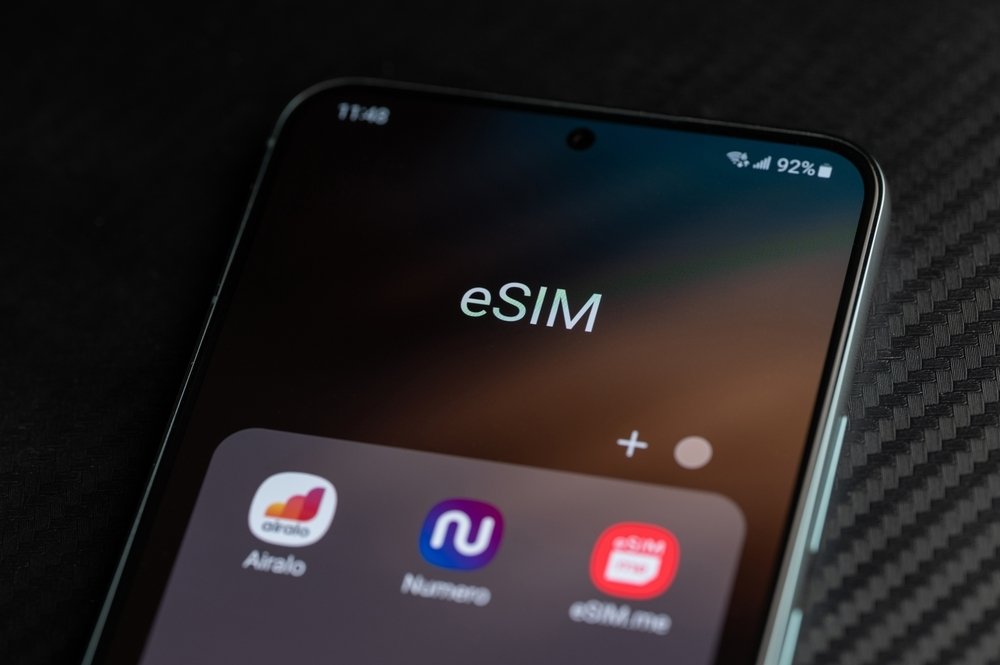
The demand for eSIM cards used for travel could increase by about a third this year as travelers are increasingly seeking more affordable options than traditional roaming data packages.
According to the Financial Times, analysts from the research firm FDM CCS Insight estimate that around 134 million traveler eSIMs will be used worldwide this year, compared to 101.8 million recorded in 2025.
The main reason for this growth lies in the fact that applications like Airalo and Sailya offer packages that are generally significantly cheaper than those of traditional telecoms, for whom roaming accounts for between three and five percent of total revenue with above-average profit margins.
In addition to applications, the financial sector is entering the market, with companies like Revolut and Klarna offering their own, cheaper eSIM packages to users. For example, Revolut’s eSIM offers users 1 GB of data valid for seven days at a price of £3.49, while the British operator EE (owned by BT) charges as much as £8 for 500 MB for just 24 hours.
Joe Gardiner, an analyst at FDM CCS, warns that the loss of roaming revenue will depend on whether telecoms respond to this new competition with innovations, price adjustments, or improved service.
Consumers Are Becoming More Informed
Researchers at STL Partners estimate that the market for traveler eSIM cards was worth £649 million in 2025 and could reach a value of £3.2 billion by 2030. However, this growth is also attributed to the increasing number of smartphones compatible with eSIM cards. According to data from the GSMA, the global mobile industry association, more than 326 device models, including the entire Apple iPhone line, supported eSIM in 2025, representing an increase of nearly 50 percent compared to the previous year.
Vykintas Maknickas, CEO of Sailya, emphasizes that the eSIM market is benefiting significantly from the increasing awareness of consumers.
– The market is shifting from educating users to attracting and converting them, and this process is now accelerating dangerously, says Maknickas.
The expansion of traveler eSIMs further complicates the position of traditional mobile operators, who are already struggling with competition from mobile virtual network operators (MVNO). These operators utilize their existing infrastructure to provide comprehensive services without the need to invest in building their own networks. The Financial Times reported in May that the three leading British mobile operators recorded the worst year for customer loss in history in 2025.