
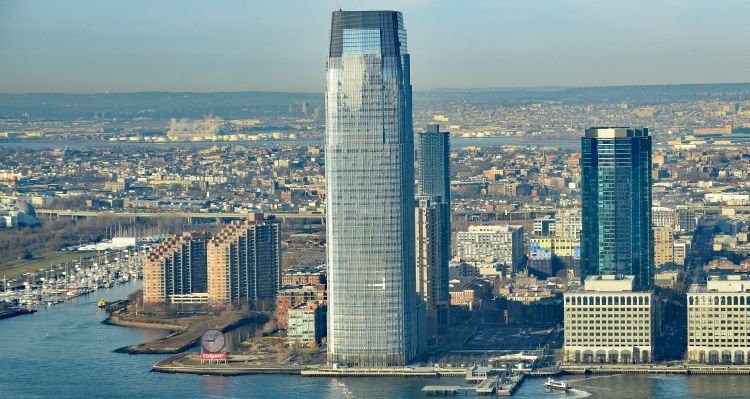
The announcement of quarterly business results is in full swing. The main U.S. stock indices are rising and breaking records, finding momentum in good macroeconomic indicators and strong corporate earnings. Let’s take a look at how two significant companies from the investment banking world performed, the (un)reasonably notorious The Goldman Sachs Group, Inc. (NYSE:GS) and Bank of America Corporation (NYSE:BAC), and what they delivered to their shareholders. Did the business results for Q1/2017 disappoint or please investors? Let’s find out below.
The Goldman Sachs Group, Inc. (NYSE:GS)
The Goldman Sachs Group, Inc. is a leading firm in the investment banking industry, operating for 148 years, with a current market capitalization of $91.26 billion and 34,900 employees worldwide. The company was founded in 1869 and is headquartered in New York. The current stock price is $226.85, having ranged from $138.20 to $255.15 over the past 12 months. The stock is included in the S&P 500 and DJIA indices. The quarterly earnings reports were released before the market opened, and the stock price fell by 0.03% in pre-market trading. Let’s look at the financial report results below.
>>>Bank of America: The chances that we live in the ‘Matrix’ are 20 to 50 percent
Earnings per share in the first quarter of 2017 amounted to $5.15, which is $0.16 less than analysts’ expectations, who forecasted a level of $5.31. In the same period last year, earnings per share were $2.68, representing an increase of 92.16% in 2017. Revenues in the first quarter of 2017 amounted to $8.03 billion, which is $420 million less than analysts’ expectations, who predicted a revenue level of $8.45 billion. Revenues in the same period last year were $6.34 billion, and in 2017, revenues increased by 26.65%, or $1.69 billion. The stock has gained about 37% over the past 12 months.

Bank of America Corporation (NYSE:BAC)
Bank of America Corporation is one of the largest banks in the commercial banking sector. It was founded in 1874 and is headquartered in Charlotte, North Carolina. Today, it has over 208,000 employees, and its current market capitalization is $244.37 billion. The largest segment in which the bank operates is the commercial banking segment, which has over 4,600 financial centers and 15,900 ATMs. The current stock price is $24.15, having ranged from $12.05 to $25.08 over the past 12 months. The announcement of quarterly financial reports was accompanied by a 0.31% increase in the pre-market price. What are the results? Let’s look below.
Earnings per share in the first quarter of 2017 amounted to $0.41, which is $0.06 higher than analysts’ expectations, who anticipated a level of $0.35. In the same period last year, earnings per share were $0.21, representing an increase of 95.23% in 2017. Revenues in the first quarter of 2017 amounted to $22.2 billion, which is $590 million more than analysts’ expectations, who forecasted a revenue level of $21.61 billion. Revenues in the same period last year were $20.9 billion, and in 2017, revenues increased by 6.22%, or $1.3 billion. The stock has gained about 61% over the past 12 months.


