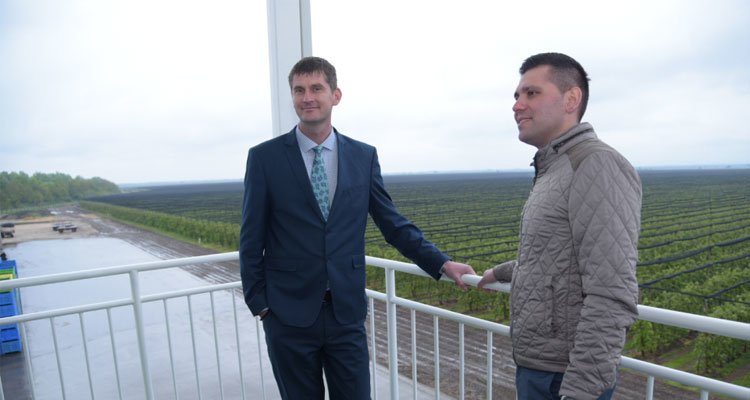
Just ten kilometers from the border of Croatia and Serbia, on the Podunavlje estate in the village of Čelarevo, lies the largest orchard in this part of Europe, covering as much as 500 hectares of land and producing 70 tons of apples per hectare. The orchard, owned by the Serbian company Delta Agrar, has surpassed the once largest orchard Borinci in Croatia, which was synonymous with fruit growing, especially apples, and today its production has significantly declined. In Čelarevo, they export 80 percent of their production, around 200,000 tons of apples, primarily to Russia, but also to the Middle East, the Netherlands, and England. They have around 300,000 tons of other fruits ready for export, including 2,000 tons of plums, peaches, cherries, and sour cherries.
>>>Great Increase: Which Fruits and Vegetables Are Most Produced in Croatia?
They are part of Delta Holding, owned by Miroslav Mišković, who is also the president of Delta Holding. Serbian media have already begun speculating that he is interested in the agro segment of Agrokor. The top management of Delta Holding confirmed that they have the financial and personnel potential to strengthen some of Agrokor’s companies, but it remains to be seen whether this will materialize. Last year, Delta Agrar achieved revenue of around 230 million euros, they are export-oriented, and their goal is for exports to account for 40 percent of total revenue. Delta Agrar in Čelarevo has focused on so-called club apple varieties, which are protected apple brands that can only be grown by certified producers who receive this right from the license holder. Club apples are often packaged in small bags, containing several pieces, and can be sold in better stores, not just at markets or large supermarkets.

According to the director of the Čelarevo orchard, Nikola Milićević, Delta Agrar has obtained the right to produce eight apple varieties, among which Pink Lady stands out as the most famous apple variety. Serbia, says Milićević, received the license for Pink Lady after four years of negotiations and is the fourth country in Europe to obtain this right.
– Over four years, they came for negotiations and assessments at this estate, and due to high yields and the possibility of expansion, they ultimately chose us. Today, we are the only ones in this part of Europe licensed for Pink Lady, and this apple variety should not be planted without approval. We report various illegal producers and initiate procedures for destruction, and as far as I know, Croatia has paid one million seven hundred thousand euros in fines for the illegal sale of Pink Lady apples. Until a few years ago, no one in Serbia had even heard of the apple varieties we now have; Idared was the only variety that was planted, and that was logical because it is the easiest to grow and the most widespread. However, besides Pink Lady, we have also obtained licenses for varieties such as Evelin, Modi, Kiku, Isaaq, Red Moon, Sweet Tango, Rubens – says director Nikola Milićević.
The largest investments in the company have been made in fruit and vegetable production, and over the last ten years, they have invested 50 million euros in fruit growing.
The largest investments in the company have been made in fruit and vegetable production, and over the last ten years, they have invested 50 million euros in fruit growing. They have invested all from their own funds and have not drawn money from EU funds. They plan to expand the estate to 1,000 hectares and increase apple plantations, as well as modern cherry plantations, and employ 300 workers plus 1,000 seasonal workers. They are not interested in apple processing, they do not have juices or the popular healthy apple chips, but only small quantities of apple brandy. The director of the cold storage, Nikola Nenadović, explained the process of the most modern apple production and packaging, which, in addition to the most modern facility, has extensive distribution, and in the last ten years, apple production has doubled.
Delta Agrar is a company that has been present in agribusiness since 1993 and is engaged, among other things, in primary agricultural production, cooperation, and procurement. The total area of five agricultural estates, including Podunavlje, amounts to 15,000 hectares.