
This column is being written on April 12. Unlike last week’s, written in an atmosphere of panic due to the uncontrolled collapse of the components of the Agrokor group and the company as a whole, and the most serious threat of a domino effect that could push the Croatian economy back into recession, this text is being created in a much calmer business environment. With the activation of ‘lex Agrokor’ and the entry of the state’s extraordinary commissioner Ante Ramljak into Agrokor, confidence has, at least temporarily, somewhat returned.
Those who have experienced this themselves or have witnessed similar downfalls of fundamentally healthy companies, but which were poorly managed financially, know that, in fact, only a little fresh money is needed to stabilize operations in the short term. This is happening, for example, in Konzum, which generates revenue of about 25 million kuna every day.
Bankers Recognize Potential
The fact that bankers and other investors are willing to further finance the struggling and heavily indebted Agrokor system shows that the potentials of the system, once it is isolated from old debts, are actually significant.
The government of Prime Minister Andrej Plenković should be acknowledged for having, after previous dramatic delays in decision-making, played this opening of a long-term not entirely secure game well. With the note that it will take time before a complete picture of the circumstances that caused the escalation of Agrokor’s collapse and the departure of founder Ivica Todorić from the position of CEO of the largest group in Croatia is established.
There are still many threats, especially regarding Agrokor’s parts outside Croatia, which are not under the glass bell of protection according to ‘lex Agrokor’.
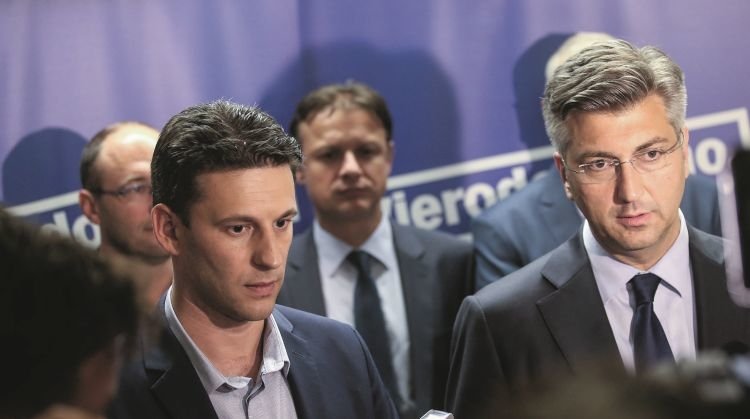
At this point, I would like to focus on this week’s statement by the leader of Most and President of the Parliament Božo Petrov, which states: ‘I believe that all Croatian companies, when those from Agrokor enter the market, should participate in the purchase because I believe that we do not need one giant, but a series of strong Croatian companies. If we set the rules this way, we lay healthy foundations for the economy and market competition.’ Božo Petrov touched on a very important topic for the future of the Croatian economy. But in a completely wrong and dangerous way.
It is time to finally open a professional, but also political discussion about what the desirable structure is when it comes to the size of companies in Croatia. But to claim, without presenting any analysis, that Croatia ‘does not need one giant’ is extremely irresponsible. First, the division into ‘giants’ and ‘strong companies’ is confusing. Can’t a giant be a strong company? It would be more logical for Petrov to have spoken, if he has already touched on this topic, about giants and, say, medium-sized companies (according to standards in Croatia). Furthermore, it turns out that the leader of Most claims that any large national company is contrary to the healthy foundations of the economy.


