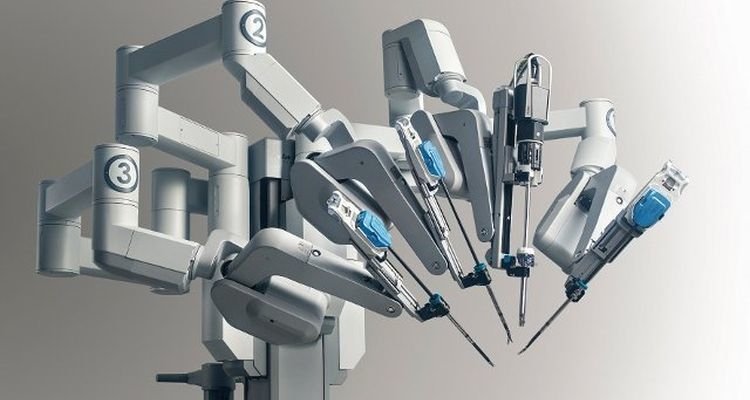
Will artificial intelligence (AI) and robotics replace human doctors? Not yet, but healthcare is changing and the public is ready for it. According to PwC’s research, the majority of users are willing to receive healthcare from such advanced technologies that have the potential to change the delivery of healthcare to make it better, faster, and more accessible to everyone.
>>>VIDEO: Domino’s and the co-founders of Skype are starting to automate pizza delivery in Hamburg
The results are analyzed in PwC’s report Whatdoctor? WhyAIandroboticswilldefine New Health, which is based on research involving more than 11,000 people from 12 countries across Europe, the Middle East, and Africa. In the region, more than half of respondents (55%) said they are willing to use advanced computing technology or AI robots that can answer health questions, perform searches, make diagnoses, and recommend treatments.
The results indicated three main themes
People are increasingly willing to engage with AI and robots if it means better access to healthcare, the speed and accuracy of diagnosis and treatment are crucial factors in their willingness, and trust in technology is key to broader application and acceptance; the “human factor” remains the main ingredient in healthcare.
Emerging markets are the most open to relying on technology in care. A pattern was observed between developed markets and emerging markets for all questions in the research. People in countries with well-organized and therefore less flexible healthcare systems (UK and Western/Northern Europe) are willing to communicate with a non-human healthcare provider, but less so than people from emerging markets, where healthcare is still being shaped and built.
Robots in the Operating Room
The research showed that even in the operating room, respondents are willing to accept robots performing minor surgical procedures instead of doctors, with nearly half to as much as 73% of all respondents expressing a positive response. Respondents in Nigeria, Turkey, and South Africa are the most willing to undergo minor surgical procedures performed by robots (73%, 66%, and 62% respectively), while the least willing are respondents in the UK (36%).
It may not be surprising that the situation dramatically changes when it comes to major surgeries such as knee or hip joint replacements, tumor removals, or heart surgeries. Nevertheless, a significant percentage of respondents are still willing to undergo a major surgery performed by a robot: from 63% in Nigeria to 40% in the Netherlands and 27% in the UK.
>>>PwC: We cannot have an age of machines without people
The research also examined key drivers of a person’s willingness or unwillingness to use a procedure or healthcare service provided by AI or robots. Easier and faster access to healthcare services (36%) and the speed and accuracy of diagnosis (33%) are the main motivations for willingness, while lack of trust in the ability of robots to make decisions (47%) and lack of human contact (41%) are the main reasons for hesitation. Although percentages vary from country to country, the two mentioned advantages and disadvantages are listed in the same order in all countries except Saudi Arabia and Qatar, where respondents consider the lack of “human contact” to be the biggest drawback.
– Whether we like it or not, AI and robotics are the future of healthcare. Access to quality, affordable healthcare and good health for all are the ultimate goals. The economic and social benefits that can arise from the gradual integration of AI and robotics into existing healthcare systems and the creation of new healthcare models based on these technologies are enormous, said Dr. Tom Wilson, head of healthcare services for the Middle East.
Next Steps for Government, Businesses, and the Profession
Governments need to create quality standards and a regulatory framework applicable to and mandatory for the entire healthcare sector, as well as appropriate incentives for adopting new approaches. Healthcare professionals need to understand that AI and robotics have the potential to work for and with them both in the medical environment and throughout the entire healthcare ecosystem and should be open to challenges.
Decision-makers in healthcare institutions need to develop an evidence base, measure the success and effectiveness of new technology, and focus on what users want and need.
Patients need to get used to AI and robots and discover the benefits they can provide. The private sector developing AI and robotics needs to create solutions for the major demand and resource problems faced by every healthcare system. By providing AI and robotics-based solutions, the private sector has the opportunity to bring lasting changes to healthcare.
– It is clear that people are becoming increasingly willing to accept new technologies such as AI and robotics for their healthcare needs. However, governments, businesses, and the healthcare profession must start thinking completely differently about how we provide healthcare to citizens. We must carefully consider the implementation strategy in different parts of the world. We will all face challenges, said Dean Arnold, Europe, head of PwC healthcare services for Europe, the Middle East, and Africa.