
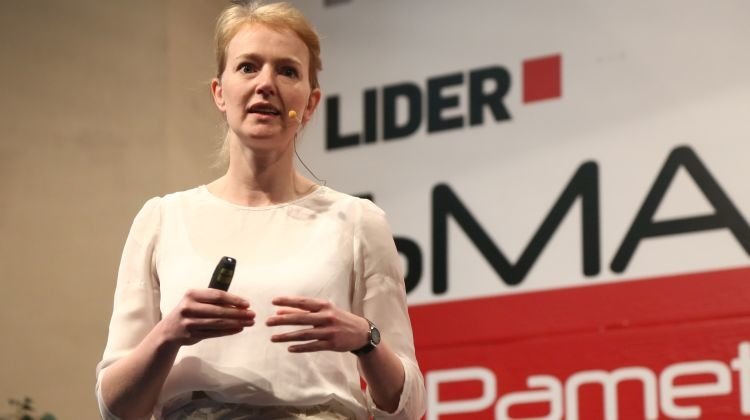
Open collaboration with citizens, a long-term vision, and competent leadership are prerequisites for the creation of smart cities. This is the conclusion of the presentation by Vedran Kružić from Sense Consulting, which opened the Lider conference Smart Cities 2017 – Smart Solutions for a Sustainable City at the Zagreb Fair this morning.
He stated that the concept of a smart city involves the transformation of standard public services into personalized services and that the private sector should play a more significant role in this transformation, in city development planning, decision-making, and solution implementation. He presented data indicating that smart cities are the first new industry of the 21st century and that by 2040, $40 trillion will be invested in their creation. Managing smart cities requires a specific set of competencies and knowledge, Kružić said, and openness, a desire to learn, readiness for change, developing a culture of collaboration, and effective use of data are also important. He also mentioned that more than a third of transformations into smart cities occur in small towns, and a good example of a smart city is the large American city of Seattle, which fosters innovation, develops a vibrant cultural scene, and connects its citizens, where companies like Amazon and Microsoft have emerged.

Amsterdam’s mobility project
The example of the smart city of Amsterdam was presented by Marije de Vreeze from the local platform Konnekt for the development of smart urban mobility. We heard that one of Amsterdam’s ambitions is to achieve zero CO2 emissions by 2025. In collaboration with citizens, local authorities are working on installing 850,000 solar panels, one for each resident, and they are currently at 350,000. The idea is also to have 100,000 sustainable residential buildings and to prevent traffic congestion. The Amsterdam mobility project is unique, de Vreeze said, and she explained that one-third of citizens travel by bicycle, one-third walk, and one-third use public transport and cars. Despite this, 60 percent of public space is occupied by cars, so Amsterdam is developing smart solutions such as parking standards based on the number of built houses, traffic lights that favor cyclists, and cargo bicycles for transporting goods within the city. She also mentioned that in creating smart solutions, they collaborate with companies from which they can obtain data on residents’ movements, such as TomTom, and that all data on smart Amsterdam solutions is available on one website.


