
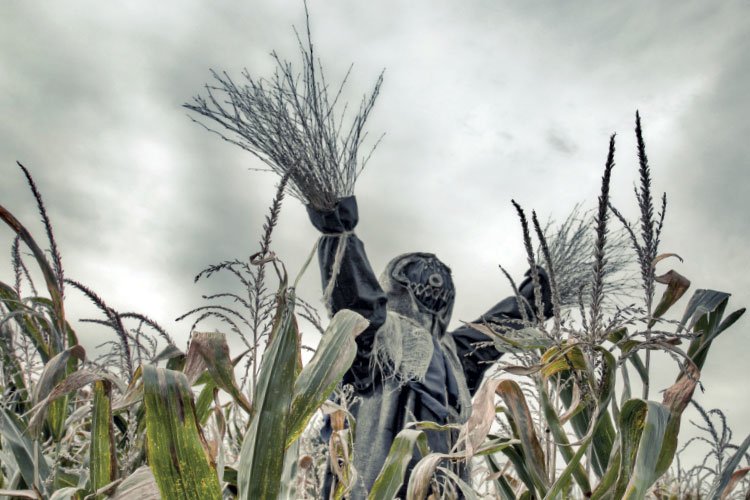
Anyone who has a garden, vineyard, orchard, or a larger piece of land, plants vegetables for their needs or engages in agriculture, knows how difficult it is to protect planted and sown crops from lovers of natural delicacies. Moles, starlings, pigeons, sparrows, crows, mice, deer, wild boars, or rabbits can quickly destroy all the effort and put great strain on gardeners and farmers. To protect their gardens and crops, in addition to the increasingly rare use of straw scarecrows and plastic bags tied to sticks, they have turned to technology and science. New modern scarecrows are devices that operate on small electric batteries and accumulators, using ultrasound or recordings of the calls of certain predatory birds to scare away unwanted animal visitors. They can be charged with solar power and activated as soon as they sense movement within their range. However, they do not only scare away the animals for which they were set up, but also all others. This can disrupt the balance in nature, particularly those that cause great suffering to animals, such as glue traps for catching rodents.
The Animal Friends Association believes that the root of the problem lies in human actions directed towards personal benefit and profit, treating animals as pests. The websites, they add, that advertise their products, repellents for wild animals, already categorize wild animals as enemies of fields and forests through their rhetoric. – On one page, a manufacturer of wild animal repellents describes deer and elk as pests: ‘Deer generally uproot shoots, and young plants are often completely destroyed. Another way of harmful action is rubbing the antlers of the buck against the trunk, sometimes to the point of completely destroying the tree. By rubbing its antlers against the trunk, the buck removes the skin and hair from its new antlers while simultaneously marking its territory. The elk causes the most damage to trees by stripping bark and damaging them by hitting and rubbing their antlers. Ash, oak, and spruce are particularly exposed to this. Significant damage is also caused by biting off buds and shoots.’ By using such a distorted image of deer and elk, whose natural habitat is the forest and have nowhere else to live and nothing else to eat, they are portrayed as animals that are parasites and need to be driven away. Humans, the greatest pest on the planet and the species responsible for the destruction of forests and nature as a whole, label wild animals as those that need to be limited with various repellent means in already destroyed and reduced habitats – they note in the association. The same applies to birds and other wild animals that feed on fruits, seeds, and crops growing in their habitat areas. They consider it very important to highlight this paradox when discussing animal repellents.
Instead of causing harm to animals and nature, for example, smaller animals can be relocated or barriers can be set up for ground movement, such as copper fences and strips, dry tree bark, straw, or sawdust. Birds can be deterred by placing protective nets over plants, while visual and auditory scarecrows are less effective as birds quickly acclimate to them. Ecological means based on plants with repellent properties are not harmful to plants, fruits, vegetables, and animals, unlike chemical means. Moreover, Animal Friends point out that chemicals are harmful to humans as well and destroy plant cultures in the long term, having a very long waiting period (the time of decay, the period from the last application of the chemical to harvest). They also recommend planting plants that have a repellent effect on certain species of animals that need to be driven away from the area. – Pesticides are particularly harmful as they kill insects important for pollinating plants, primarily wild bees, which are the best pollinators and are becoming extinct due to the preference given to the cultivation of one species of bee, the honeybee. Honey today is full of pesticides from grazing areas, as well as poisons used to treat hives and bees. Therefore, it is necessary to revitalize the species and habitats of wild bees that still have a chance. Every individual can, instead of using honey, beeswax, propolis, and royal jelly, prefer ecologically and ethically suitable products for sweetening and broader use, such as vegan grape fats, candles, and similar items. In recipes, agave, rice, and maple syrup, molasses, barley malt, dried fruits, or fruit sugar can be used – emphasize Animal Friends. They advocate for a ban on the use of glue traps and other traps that cause the death of rodents, birds, and even other animals. They have therefore proposed that glue and other traps that cause long-term pain and suffering to animals be banned in Croatia by a new animal protection law. The association warns that these traps are one of the cruelest methods of capturing and killing animals and are responsible for more suffering than any other product on the market for controlling wild animals. They consist, they describe, of pieces of cardboard, particle board, or plastic coated with glue that catches any animal that, attracted by bait, crosses their surface: mice, rats, birds, squirrels, snakes, or kittens. The methods of dying caused by glue traps are always painful, and the association conveys that research shows that most animals caught in sticky traps try to free themselves. – An animal can struggle for days to tear its fur, skin, and feathers from the glue, often biting its own limbs or breaking them to free itself. The glue irritates and damages their eyes. The noses, mouths, or beaks of animals can get stuck in the glue, causing them to suffocate and slowly die, which can take hours. Animals can suffer for days until they die from hunger or thirst. Besides being a cause of animal torture, glue traps do not solve the problem of mice in homes, buildings, and industrial facilities in the long term. Rodent population control should focus on addressing the causes and sources – they convey in the association.


