
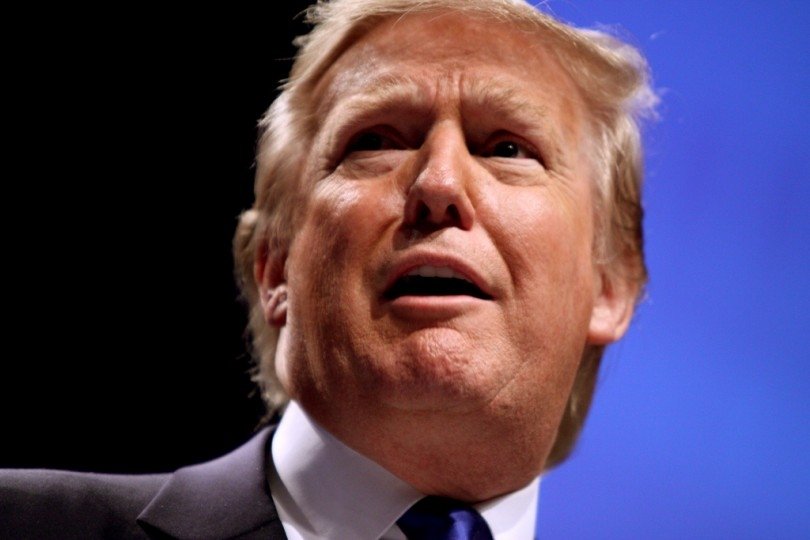
The world was a complicated place even before Donald Trump won the presidential election in the USA. The entry of the controversial entrepreneur into the White House will very likely affect many things, including business and globalization. The majority of the business community is certainly aware that, no matter how far America is, the consequences of what will be decided in Washington will, sooner or later, and through a series of derivatives, impact the future of companies in Croatia. It has already been difficult to predict anything and plan based on that. From domestic games between the ruling HDZ and Most regarding tax reform (to start) to the technological revolution that brings previously unimaginable disruptive business competitors and triggers a crisis in the European Union institutions, which we have just begun to get used to, to the question of how long the global economy will remain out of recession thanks to increasingly potent heavy financial drugs.
When it happens – it’s too late
One possible solution for entrepreneurs, managers, and economic policymakers in the government is the use of a tool called – scenario. It is no longer helpful to ‘bet’ on one possible sequence of events in the company’s environment. It is dangerous to start thinking about adaptation when a change has already occurred. Those who survive are capable of making quality complicated decisions in a short time. Those who want to survive in increasingly turbulent circumstances must master the techniques of shaping multiple possible futures. If necessary, five or six scenarios. Some of which, preferably, should be pure fantasy from today’s level of understanding. There is a high probability that this fantasy could become a reality. If one pays a little more attention to the mention of the term ‘scenario’, one can notice its increasing frequency. In Agrokor, for example, they often mention how different scenarios are being played out in the Group. The management of INA recently stated in a press release regarding the announcements that the Oil Refinery in Sisak could be closed that they are working on several possible scenarios. Finance Minister Zdravko Marić, defending the final proposal for tax reform, has repeatedly stated that dozens of different scenarios have been created…
At the end of the twentieth century, it was enough to project old trends into the future and plan based on that. There was a fashion trend that every company worth its salt had a vision, mission, and annual plans. Then the plans were revised semi-annually or quarterly. Today, that is no longer sufficient. Experienced players master the techniques of creating quality scenarios, and decision-makers, depending on the development of the situation, pull out a specific scenario. Given that they have already come to hypothetical decisions on what to do when things get tough while playing with these scenarios, the process does not start from scratch. Solutions and adaptations are already prepared. Of course, the technique of scenario creation is not a magical solution, but those who apply it claim that this approach has been crucial for them. Whether it is about which part of the business to sell, what to acquire, which production to abandon, which new businesses to enter, how to confront challengers who have already stepped into the fourth industrial revolution and come with disruptive business models…


