Home / Information / Niedermayr-Kruse: The Lack of Competencies Among Controllers is a Key Cause of Inefficiency

Niedermayr-Kruse: The Lack of Competencies Among Controllers is a Key Cause of Inefficiency

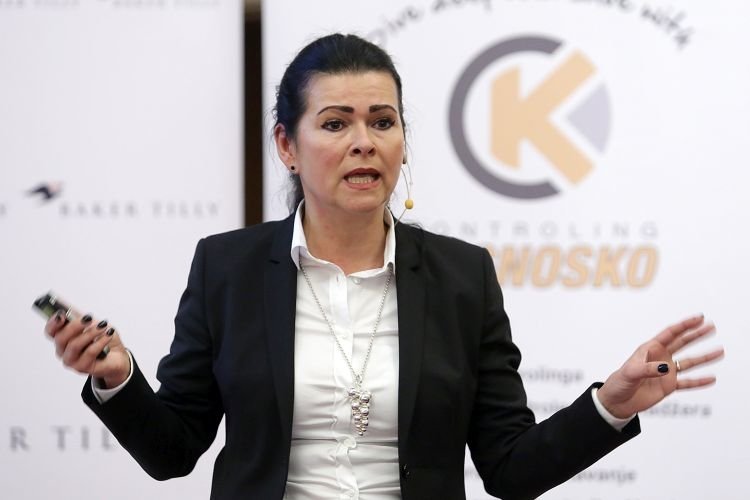
What competencies are expected from a modern controller was explained by Rita Niedermayr-Kruse, a member of the Board of the International Group for Controlling (IGC), in her speech at the 4th International Conference on Controlling, where she published a standardized model of competencies for controllers, known as the IGC model.

– Most companies lack a systematic overview of the competencies of controllers, leading to difficulties that include insufficient knowledge, employee inefficiency, low motivation, and an increase in workload with the same number of employees, Niedermayr-Kruse, a member of the Management Board of the Austrian Institute for Controlling, pointed out. To address these issues, it is necessary to establish a framework for competencies and manage them, starting with defining the mission of the controller.

Each company can compile a different set of competencies that their controllers should possess, depending on the specificity of the work they perform. Less than half of the companies that participated in a Deloitte study have systematically defined and transparent competencies for controllers.

The modern development of controlling should be realized through four steps: adopting a new paradigm in the work of each controller – from expert to partner in management, building the elements of the IGC competency model, implementing competency management for controlling, and applying it for the development of controllers.

Successful companies manage the necessary competencies of controllers more systematically, and behavioral traits are more important to them than knowledge and technical requirements. Therefore, it is not surprising that in the future, competencies such as deep business understanding, the ability to pose critical challenges, communication, and persuasion will become increasingly important. Of course, improving leadership competencies will always be of great importance. According to various studies, leadership is extremely important in controlling, but this leadership also encompasses project management, reporting on collaboration with others, and similar tasks.

Puna dvorana
4th International Conference on Controlling gathered 170 participants.

Rita Niedermayr-Kruse explained how competency profiles for controllers are created in specific functional groups using the example of Telekom Austria.

– When creating competency profiles for controllers, the complete picture is taken into account, as well as general and specific competencies. When working on competency profiles, you can prepare a nice analysis, but it will be of no use if it is not applied. It is necessary to comprehensively analyze all these aspects, in addition to competencies, and consider financial aspects as well, said the member of the IGC Board.

Biovega has the best controlling project in 2016.

She also explained how much can be done during discussions within the company about the necessary competencies of controllers.

– The lack of awareness about competencies is something that can change quickly. Efforts should be made to raise awareness so that all stakeholders are focused on the development and improvement of these competencies. The issue of competencies in controlling is closely related to the management structure of the company, and even discussions with company leaders can be very beneficial. If the opportunity for such discussions is missed, the consequences will be visible. It is undisputed that the lack of competencies among controllers represents a key cause of inefficiency in companies, Niedermayr-Kruse concluded her presentation.

You can view the presentation here.

The conference moderator, Jasmina Očko, was interested in how the IGC publication presenting the competency model for controllers was created.

– At an IGC event in Munich, we discussed controlling with young students for whom education does not end after graduation but only begins. We asked ourselves what the responsibilities of the IGC are in this context and realized that we must address the very root of everything – skills and competencies. There are other functions within the company that need to be addressed, but we started with controllers because they play the role of initiators, agents of change. Our experiences can help the company in a number of other areas, for example, they can be utilized in the finance segment, explained Niedermayr-Kruse, the source of inspiration for this commendable IGC publication.