
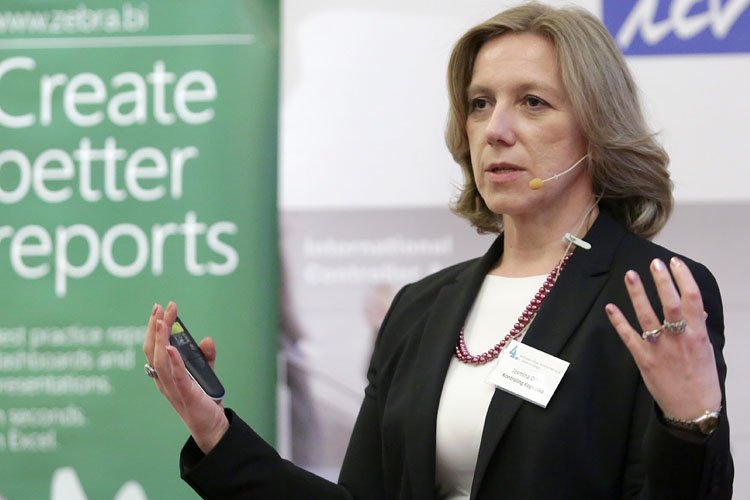
At the 4th International Conference on Controlling, examples from practice were presented that highlight the important role of controlling in business. Concrete examples illustrated the role of controlling in the process of merging two companies, changing ownership structures, and optimizing company operations.
Controlling in Action in the Formation Process of the Makromikro Group
The merger process of Stublić Impex and Makromikro, leading to the formation of the Makromikro Group, aimed at becoming one of the leading companies in the segment of selling IT materials, office supplies, and paper products, was presented by Jasmina Očko, a controlling consultant from Kontroling Kognosko. Makromikro was engaged in the retail of IT devices and accessories, while Stublić was involved in the wholesale of office supplies and paper products.
Niedermayr-Kruse: Lack of Controller Competencies is a Key Cause of Inefficiency
– Although the common vision of the owners was very clear and communication among them was excellent, the challenges on the path of merging that began in 2015 were significant. Two different business structures with different business models, corporate cultures, and customs were merged, Očko explained.
The owners faced questions such as: Which business model is better? Which IT solution is more efficient? Which organizational scheme is more effective? Since they could not find a simple answer, they decided that it was the right time for controlling.
– It was necessary to connect strategic goals with appropriate operational activities. Every job position and every operational activity was recorded to create a list of all activities. After that, it was necessary to quantify the data and determine how much time is invested in a specific activity and establish standardized time for performing each action, she said.
The process of recording jobs and activities was also used to detect difficulties in work processes and agree on a unified protocol, which is essential for aligning operational tasks with strategic goals, calculating the cost of individual activities, eliminating activities that do not create new value, fair and objective distribution of tasks, and measuring efficiency and fulfilling operational tasks.


