
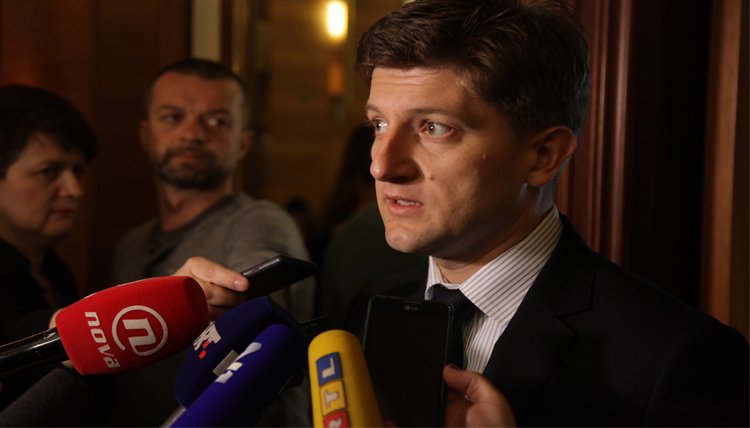
– After this tax reform, no one’s salary will decrease. The tax reform has been conducted professionally and its result is greater fairness and greater transparency of the system. This was stated by Finance Minister Zdravko Marić while guesting on the show “In the Network of the First” of Croatian Radio, where he spoke about the details of the tax reform presented on Thursday. He confirmed that the allowances for children and dependents (for the first child 1750, the second 2500, and the third 3500) will be cumulatively added.
In response to the question of how to protect workers so that employers do not perceive these tax benefits as support for them, Marić stated that there is Article 92, paragraph 4, of the Labor Law which stipulates that compensation for work is actually gross salary.
– There is a possibility that an employer offers a worker a new employment contract with a lower gross salary, and the state cannot intervene in that. There is no stronger mechanism to protect workers, except that we as a Government send a stronger appeal to employers that they are really benefiting from this reform, he added.
He believes that the local community, which will have a portion of its revenue taken away, will have no reason to raise local taxes.
– We will separate the law on local taxes. I am putting a question mark in front of the law that we need to change in that sense, and in discussions with the association of cities and counties, we will conduct certain simulations. If we do not manage to do everything, direct compensatory measures will be implemented from the budget – which local self-government will be able to partially treat as direct revenues. Once everything is arranged, we will have a completely clean system where the entire income tax will be allocated to local self-government units in certain ratios, taking into account the indices of development, said Zdravko Marić, reflecting on the issue of generating secondary income.


