
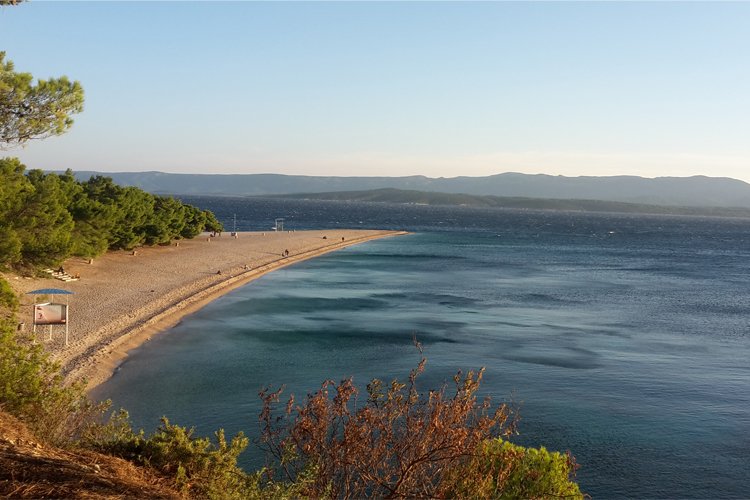
– Tourism does not happen by chance; it is the result of hard work. There is no tourist season but a tourist year, and it is still ongoing. The Ministry of Tourism will support a more balanced development of tourism, which means a slightly firmer approach to the development of continental tourism and the extension of the tourist season, said Minister of Tourism Gari Capelli at the ceremonial award ceremony for the annual tourism awards during the closing evening of the Croatian Tourism Days (DHT) in Bol on Brač. He emphasized that with 90 million overnight stays achieved this year and revenues of 9.5 billion euros, we are at 50% of our goal for 2020, which is to reach 15 billion euros in tourism revenue.
According to the director of the Main Office of the Croatian Tourist Board, Ratomir Ivičić, as of October 26 this year, 87.6 million overnight stays have been recorded. Although he is satisfied with this year’s results, Ivičić says he has one foot in 2017 and 2018.
Annual Tourism Awards 2016.
Hotel of the Year: Villa Dubrovnik from Dubrovnik Campsite of the Year: Naturist Camp Valalta from Rovinj Restaurant of the Year: Restaurant Bevanda from Opatija Marina of the Year: Marina Frapa from Rogoznica Travel Agency of the Year: Katarina Line from Opatija Cultural Attraction of the Year: Fortress Baroni from Šibenik Tourism Event of the Year: Advent in Zagreb Innovation of the Year: Apoksiomen on the Island of Vitality Most Successful Destination: Dubrovnik
Lifetime Achievement Award winner Selimir Ognjenović, in his speech, advocated for tourist Croatia to extend beyond the Adriatic and bring tourism to the continent – to Slavonia, Baranja, and Zagorje.
– These awards are an encouragement and recognition for all the winners, but they also give us new opportunities ahead. I guarantee and assert that all who received awards are world-class and competitive in their services,” said Josip Zaher, Vice President of the Croatian Chamber of Economy for tourism, trade, and finance. He added that we must confirm our competitiveness and offer Croatian products through tourism.
Despite the phenomenal results achieved in tourism this year, the Croatian Tourism Days discussed the challenges and changes necessary to continue achieving success in the years to come.
Deficit of 20,000 Tourism Workers in 2017.
Marinela Dropulić Ružić from the Poreč Institute for Agriculture and Tourism highlighted the challenges faced by students, pupils, and young employees in tourism, identifying key challenges such as the perception of tourism as a poor employer, an unsatisfactory school program that relies mostly on theory while practical work is neglected, and poor management of human resources.
Dropulić Ružić also presented the results of the project Social Distance and the Index of Polychronism of Young Employees in Hospitality, which revealed that 73% of young employees are satisfied according to 1,604 surveyed hotel guests, but also the disappointing result that as many as 95% of young employees in tourism have never been abroad for professional training and that 51% have never pursued self-initiated professional development.
– During their stay on vacation, guests encounter 10 employees, and they are the face of the service, organization, and brand. A satisfied employee generates loyal guests, which in turn leads to profit, explained Dropulić Ružić.
- In tourism, approximately 95,000 people are employed – 7% of the working population.
- 30 million kuna has been invested in popularizing vocational occupations.
- Only 24 kuna per month is allocated for the education of employees in tourism.
– Employers need to ensure the best possible working conditions because only then will they have satisfied workers and guests, believes Natali Komen Bujas, director of the HUP Association of Hospitality and Tourism.


