
The implementation of the CRO card would have a direct effect on budget revenues – VAT would slightly increase, its effects would address the problem of emigration of Slavonians, employers who accepted it would pay lower profit tax, directly creating seven to ten thousand new jobs, and indirectly ten to twenty-one thousand, a significant investment potential of one billion euros would emerge, and 2 to 4 billion kuna of direct net income would be secured, that is, if direct and indirect incomes are summed, that amount would vary between 2.7 and 5.4 billion kuna.
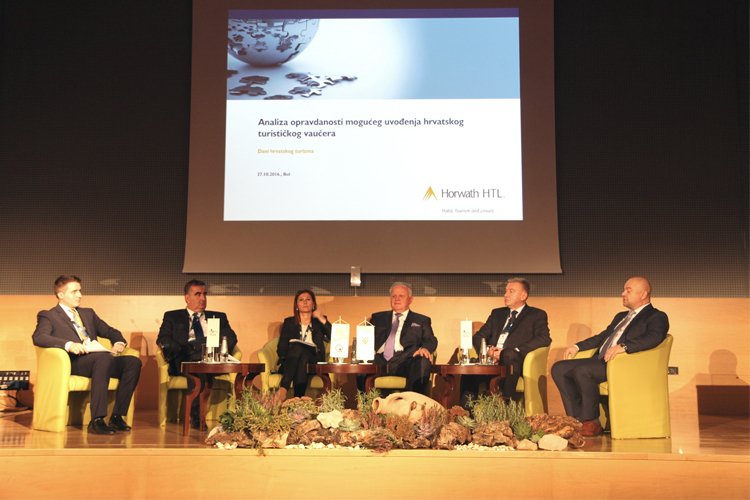
These positive impacts that the introduction of the tourist voucher would have on Croatian tourism were presented by Siniša Topalović, director of the consulting firm Horwath Consulting, as an introduction to the panel discussion CRO card – stimulating domestic tourist spending as part of The Days of Croatian Tourism held in Bol on October 26 and 27.
Topalović presented the results of a study conducted by his consulting firm at the request of the Ministry of Tourism.
– The key motivation for launching the story with the Croatian voucher is an attempt to equalize the discrepancies that exist in Croatian tourism, especially when looking at the imbalance in tourist supply and demand as well as in continental and coastal tourism, said Robert Pende, assistant minister of tourism, explaining that the implementation of the voucher will be a long-term process lasting several years.
The whole idea is to encourage employees to spend their vacation in Croatia by transforming the existing non-purpose regression – making it purposeful and abolishing the tax on it, or leaving it non-purpose but abolishing the tax. Preconditions for the introduction of the tourist voucher are new legal regulations, the establishment of a system that would encompass the state (in the role of supervisor), employers (who pay contributions to their employees), banks and financial institutions (which manage the money from contributions), and suppliers (who receive guests who pay with that special card). The CRO card would not differ much from a current account card, and the idea is to define three sub-accounts, that is, a percentage that would be deducted from the card for each category of expenses. The proposal is as follows: accommodation 50%, food and drink 30-35%, and other expenses including visits to tourist attractions and similar 15%.


