
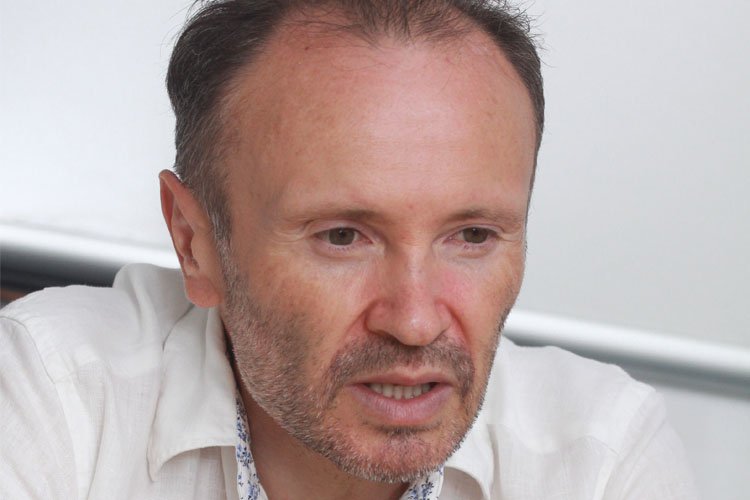
Renowned economist Željko Lovrinčević, also one of the creators of the comprehensive tax reform presented today in an interview for Lider comments on its fundamental features.
– This is a package of tax relief with the greatest effect in the income tax system, which has been extremely complex, with many exceptions, numerous and different personal deductions, special areas, and so on. It has therefore been punctured in many places and in many ways, and now it has been significantly simplified. The concept of synthetic taxation of dependent and independent work has been introduced, and for income from property, final payment has been established, which reduces uncertainty. Looking at the general effect in the system, income is essentially increasing for everyone, although depending on status and modalities – for example, the number of members or children in a particular household. This also applies to people with the lowest incomes, as the non-taxable portion has increased to 3,800 kuna. This part of the tax reform is good and is not questionable because the overall tax burden in Croatia is reduced to 6.3 percent, thus entering the category of countries with low effective tax burdens.
The proposals suggest social awareness; the minister said today that they are, as much as they can be, aimed at demographic renewal.
– I think that this, in my opinion, could have been resolved more effectively in the part related to dependent family members and the treatment of children. The proposal still retains different, progressive coefficients for the number of dependent children or household members, with the flaw that it cannot actually help poor citizens who have children. These are people who cannot utilize the tax shield because they have no income. I believe that the entire system, when we talk about child care, should have equal coefficients in the lower part, and to assist demographic trends, we should resort to other instruments, namely through another ministry responsible for child allowances and pro-natal benefits. In other words, you cannot help the demographic segment except at levels starting from 8 or 9 thousand kuna. Those who are lower simply have nothing to deduct, and that is my biggest complaint. People with lower incomes simply cannot benefit from tax progression based on the number of dependent children and members. We should model the entire system according to, conditionally speaking, the Austrian model, that is, through the system of child allowances and child care that does not finance parents, but rather children. Let’s call it per capita financing of children. This, in my opinion, is the weakest link in the changes to income tax; the rest is OK.
OK, what do you say about the changes in corporate tax?
– In corporate tax, the main intention is to shift part of the tax burden onto non-residents or tourists, or to return it to where it was before Linić’s experiments with rates that showed that lowering rates for hospitality, drinks, and similar did not result in lower prices. The idea is to pull some money and income from that segment so that the other two segments can be relieved. One is inputs for agriculture to encourage competitiveness, and the other relates to alleviating municipal and other expenses for the most socially vulnerable. This includes electricity consumption, waste disposal, and other significant expenses for the poorest. The goal is to relieve them and partially mitigate the impact of VAT, which is very regressive for the poor. Of course, there will be much discussion about this, as everyone has their own linguistic story. However, we must know that if we do not shift part of the burden towards the tourism sector, we cannot achieve actual relief for Croatian citizens, agriculture, energy, and the poorest. The regressive effect of VAT is terrible; at this moment, the bottom 20 percent of the poorest in Croatia pay a higher VAT than the wealthiest tourists.
What changes would you highlight as interesting for entrepreneurs?


