
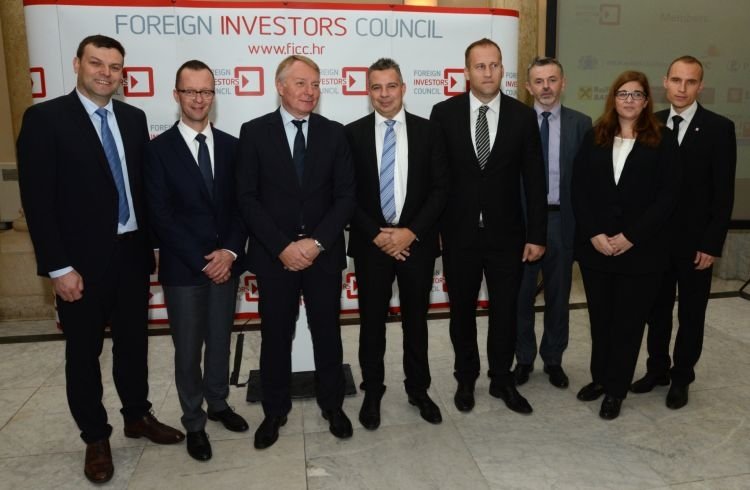
In the premises of the Mimara Museum in Zagreb, the Association of Foreign Investors in Croatia organized the presentation of the White Book – a publication on the business and investment climate and barriers to investment in Croatia. Alongside the host Mladen Fogec, president of the Association of Foreign Investors in Croatia, special guests at the event included the governor of the Croatian National Bank, Prof. Dr. Boris Vujčić, Deputy Minister of Finance, Prof. Dr. Saša Drezgić, and Assistant Minister of Economy, Ivan Sertić.
In his introductory speech, the president of the Association of Foreign Investors, Mladen Fogec, expressed satisfaction with the release of the fourth edition of the White Book, which comes at a time of a newly formed government. All improvements made in Croatia regarding the enhancement of the investment and business climate will benefit all business entities investing in the Republic of Croatia, said Fogec, concluding that an investment is an investment, whether domestic or foreign.
Deputy Minister of Finance, Prof. Dr. Saša Drezgić, welcomed the release of the 2016 White Book as a recognized and valuable publication, and announced the preparation of a tax reform that will largely incorporate recommendations previously identified by investors.
Following this, Prof. Dr. Boris Vujčić presented how the competitiveness of the country affects investments and outlined key economic indicators for Croatia in the past period. Education and human capital are crucial for economic growth, emphasized Vujčić, stating that Croatia needs to start comparing itself with the best in building its own measures and policies.


