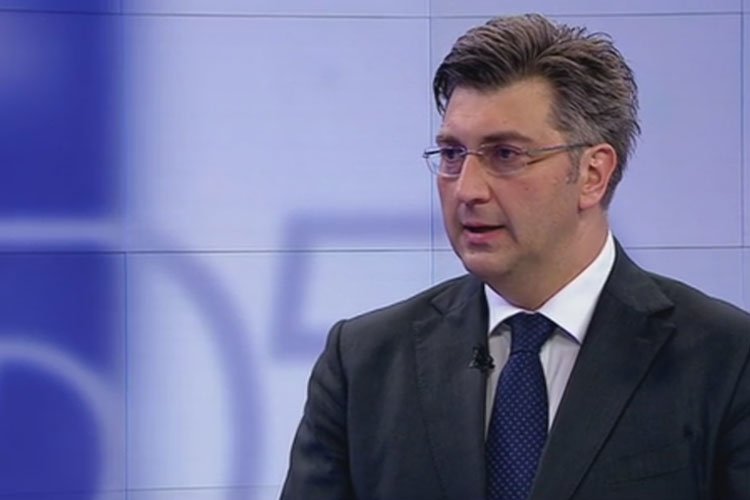
In the government program presented by Prime Minister Andrej Plenković on Wednesday in the Parliament, it is emphasized that the next 12 months are crucial for initiating changes and the developmental leap that Croatia needs, and five pillars on which the government will particularly focus in the direction of entrepreneurship development are outlined. In the government program, which Andrej Plenković spoke about at the Leader’s conference “Day of Great Plans,” published on the website of the Croatian Parliament, four fundamental goals of the government by 2020 are stated, which include achieving stable and sustainable economic growth, creating new and quality jobs, stopping emigration and demographic renewal, as well as social justice and solidarity. Additionally, five basic pillars for entrepreneurship development are mentioned.
The first pillar is a comprehensive tax reform and easing the business conditions for entrepreneurs and investors. Through further reduction of non-tax levies, citizens, entrepreneurs, and craftsmen will be further relieved, and measures related to the business environment will simplify existing regulatory requirements, reduce costs by removing barriers to entry into certain sectors, and prevent the introduction of new administrative burdens.
Inactive state property will be put to use for the economy, while public companies will undergo thorough business and financial restructuring with professional management that will have clearly defined goals based on which their performance will be measured.
Secondly, through concrete measures, the government will invest in growth generators – one of the largest growth potentials is agriculture, and therefore unused agricultural land will be put to use according to clearly defined criteria, and there is significant room for growth in tourism where revenues can be doubled by investing in accommodation capacities, expanding the offer, and extending the season.
It is also stated that the government will particularly encourage Croatian exporters who make a significant contribution to the country’s economic development. The program emphasizes that the Croatian model of economic growth should be based on exports.
Thirdly, the government will take measures aimed at increasing the efficiency of institutions, which includes simplifying rules and speeding up the work of administration and courts, digitizing all processes, e-services, connecting all bodies of state administration so that citizens and entrepreneurs receive fast and quality service.
Fourthly, the government will continue to strengthen the sustainability of public finances, which is the foundation of lasting economic growth and overall economic stability. This means further reducing the budget deficit, which will result in lowering the debt-to-GDP ratio and generally enable a reduction in the cost of interest that the budget currently pays on public debt.
The program also states that the permanent task of the government and all state institutions is to improve the effectiveness of using European structural and investment funds.
Fifthly, the government will implement a reform of the education system with the aim of modernizing it to meet the needs of society and the economy.
Reducing public debt by 10 percentage points, balanced budget
In the area of public finances, the government intends to pay special attention to strengthening fiscal capacity and achieving fiscal sustainability through reducing the budget deficit and the share of public debt in GDP. The government’s goal by 2020 is to have a balanced budget of the general government, and to reduce the share of public debt in GDP, which was around 85 percent of GDP at the end of June, by more than 10 percentage points during the four-year mandate.
Along with economic growth, it is stated in the government program that this is crucial for improving the country’s credit rating. In this regard, the government will strengthen fiscal responsibility at all levels of government, give the Fiscal Policy Commission a stronger supervisory role over the implementation of fiscal policy, and has announced the adoption of a Public Debt Management Strategy.
In the area of tax policy, the government announces a comprehensive tax reform, whose goals are to create a stable, sustainable, simple, and competitive tax system. The government also announces the continuation of the process of fiscal decentralization, but at the same time, a simpler and more understandable system for the distribution of income from income tax and a system for financing decentralized functions will be established.
The government also announces measures aimed at solving the problems of blocked citizens and companies. In this regard, it will focus on reducing the share of non-performing loans, encouraging banks and other credit institutions to attempt to partially or fully write off difficult-to-collect and non-performing claims (NPL) out of court, which will be included in the reform of the entire tax system.
In the area of monetary policy, the government’s policy will be directed towards fulfilling a specific goal – full coordination and cooperation between the government and the Croatian National Bank (HNB) in the function of economic growth, and it will insist on strengthening transparency in the operations of the HNB, as stated in the program.
Strong development of agriculture
The government’s policy in the agriculture sector will be directed towards several goals, including strong agricultural development, further development and construction of irrigation systems, an efficient financial system, and easier access to financial resources, as well as quality implementation of the Rural Development Program.
The government will lead agricultural policy with the aim of putting unused agricultural land to use, and the development of small family farms will also be encouraged, as stated in the Program.
The government will also ensure the full implementation of the National Irrigation Plan and double the irrigated areas in Croatia using funds from EU funds, as well as ensure an efficient financial system for agriculture, reduce VAT on goods used in agricultural production, and implement the reprogramming of existing debts.
The Program states that changes to the Rural Development Program will enable greater availability of money from EU funds to family farms, especially in areas with lower development indices.
The Program also states that tourism is an important branch of the economy, which has great potential for further development and growth. The government will implement measures to improve the quality of the tourism offer, which will increase the number of overnight stays, reduce seasonality, increase tourist spending, and employment in tourism. The government’s policy will be directed towards encouraging new investments in tourism, a more diverse offer, and extending the tourist season, it is stated.
Energy is an important area for new investments
The energy sector is also mentioned as one of the more important areas for new investments, as energy is marked as a prerequisite for the development of the overall economy.
The government intends to develop the “Energy Development Strategy until 2050,” which will be based on supply security and the competitiveness of energy prices. Specific goals of the government in this area include improving the security of oil and gas supply in Croatia and the European Union.
Regarding oil, efforts will be made to utilize Croatia’s favorable geostrategic position, which allows for the supply of oil and oil derivatives for the needs of the European market by land and sea, which means that this way the supply of the Croatian market is ensured while simultaneously achieving significant economic benefits from oil transit for the needs of the EU market and neighboring countries.
Similarly, new investments in gas infrastructure will aim to ensure cost-effective gas supply in the future.
In addition to integrating the country into European transport routes and developing a modern and efficient transport system, the government will also emphasize the development of next-generation broadband infrastructure. Special attention will be paid to the construction of the Pelješac Bridge, the completion of the highway to Dubrovnik and the Istrian Ypsilon, the expansion of Split Airport, as well as other airports, especially on the islands. Investments will also be made in railway infrastructure, as well as in the infrastructure of river and sea ports.
Focus on reindustrialization and employment
Regarding reindustrialization, the government states that it will work on increasing industrial competitiveness, as the industry should retain its role as a local driver of sustainable development and employment. The industry will be encouraged by favorable sources of financing, as well as cheaper and more accessible raw materials and energy, as stated in the Program.
Likewise, domestic production will be protected, and support for domestic producers will also be reflected in strengthening capacities in market oversight, actively working on anti-dumping policies, and encouraging Croatian producers to participate in public procurement processes.
The government also announces reforms in the area related to the labor market, so among other things, it will ensure the effective functioning of all institutions in the labor market and significantly improve the mediation process to enable faster employment for the unemployed and provide employers with the necessary workforce.
Special attention will be directed towards the activation and education of young people and the long-term unemployed. Youth employment will be encouraged, among other things, by redefining the measure of “professional training for work without establishing an employment relationship” and providing non-repayable funds and favorable loans up to 350,000 kuna for starting their own business.
This is the economic part of the government program with which Prime Minister Andrej Plenković will seek the confidence of the representatives for the new, 14th Croatian government in the Parliament on Wednesday.