Home / Information / Stojić: We are raising the GDP growth estimate for 2016 to 2.7 percent

Stojić: We are raising the GDP growth estimate for 2016 to 2.7 percent

Traditionally the most pessimistic economic forecaster, Hrvoje Stojić, the chief economic analyst at Addiko Bank, has transformed into an optimist and raised the GDP growth forecasts for this year – from two percent to 2.7 percent, primarily due to an excellent tourist season, recovery in domestic consumption, and investments. The recovery in consumption has been contributed to by several factors: a decrease in unemployment, deflation, a drop in the savings rate, a recovery in household loans, and announcements of further tax relief on income. Additionally, better utilization of EU funds, increased lending to businesses, and exporter optimism have stimulated the recovery of private sector investments.

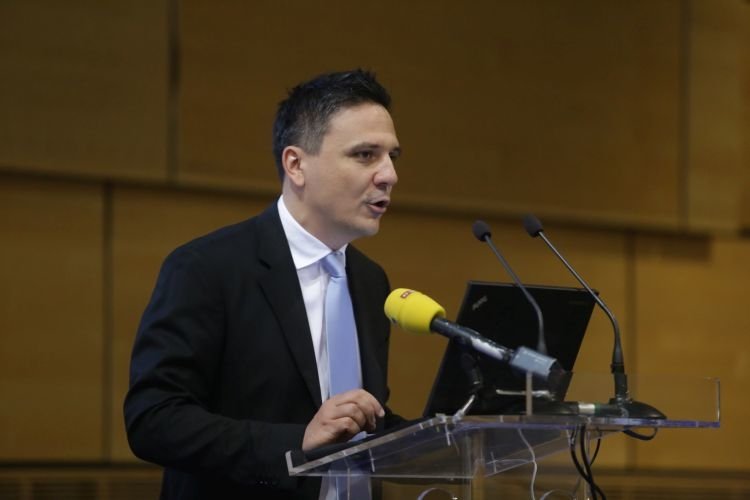
– Reduced political uncertainty after the September elections, further recovery in financing conditions, and the continuous recovery of consumption and investments have prompted us to raise the growth estimate for 2017 to 2.2 percent. The slowdown in growth dynamics compared to this year arises from the deceleration of disposable income growth, the absence of a record ‘delta’ in tourist revenues over the last two years, and the adverse impact of political uncertainty across the EU, particularly on investments – stated Stojić at the traditional semi-annual presentation of macroeconomic prospects, this time by the newly rebranded Addiko Bank.

Another reason for weaker growth in 2017 is that the slowdown in investment and consumer demand in the Eurozone will also affect the slowdown in Croatian exports. Such sensitivity of exports is certainly not helped by the low sophistication of the export mix and insufficient progress in the growth of the distribution power of exporting companies. Despite this, Stojić estimates that stable foreign exchange revenues from tourism and better transfers from EU funds will maintain a surplus in the balance of payments at a solid 3.5 percent.

– Consequently, reduced borrowing needs combined with a record net foreign asset position of banks and solid inflows of portfolio investments allow for a decrease in external debt and further recovery of the country’s net foreign investment position – says Stojić.

Good news also comes from a reduction in the budget deficit by as much as 62 percent in the first seven months of this year (now at 0.6 percent of GDP), which reflects revenue growth but also lower public spending. However, while revenue growth reflects above-expected economic activity, the decrease in expenditures is not a result of conscious consolidation but rather a temporary freeze on public investments, subsidies, and material costs due to political stagnation, along with lower interest expenses (although these expenses are still above 3.5 percent of GDP). In any case, this year’s fiscal consolidation, with all the listed causes, will exceed all forecasts, placing the deficit at around two percent of GDP. Next year, it will remain below the Maastricht three percent, despite expected investment growth and announced tax relief, whatever that may mean for the budget and for users.

All of this together should result in a return to investment grade or at least a small shift in the eyes of rating agencies, which would further reduce our interest costs.

This is also the essence of the presentation by Sanja Madžarević Šujster, senior chief economist at the World Bank in Croatia. She states that with such fiscal trends, we could exit the Excessive Deficit Procedure next year, which would almost automatically mean a shift in the ratings assigned to us by rating agencies. She emphasizes that the two main economic directions are: to continue fiscal consolidation, but this will largely depend on what will be negotiated with unions regarding a six percent wage increase (in line with GDP growth) and what the outcome of the arbitration in the ‘Swiss franc’ case will be.

The new government and the new/old/technical finance minister have a good wind at their backs. To ensure that the continuation of the story can also be positive, we can read from yet another Stojić figure: unemployment will fall from this year’s 15.2 percent to 14.6 percent. The bad news is that the employment rate will not recover next year.