The management of the Hungarian company approved a long-term business strategy “MOL Group 2030 – Enter Tomorrow” last Thursday, through which the company aims to strengthen its position in Central Eastern Europe, become a leading chemical group in the region, and invest around $1.5 billion every five years with the goal of growth in the petrochemical industry. In response to a journalist’s question about whether Ina is part of the new strategy, MOL’s CEO Zsolt Hernadi stated for a Hungarian portal that this strategy is for the future, not for the present or the past, and that for now, Ina is more of the past and present.
– MOL is doing everything it can to keep Ina’s business positive, but for the question of the company’s long-term development, a cooperative partner will definitely be needed, especially in the Croatian government. Croatian authorities have so far been willing to consult with MOL only on development concepts in 2003 and 2008, significantly before the crisis, but now it is 2016, and the world is moving forward, not backward, Hernadi noted.
He emphasized that discussions should be held about plans for 2030 and what needs to be done for this Croatian oil company to exist in 15 years.
– As long as we are unable to maintain meaningful consultations with the Croatian government about future development, and we are constantly faced with a planned economy mentality, there will be no progress in that area. The ‘MOL 2030’ strategy is sustainable even without Ina. We know how and where MOL can develop, and Ina can play a role on that growth path, but not necessarily, he assessed.
Panenić reminds Hernadi: MOL is not the owner, but one of the shareholders of Ina
When asked if he thinks he will have the opportunity for meaningful dialogue with the new Croatian government, Hernadi replies:
– God forbid that I publicly qualify any government or party program or statements of politicians! However, one thing is certain: if we can discuss issues related to Ina as our joint company, on market-based grounds, that dialogue will be meaningful. The MOL Group will follow its path with or without Ina, he asserted.
– I regret the most that I currently cannot present any vision to Ina’s employees. We will do our best to enable sustainable operations for Ina, but for all guidelines for further development, we will inevitably need the Croatian government. If Croatian politics would prefer Ina based on the concept of a planned economy under strict political control, which operates non-market, that is also a possible option, but MOL is not needed for such a scenario, Hernadi conveyed.
Speaking about the new long-term strategy of the Group, Hernadi emphasized that MOL wants to be the best, not the largest company in the region.
– First of all, we will maintain a business based on integrating research and production, as well as refining and marketing, and this will remain our ‘cash cow’ for the next ten years. We have the best refineries in the region, but we will have to adapt them to the changing market situation. Namely, the demand for fossil fuels will certainly decrease in the long term, and therefore we will have to reduce the production of motor fuels, which currently account for 70 percent of total production, and it is planned to reduce that share to below 50 percent by 2030. But that does not mean we will produce at reduced capacities. We plan to build a strong chemical and petrochemical business, which will require huge investments, he said.
In this process, MOL plans to invest $4.5 billion over the next 15 years.
– That is an incredible amount, but we will become number one in the chemical industry. We will also develop a completely new retail business that will respond to new consumer demands. Ultimately, we will also look at new business opportunities that arise in Central Europe, not just in our traditional business, he emphasized.
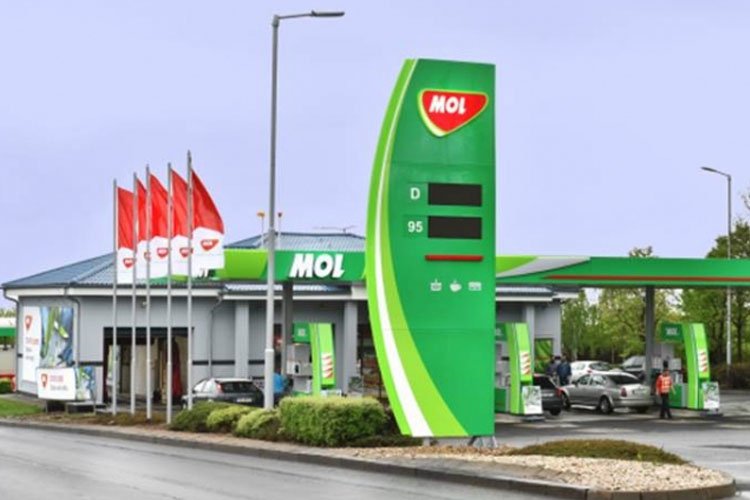
Speaking about the retail network, Hernadi said that it will be transformed, as it will thoroughly restructure its market operations and focus more on consumers.
– We want to become their first choice in terms of mobility and transport. Therefore, we want to participate in redefining transport and transportation in Central Europe. Our existing gas stations will increasingly become service stations, not just places to refuel. For example, a person traveling may need postal services or want to shop when stopping at our station. However, this is just the beginning, as we are already anticipating new transport-related needs that require our response. Car sharing, electric vehicles, sustainable transport… MOL wants to enter these business areas, Hernadi said among other things in an extensive interview for Origo.hu.