Love is an inexhaustible theme that has been written about, talked about, and speculated on since the beginning of time. From Petrarch’s sonnets to ‘Fifty Shades of Grey’, from ‘Casablanca’ to ‘Bridget Jones’s Diary’, from Robić’s ‘Love Only Once’ to Rozga’s ‘Nirvana’ – it seems that romantic relationships are equally interesting in every era and that each generation has its own ideal of male-female relationships, knowledge of what is important in them, and advice on how to find, satisfy, or keep a partner.
The story, however, of the prince on a white horse, of the longing (and hope) that ‘Mr. Right’ will one day appear – is as paradigmatic a commonplace as the hope for light at the end of the tunnel. These themes are as old as the world itself. Author Helen Fielding was therefore not at all original in her choice of theme for her novels, and it is entirely natural (and understandable) that she drew inspiration for her heroine’s character, whom she presented ‘in a new package’ (weight, penchant for alcohol, persistent cigarette addiction, but also awareness of the relentless ticking of the biological clock), from the classic novel of longing and unfulfilled dreams by Jane Austen, ‘Pride and Prejudice’. Thus, the female ideal of Victorian single women, Mr. Fitzwilliam Darcy, is also found in ‘Bridget Jones’s Diary’, in the character of one of the two men in Bridget’s life, businessman Mark Darcy (in the film: Colin Firth). Incidentally, the author was a regular columnist for the ‘Independent’ during 1995, and the book was based on her columns.
Do you remember Bridget Jones?
Indeed, who would not be intrigued by the story of single women in their late 20s and 30s who struggle with their complexes and tirelessly seek their No. 1, convinced that someone like that will one day be found for them. In doing so, of course, out of a desperate desire to achieve their dream, they fall into impossible situations, making both right and wrong moves that we have all made when we desperately longed for something. Let us recall, in a somewhat more serious context, the unforgettable Neruda’s verse: “Some love so much that they miss love itself”…
So, do you remember Bridget Jones? How much has her story marked you, to what extent have you shared her problems, or, more precisely, who has not encountered them in one way or another? However, it is quite certain that the novels ‘Bridget Jones’s Diary’ by Helen Fielding, published in 1996, and its sequel ‘Bridget Jones: The Edge of Reason’ from 1999 have marked generations. Both books became undisputed bestsellers, selling 15 million copies in forty countries around the world, and experienced film adaptations that filled cinema box offices across the planet. Bridget’s ‘Diary’ was declared one of the ten novels that best embodied and represented the 20th century. After 14 years, we have also welcomed the third novel in the ‘Crazy for a Boy’ series, which (like the first two) has had its film adaptation, with the same cast, but with an expanded repertoire of Bridget’s problems. The heroine will continue to struggle (unsuccessfully) with alcohol, weight, and smoking, but now a third problem (passion) enters her life – Twitter and the internet. Of course, the incomparable antics of the heroine, the inevitable comic situations, and the self-humor that Bridget is characterized by and ‘heals’ will also be indispensable.
‘Infected’ is the actress
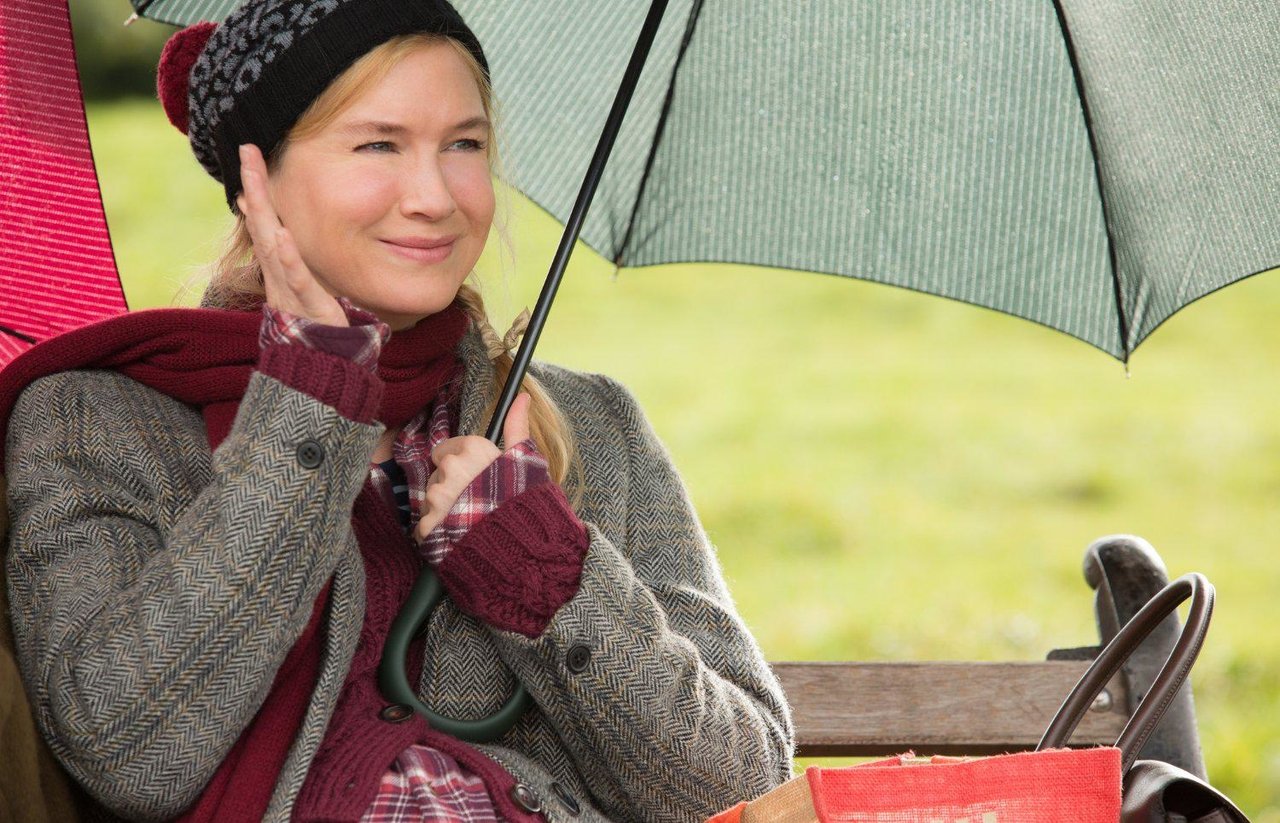
The film character Bridget Jones was embodied by American actress Renee Zellweger, who approached her film task with incredible seriousness and a desire to fully immerse herself in the character marked by optimistic romanticism that she would represent. The task was indeed difficult: she had to gain ten kilograms and perfect a British accent, but the persistent American was ready to take it on. She did not consider it a negative experience since it significantly contributed to bringing Bridget’s character to life, and she indeed succeeded in doing so. Partly, she is somewhat headstrong and unusual herself, which perhaps made it easier for her. For example, American studios persistently advised her to change her name to sound a bit more ‘Hollywood-like’, which the stubborn Texan (with a Swiss mother and a Laplander father) readily refused. For her character, she stated the following: ‘What I respect most about Bridget is her ever-present optimism despite the numerous obstacles and impossibilities she faces. I like that she makes fun of herself, stays on her feet, and persistently continues trying to achieve her dreams.’ And in her desire to truly be authentic, she thought of even the smallest details. Thus, she clashed sharply with the makeup artists who wanted to powder her nose reddened from crying. By the way, Renee Zellweger also became famous in other hits: ‘Jerry Maguire’, ‘Nurse Betty’, ‘Me, Myself & Irene’, ‘Cold Mountain’, for which she won an Oscar for Best Supporting Actress. After relationships with Jim Carrey and George Clooney, in 2005 she married country singer Kenny Chesney, divorcing after just four months, thus joining, along with the heroine of ‘Bridget’s Diary’, the ranks of Hollywood singles. Symptomatic, isn’t it?
Keeping a diary
In an effort to take her life into her own hands, the unfortunate Bridget decided to keep a diary, guided by three basic postulates: 1. she will no longer make New Year’s resolutions, 2. she will lose ten kilograms; 3. she will find a friendly, refined man. We would say that the postulates and the diary did not prove to be very successful means for solving the problems of unfortunate Bridget, and modern psychology, as we will see, does not help her much either.
Despite the common belief among psychologists that it is useful to keep a diary describing positive and negative experiences of the day to overcome problems and free oneself from traumas, the latest opinions are quite the opposite, confirmed by the British Psychological Society and published in New Scientist. It is believed, namely, that keeping a diary is harmful to health because by describing traumas, the respondent does not rid themselves of negative thoughts but merely ‘goes in circles’, failing to get out of it, which in turn causes headaches, digestive issues, and insomnia.
For our Bridget, we would say, there really is no solution, but she will remain in our memory as a lovable, clumsy, and tireless warrior for the realization of her dreams in the ruthless world that surrounds (us). It remains to be seen whether the tireless Helen Fielding will one day ‘honor’ us with an elderly embodiment of her character, so our Amazon will end her days in some home for the elderly and infirm, with the obligatory regular visits to the alcoholism treatment society. Who knows, maybe there she will finally meet her ‘Mr. Right’.