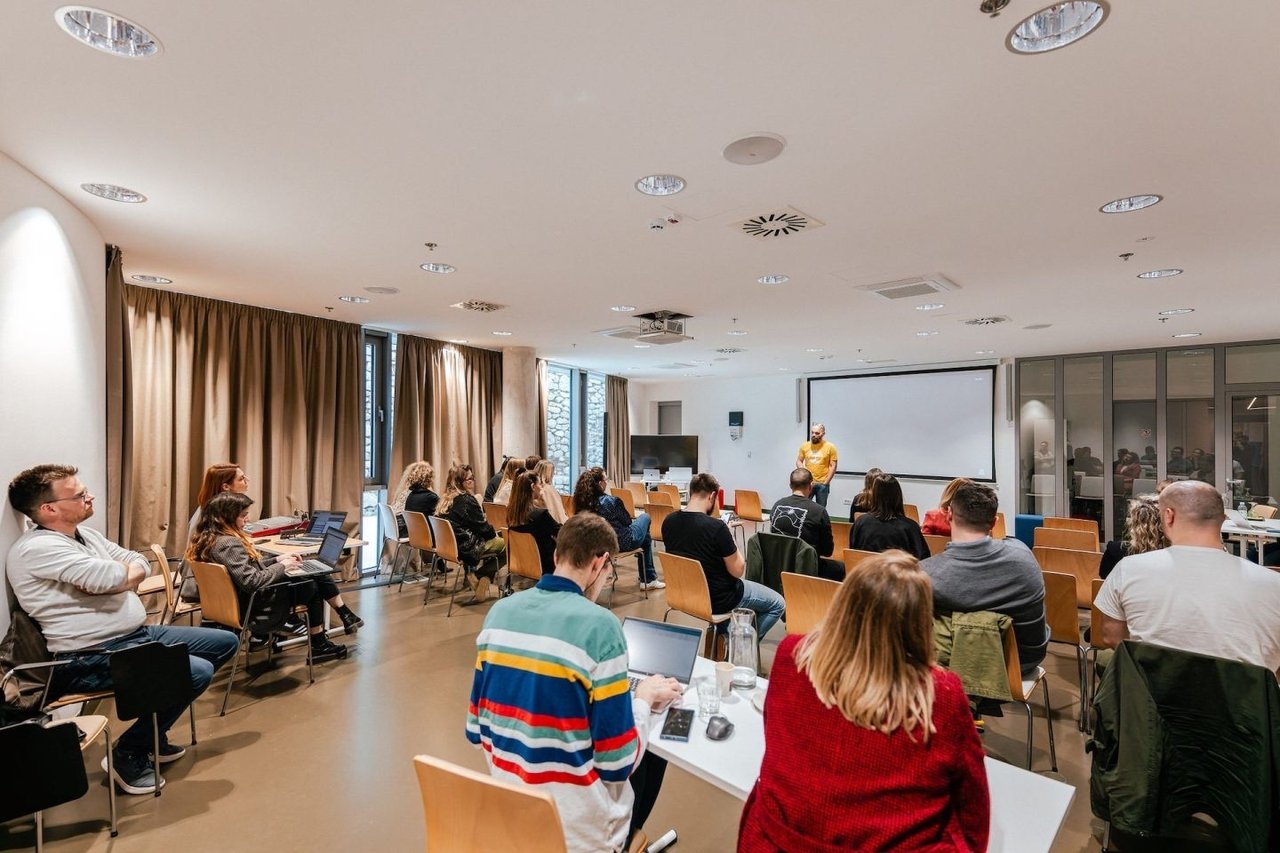
Although it is difficult to predict whether and when any language will threaten English, the primary language of communication on the global economic scene, and become global, business professionals are increasingly interested in learning Chinese, Russian, and Arabic. Some foreign language schools have included these languages in their programs (Russian for a long time), and Chinese has been taught for the last four years at the Confucius Institute at the University of Zagreb, in some foreign language schools, and Arabic at the Arabic Center in Zagreb. According to available data on the number of participants, Chinese is the greatest exotic language in Croatia. Since the establishment of the Confucius Institute in Zagreb in September 2012, which also offers free courses, more than 3,300 adult participants are learning Chinese, of which 10 percent are business people. The increasing interest in learning Chinese shows that it will not just be a short-lived curiosity. For example, 1,263 participants enrolled in the course in the academic year 2015/2016.
The market chooses the language
The second exotic language that Croatian foreign language students are discovering is Arabic, which currently cannot compete with English or Chinese in any way, but is interesting due to the potential market and explosive demographics and events in the Middle East. While it is increasingly heard in public that knowledge of Arabic will be highly sought after in the near future on the global economic scene, Anita Prka Đurašić, director of the EuroBIZ Center Foreign Language School, refutes this. She states that in the Arabic business scene, English and traditionally French are used, and in Croatia, there is more reliance on translation and interpretation when establishing contacts with business people from that area.
– Chinese is the language that, for demographic reasons, as well as the expansion of trade ties towards the West, is one of the most sought after besides the classical languages; English, German, Italian, and French. Russian should not be overlooked, also for economic reasons, nor Spanish – emphasizes Prka Đurašić, highlighting that besides the language, it is important to know the business customs and etiquette of individual countries, as well as the rules of business correspondence.
However, according to Mustafa Alajbegović, director of the Arabic Center, Croatian business people are showing increasing interest in learning Arabic and gaining knowledge about that culture.
– There are differences in Western and Eastern cultures, and Croatian entrepreneurs want to learn these cultural differences and align their business habits to ensure flawless operations. I am glad that Croatian entrepreneurs have developed an awareness that Arabic business culture has its own tradition that should be respected and understood. I must emphasize that the Arabic Center has been entrusted with this task, and we have also had Croatian diplomats who learned Arabic. Additionally, there are many students. It is actually difficult to categorize the participants; they are people of various profiles and professions who are increasingly open and show interest in something different and unusual – says Alajbegović.
Where to learn
While Arabic students can only learn the language in Zagreb or via Skype and in other parts of Croatia, free Chinese language courses are held in 24 locations in Zagreb, Split, Rijeka, Dubrovnik, and Varaždin. That Chinese is indeed very interesting to Croatians is shown by the fact that in February of this year, 250 people applied for 45 available spots in Rijeka, and in Zagreb, more than 750 interested parties applied for the same number of spots. Starting in October, Pula and Zadar will join the list of Croatian cities where Chinese is taught.