
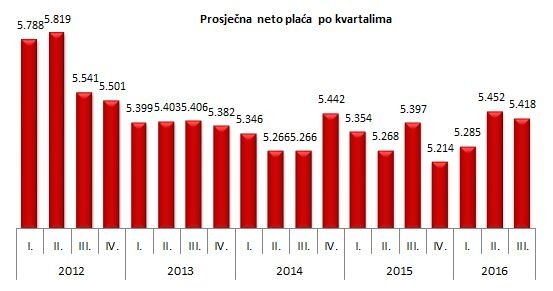
In the third quarter of this year, the average monthly net salary in Croatia amounted to 5,418 kuna, which is 1% less than in the previous quarter. Compared to the same period last year, the average net salary remained unchanged. If we add bonuses to the net salary, the average monthly salary rises to 5,624 kuna, which is also 1% less than in the previous quarter, reveals data from the MojaPlaća service.
 Apart from the top management category, which has an average salary 117% higher than the average, the highest paid professions are those in the fields of technology and development (61% above average), human resources (+35%), and information technology (+32%). The lowest average salaries are earned by workers in the textile and leather industry (-46%), auxiliary professions (-41%), and workers in service activities (-36%).
Men continue to earn more In the last three months, men had an average salary 9% higher than women, which is a slightly smaller difference compared to the previous three months. Men earned an average of 5,652 kuna, while women earned an average of 5,178 kuna. Compared to the previous quarter, the average salary for men is down by 1%, while the average salary for women remained unchanged.
A bachelor’s degree brings only a 1% higher salary
Individuals with a completed university degree have an average salary 52% higher than those with a secondary education, and 22% higher than the average. A completed master’s degree or doctorate increases the salary on average by as much as 105% compared to secondary vocational education. Compared to the average salary in the survey, respondents with secondary vocational education have an average salary 19% lower, while respondents with postgraduate or MBA education have a salary 66% higher than the average. Respondents with higher vocational education have a salary 6% higher than the average, but 32% higher than respondents with secondary vocational education. Respondents with completed first-level university education, bachelor’s degree holders, have a salary 1% higher than the average and 17% lower than respondents with higher vocational education.
Foreign companies pay the most, averaging 6,253 kuna The level of salaries also depends on the ownership structure of the company, therefore salaries in private companies with foreign ownership are 15% higher than the average, averaging 6,253 kuna, while salaries in companies predominantly owned domestically are the lowest, averaging 5,134 kuna (5% less than the average), as well as in associations (-5%). The average salary in state-owned companies is 3% higher than the average, amounting to 5,606 kuna.


