
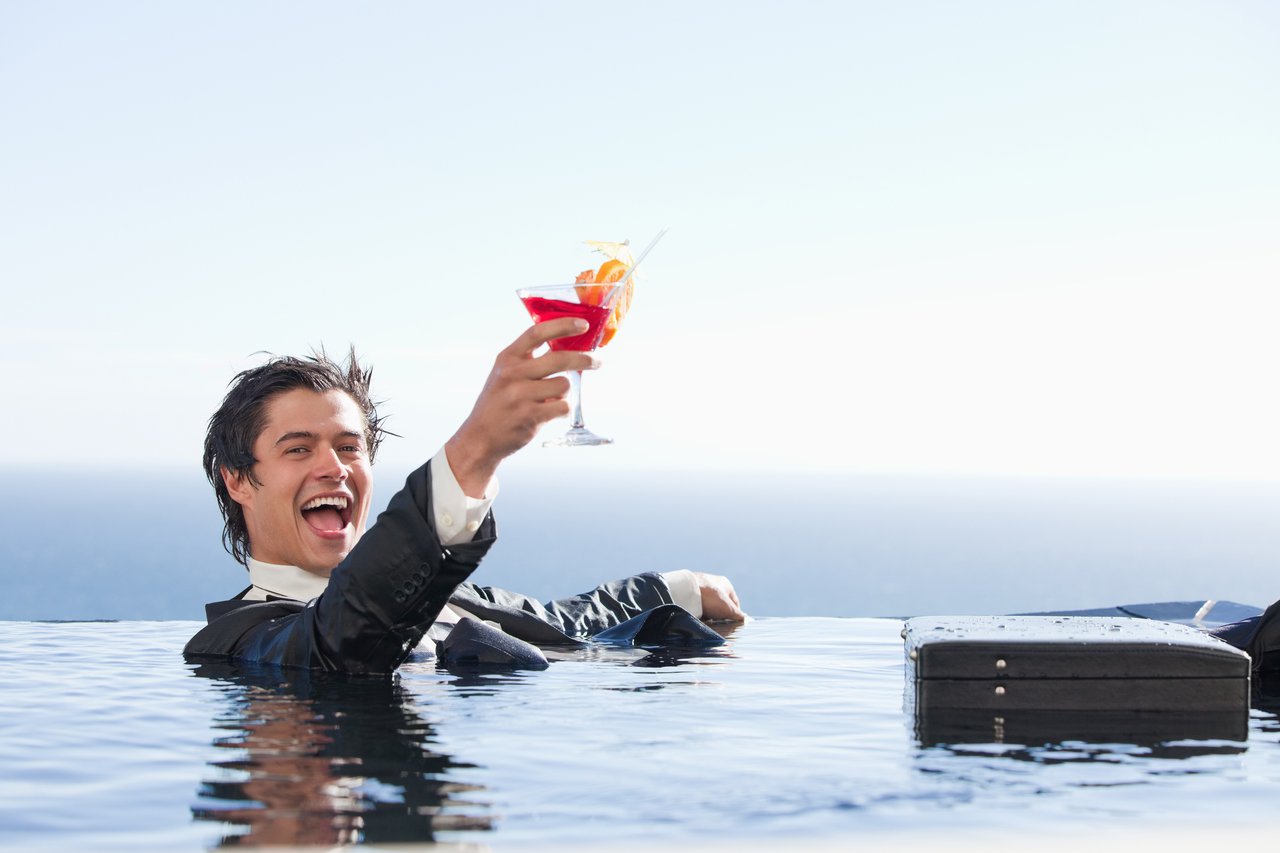
Do you think that only Russian oligarchs, Croatian wannabe jet-setters, sponsor girls par excellence, and idlers whose fathers left them money to throw around are engaged in luxury and thoughts about it? You are mistaken. Sociologists and serious writers, among whom perhaps the most well-known in recent times are Dana Thomas, author of the book “How Luxury Lost Its Luster” (2008), translated here, and Robert Frank, who authored “Rischistan: A Journey Through the 21st Century Wealth Boom and the Lives of the New Rich” (2008), are also dealing with luxury and the question of what it truly is. Bernard Arnault’s company LVMH, which exclusively deals with luxury, has a special advisor for trends in the luxury world, Concetta Lanciaux, and besides the Luxury Institute, the greatest reputation in this field is enjoyed by London’s The Future Laboratory. Their extensive research on luxury and the five characteristic phases into which the perception of luxury can be divided was recently presented in Croatia, at the Lone hotel in Rovinj, the only Croatian hotel that is a member of The Design Hotels group, by their regional development director, Serdar Kutucu.
Time and Money
When they first addressed this topic at The Future Laboratory five years ago, the research showed somewhat different results from those discussed today. When asked about their view and experience of luxury, most will throw out a cliché about freedom or free time as the ultimate luxury, but the truth is a little different, although, of course, it is related to freedom (of spending) and free time (meaning: idleness, leisure). The fact is that in our country and in most transitional countries, luxury is primarily linked to purchasing power, brands, and labels. Here we are talking about the first phase of luxury, which, according to The Future Laboratory, is actually a completely outdated perception of what luxury truly is. Sociologist Thorstein Veblen analyzed the phenomenon he called “conspicuous consumption” in the 19th century (obvious, ostentatious consumption aimed at showing and proving high status to everyone).
Greed is Still ‘Good’
However, it would be more accurate to say that the phases do not necessarily change chronologically; it is indeed true to assert that, for example, in the 1980s it was “in” to show what you have, to spend, to be seen and noticed spending, but it is equally true to say that these phases actually vary geographically, considering that in Shanghai today it is just as “in” to have and proudly show what you have. If you got it, flaunt it – it is certainly at play, and greed is still “good” there, just as Gordon Gekko claimed in Oliver Stone’s iconic film ‘Wall Street’ from 1987.
1st Phase: Gold and Diamonds
The first phase of luxury can be recognized in gold and the color gold, in a masculine approach to luxury that symbolically evokes the Mooi horse with a lamp on its head, seven-star hotels like the Burj Al Arab, Motorola phones adorned with diamonds, astronomically expensive designer items like Marc Newson’s armchair or Carlo Mollini’s glass table. In the first phase of luxury, design is a kind of new “rock and roll,” and if something is not fabulously expensive, it simply is not good enough. Key words of the first phase of luxury are: superficial, obvious, flashy, decorated, branded. Brands that The Future Laboratory associates with the first phase are Louis Vuitton (their store on London’s New Bond Street is a prime example of luxury phase 1), Gucci, Versace, Bugatti cars, Baccarat crystal, gold bracelets in the shape of belts signed by Bottega Veneta, Veuve Cliquot champagne, Montblanc pens, hotels like the Savoy in London, the new Armani hotel in Dubai, gold iPads and iPhones… In the first phase, there is simply no sophistication, and this phase is today most prevalent in transitional societies and among the newly rich, or among certain strata in India, China, or Russia, while the poorer in those countries aspire precisely to such a model of purchasing/behavior/lifestyle.
2nd Phase: With a Pinch of Tradition
In the second phase, which is still strongly colored by materialism, luxury is associated with tradition, craftsmanship, and bespoke production, knowledge, heritage, quality, and exclusivity. The buyer uses their money to buy things that will show everyone their good taste, knowledge, and wealth, as these are items that not everyone can have or even know how to choose. In phase two, they will choose Soho House hotels, for dinner at Kee Club by Dunhill in Shanghai, Frederique Constant watches, Vertu phones, Cutler and Gross glasses, bespoke suits from Saville Row in London, Courvoisier cognac, Cohiba cigars, Ralph Lauren clothing, Tod’s shoes. The “luxurist” of this phase feels more comfortable in their skin than the buyer who perceives luxury through phase 1, but needs confirmation of their own taste and finds it in tradition and conservative brands that project “old money,” so they buy things that are expensive and have “patina” and still love to show that “they have.”


