Home / Information / Adrović for Bloomberg: The Government Does Not Have Much Time to Reach an Agreement with Banks

Adrović for Bloomberg: The Government Does Not Have Much Time to Reach an Agreement with Banks

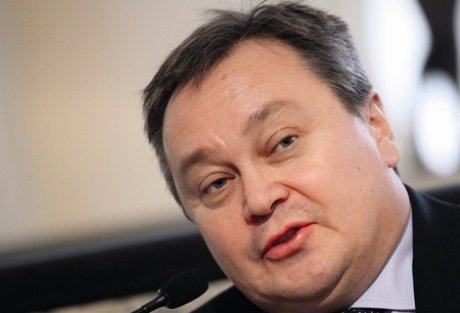
The next government should try to reach an agreement with banks regarding the so-called law on the conversion of loans in ‘Swiss francs’ before other banks, such as UniCredit, decide to file a lawsuit against the state as they have been burdened with the entire cost of conversion, stated the director of the Croatian Banking Association (HUB) Zdenko Adrović in an interview with Bloomberg.

In the Bloomberg article published this week, HUB data indicates that banks bear the entire cost of conversion, estimated at 7.6 billion kuna, incurred after last year’s amendments to the Consumer Credit Act mandated banks to convert loans linked to the Swiss franc into loans linked to the euro at an exchange rate lower than that at which the loans were granted.

As a reminder, on September 16 of this year, UniCredit, which owns the largest Croatian bank, Zagrebačka banka, filed a request to initiate arbitration with the International Centre for Settlement of Investment Disputes in Washington. The discussion on this topic, Bloomberg assesses, will be the first test for the future government, and Adrović says that the new government may reach a compromise with banks, but time is running out.

“We do not have much time available. The situation will change after three, four, or five more banks initiate arbitration proceedings, and we know that several banks are already prepared for that,” Adrović stated, but did not specify which banks are also preparing for lawsuits.

Adrović described the legal solution for conversion as “radical” and stated that Croatia adopted this law, unlike other EU member states, without consultations with the European Central Bank or the European Commission.

The text also recalls that various steps to ease the position of debtors in ‘Swiss francs’ have been taken by Hungary, Poland, Romania, and other European countries, and that in the case of Croatia, the European Commission has intervened, asserting that the manner in which the conversion was carried out contradicts the legal norms of the European Union.

It also mentions an earlier statement by Finance Minister Zdravko Marić that efforts are being made to reach an agreement with banks, as well as a statement by the leader of Most, Božo Petrov, that one of the topics in discussions about forming a new government with HDZ is the possibility of introducing a tax on bank assets.

“We exchanged information with the government, but I would not say that negotiations have already begun,” Adrović told Bloomberg, adding that if a tax on assets is introduced, foreign-owned banks could hypothetically “seek protection for their investments in Croatia and merge their Croatian branches with their parent banks abroad, leaving only a retail network without assets in Croatia.”