
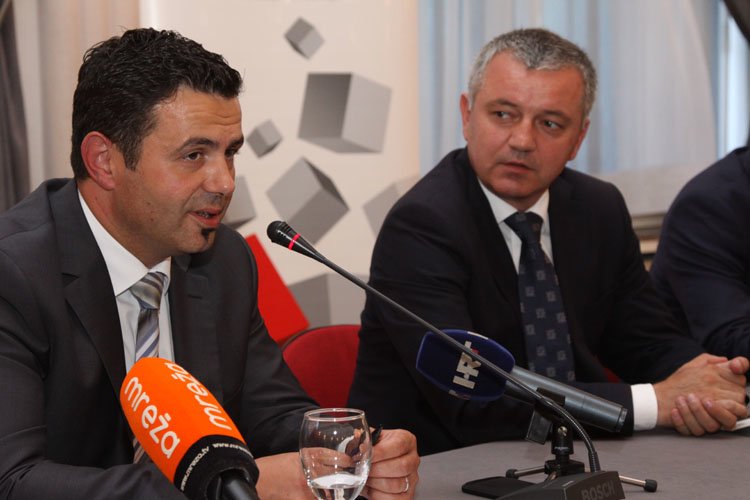
A total of 32 entrepreneurial projects have received nearly 160 million kuna in non-repayable grants from EU funds this year, which will help complete investments worth a total of 640 million kuna in the next few years, reported on Wednesday the Minister of Entrepreneurship and Crafts Darko Horvat and the CEO of HAMAG-BICRO Vjeran Vrbanec. With the help of these grants, investments in technology and production development, procurement of new machinery and equipment, and construction of new facilities and hotels in Croatia are expected, which will create approximately 500 new jobs, it was stated at the project presentation, which also included entrepreneurs who received grants from the Ministry’s calls under the Operational Program Competitiveness and Cohesion 2014-2020.
Grant recipients come from various sectors and regions of Croatia. For example, the construction of the Plaža Duće hotel in Omiš, owned by Andro International, and the construction of the Minerva hotel in Podgora near Makarska with accompanying facilities, owned by Hoteli Medora (formerly Hoteli Podgora), each received 10 million kuna. The company Prostoria from Sveti Ivan Zelina received a grant of nearly 5 million kuna for the construction of a hall for the production of designer furniture, while the laboratory for testing agricultural products and food Inspecto from Đakovo and Osijek received 11.2 million kuna in non-repayable funds for a new laboratory testing center. The company Bomark Pak from Ludbreg received 12.7 million kuna in grants for expanding production, Romanof from Čabar received 8 million kuna for a wood pellet production facility, and Optiplast from Sisak received 6.5 million kuna for the construction of a hall and new technology.
The head of HAMAG-BICRO emphasized that a public call for small and medium-sized enterprises is currently underway for obtaining small loans ranging from 25,000 to 50,000 euros with interest rates from 0.5 to 3 percent, and that about ten days ago they promoted banks and leasing companies for individual guarantees, which, according to him, will facilitate entrepreneurs in closing the financial structure for projects for which they received non-repayable grants.


