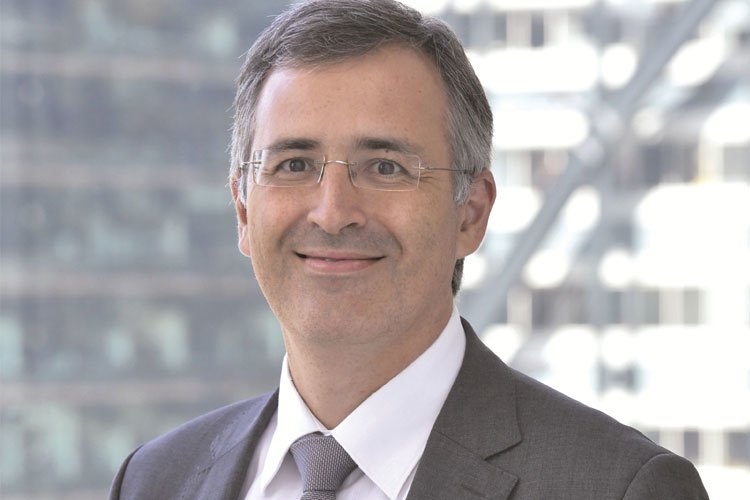
Among the low-profile guests participating in Lider’s conference ‘Day of Great Plans’ this Friday will be the freshly appointed Russian economist Sergej Gurijev, who officially took over the position of Chief Economist of the European Bank for Reconstruction and Development this summer after being selected for the job late last year. His appointment is somewhat controversial given that he fled Russia in 2013 after being questioned as part of a police investigation against oligarch Mikhail Khodorkovsky. The first Russian in the position of Chief Economist at EBRD fled Moscow due to what he claims was regime pressure on free thinkers, and he quickly found a new job at the Paris Institute of Political Studies, from which he came to EBRD. His appointment was met with very warm words from Russian President Vladimir Putin, who characterized Gurijev as ‘a smart man and a very good expert’ who is always welcome in Russia. He dismissed the reasons for his flight, stating that he does not understand why he left Russia given that he was not accused of anything.
EBRD has suspended its operations in Russia following the Russian intervention in Crimea, although Russia had been the area of the Bank’s most intense engagement up to that point. Gurijev has been described by the Financial Times as one of the most promising Russian economists, having served as the rector of the prestigious Moscow New Economic School since 2005. Before parting ways with the Russian authorities, he was an informal advisor to the government from 2008 to 2012 during Dmitry Medvedev’s presidency. In an exclusive interview for Lider before the conference, Gurijev analyzed the state of the Croatian economy, announcing an upward revision of EBRD’s forecasts, as well as the prospects of the European economy, which seems to finally be emerging from the Great Recession.
• How confident are you in the sustainability of Croatia’s recovery? Some important indicators seem promising (industrial production, budget deficit…) – has Croatia managed to turn a new page towards sustainable development?
– Croatia has clearly made progress in many areas, both in emerging from recession and in beginning to address fiscal imbalances, but there is still much work to be done. Adjustment must become sustainable by addressing the remaining structural weaknesses in the economy to ensure higher long-term growth rates. The sustainability of debt remains a problem given that public debt exceeded 85 percent of GDP last year. Financing such debt crowds out lending to the private sector, and servicing interest replaces more socially beneficial expenditures.
• What priorities do you see for the new Croatian government?
– Besides fiscal sustainability, decisions must primarily focus on improving the business climate and raising productivity. Despite significant improvements in recent years, Croatia still ranks relatively low among the new EU members in terms of business climate and attractiveness for foreign direct investment. Further reducing bureaucracy and parafiscal burdens is very important for businesses, as is enhancing the skills of the workforce. Constant improvement in productivity is crucial for Croatia, a country with an aging population and a shrinking workforce. Although external competitiveness has improved after the crisis due to wage freezes, labor productivity remains below the EU average in most sectors, with the exception of agriculture, financial services, and ICT. Improving productivity would help external competitiveness and wage convergence. Likewise, strengthening the absorption of EU funds can help expand fiscal resources and support necessary infrastructure investments. Raising the efficiency of state-owned enterprises should also be a priority, as subsidies to businesses, both public and private, are above the Union average. Although Croatia has strong tourism potential, the share of exports in GDP, which includes the export of goods and services such as tourism, is still significantly below that of Central and Eastern European countries. This share has significantly increased since joining the EU from about 40 percent of GDP to nearly 50 in the past year, but in CEE countries, this ratio is above 80 or 90 percent.