
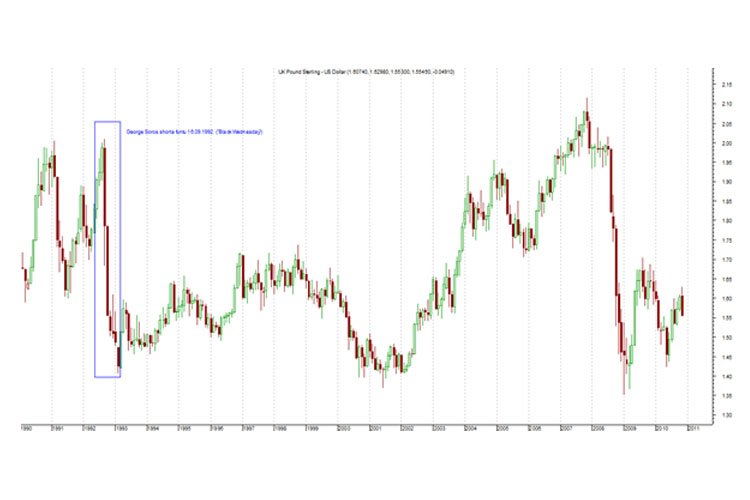
In the not-so-distant past, currency trading was reserved for banks (central and commercial), investment funds, money managers, and very wealthy individuals, with a minimum deposit to start trading ranging from 10 to 50 million US dollars. With the development of the internet, and the efforts and vision of smaller financial companies known as brokers, trading became accessible to ‘small’ investors – individuals, marking the beginning of a new era in currency trading – ‘retail’.
Retail trading or retail exchange operates in such a way that large banks trade on the spread (the difference between the buying and selling exchange rates, between BID/ASK values), which brokerage companies widen and resell to individuals – traders, thus making a profit. There are two types of brokers in the market – independent and market makers. An independent broker charges for its services through the spread (the difference between the buying and selling exchange rates), while a market maker can be found on the opposite side when closing positions, at which point your losing position becomes their profit.
On the global financial scene, there are a large number of brokerage companies offering their services, and ‘small’ investors find it increasingly difficult to decide whom to choose and what traps to watch out for when selecting. A top-notch platform with quality charts, a smaller spread, low initial stake, good customer support, and security for deposits are just some of the factors you need to consider before making a final decision. Thousands of ‘small’ investors engage daily in the business of the century, aiming to achieve high rates of return, and retail trading is becoming an increasingly important factor in the future development of currency trading, which today exceeds 5 trillion US dollars on a daily basis.
Unlike other financial markets, Forex does not have a location but is ‘over the counter – OTC’, and operates through a networked electronic system of banks (central and commercial), investment funds, hedge funds, brokerage companies, money managers, and individual investors, which brings us the following advantages:
1. High daily volumes ensure high liquidity and the ability to execute trades (realize positions) at any moment.
2. 24-hour trading, 5 days a week (from Monday to Friday), unlike stock and bond markets which are centralized and can only be traded for 8 hours a day.
3. Profit can be made when the value of a currency rises – long position and when the value falls – short position, depending on whether you predicted the future direction of movement correctly.
4. Leverage is an important element in currency trading, allowing investors to trade with amounts much larger than the deposited money in their account. For example, a leverage of 1:100 allows you to control an amount of 100,000 USD with an invested amount of, say, 1,000 USD.
5. Low entry costs – a computer, internet connection, and depositing funds into an account (from 100 USD and up).
 To get involved in the fastest-growing business, you must first educate yourself. The two most common questions in my business practice are – how much time do I need to learn to


